Menstruation can trigger headaches. The UK National Health Service (NHS) lists periods and menopause as common causes of headaches, often referred to as hormone headaches. Migraine attacks that arrive just before or during your period are known as menstrual migraines; these are frequently longer and more intense than attacks occurring at other times. Drinking plenty of water, practicing relaxation techniques, and never skipping meals can help reduce discomfort.
Can periods cause headaches?
Yes, they can. The NHS identifies periods and menopause among common causes of headaches, classifying them as hormone headaches. Headaches also appear on the NHS list of premenstrual syndrome (PMS) symptoms. PMS symptoms emerge during the weeks leading up to your period and vary between individuals and from cycle to cycle. We explore other pre-period changes in symptoms before period.
According to the NHS, most headaches resolve on their own and are not a sign of a more serious underlying condition. A headache may last half an hour, several hours, or a few days.
What is a menstrual migraine?
According to the NHS, migraine attacks that occur immediately before or during your period are known as menstrual migraines. These attacks are often more prolonged and more severe than migraine attacks occurring at other times of the month. The NHS also identifies menstruation as a potential trigger for migraines.
Main migraine symptoms listed by the NHS include:
- a throbbing pain, usually on one side of the head, that worsens with physical movement
- feeling sick (nausea) or vomiting
- sensitivity to light and sound
Some people experience warning symptoms hours or even up to two days before the headache begins, such as fatigue, frequent yawning, food cravings, mood changes, or neck stiffness. Others experience an aura: temporary warning signs including visual disturbances like zigzag lines or flashing lights, tingling sensations, dizziness, or difficulty speaking. According to the NHS, an aura should last no longer than an hour. Migraine attacks typically last between 4 hours and 3 days.
What helps with headaches during your period?
The NHS outlines practical self-care steps for headaches at home:
- drink plenty of water to stay hydrated
- try to relax, as emotional stress can aggravate headache pain
- do not skip meals, even if you do not feel particularly hungry
- avoid sleeping more than usual, which can worsen headaches
- avoid straining your eyes with prolonged screen time
- avoid drinking alcohol
The NHS also includes over-the-counter pain relievers among home self-care options. However, taking painkillers too frequently is also highlighted as a direct cause of headaches. For migraines, the NHS provides an important caution: try not to take pain relievers on more than two days per week, as overuse can cause rebound headaches and make migraines harder to treat. Always ask a doctor or pharmacist which medicine is suitable for you.
For abdominal cramps and lower back pain during your period, see our guide on what helps with period cramps.
What helps with menstrual migraines?
According to the NHS, while migraines cannot be completely eliminated, treatment can reduce their frequency and make attacks milder. Steps you can take include:
- resting or lying down in a quiet, dark room during an attack
- steering clear of known personal migraine triggers
- drinking plenty of water while cutting back on caffeine and alcohol
- eating meals at consistent, regular times
- getting regular exercise, ensuring adequate sleep, and managing stress levels
The NHS recommends keeping a migraine diary to identify triggers. If your attacks cluster predictably around the onset of your period each month, this pattern will be clear in your diary and can be reviewed with your doctor. Aside from prescription medicines, the NHS notes acupuncture, relaxation techniques, and cognitive behavioral therapy as potential options. You and your doctor decide on the most appropriate approach together.
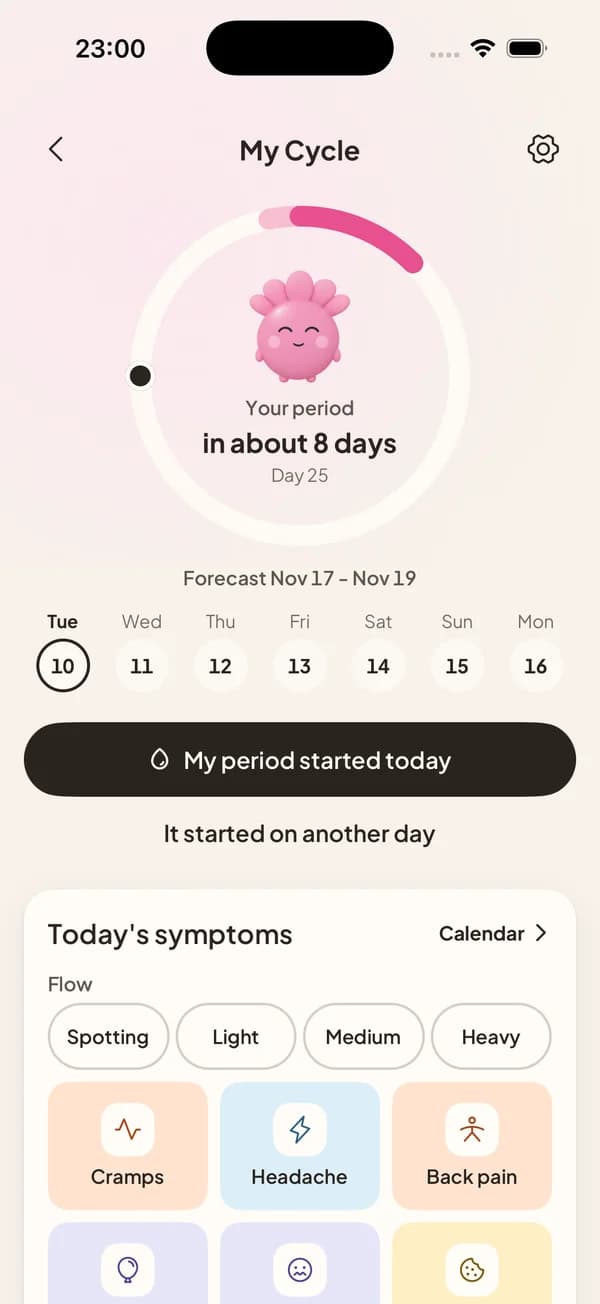
Keep your period calendar in yuuvii
Tap once when your period starts; the next estimate, your symptoms and your mood live in one place. Your entries stay on your phone.
 Coming soonAndroid
 Scan with your phone camera to open the App Store.
When should you see a doctor?
The NHS recommends consulting a doctor if:
- migraine attacks occur regularly before or during your period
- attacks are severe, worsening, or lasting longer than usual
- you experience more than one migraine attack per week
- home remedies fail to provide relief or you suffer from frequent headaches
Seek prompt medical care if: an attack lasts longer than 72 hours, an aura lasts longer than an hour, you are pregnant or recently gave birth, a headache is accompanied by visual problems or vomiting, or pain begins or worsens when coughing, sneezing, bending over, or exercising.
Call emergency services immediately (112 in Europe, 999 in the UK, 911 in the US) if a headache is accompanied by:
- a sudden, extremely severe headache (thunderclap)
- difficulty speaking, balancing, walking, or remembering
- loss of vision
- drowsiness or sudden confusion
- seizures
- numbness or weakness down one side of the face or body
- high fever, stiff neck, or extreme sensitivity to bright light
- a rash that does not fade when pressed with a glass
- a head injury sustained in the past three months
Logging headaches in your period calendar
Mark your period, tick symptoms and see when the next one is likely to start.
Your journal, mood, cycle and tracker records, including saved step counts, are stored on your device. When account backup is available and you are signed in, the app also sends an encrypted copy to our servers to restore and merge your records.
The estimate is not for contraception. yuuvii is not a medical device and does not diagnose or treat.
Frequently asked questions
How many days does a period headache last?
According to the NHS, a standard headache can last between half an hour and several days. Migraine attacks typically last between 4 hours and 3 days (72 hours). If an attack persists beyond 72 hours, seek immediate medical attention.
Do menstrual migraines improve after menopause?
According to the NHS, migraines in women frequently improve after menopause, and can sometimes ease during pregnancy as well. The NHS also notes that for many people, migraine attacks gradually become less frequent as they get older.
Sources
Keep your period calendar in yuuvii
Tap once when your period starts; the next estimate, your symptoms and your mood live in one place. Your entries stay on your phone.
Coming soonAndroidScan with your phone camera to open the App Store.