To relieve period pain, the UK National Health Service (NHS) recommends several practical measures: taking a warm bath or shower, placing a hot water bottle wrapped in a towel on your tummy, gently massaging your abdomen and lower back, engaging in light physical activity such as yoga, swimming, or walking, and asking a pharmacist about pain relief that is suitable for you. If your pain is unusually severe or fails to improve with pain medication, consult a doctor without delay.
What causes period pain?
According to the NHS, period pain occurs because the muscular wall of the womb contracts during menstruation. In most cases, it is a normal part of the menstrual cycle and can affect anyone who has periods.
Sometimes an underlying condition causes the pain. The NHS highlights examples including:
- Endometriosis and adenomyosis: conditions where tissue similar to the lining of the womb grows in other areas
- Fibroids: non-cancerous growths that develop in or around the womb
- Pelvic inflammatory disease (PID): an infection of the womb, fallopian tubes, and ovaries
An intrauterine device (IUD or coil) can also trigger period pain, particularly during the first 3 to 6 months after insertion.
How does period pain feel?
Menstrual cramps typically arrive at the start of your period or just before it begins. The NHS describes common sensations:
- abdominal aching starting with or just before period bleeding
- painful cramps that spread across your tummy to your back and thighs
- sharp spasms or a constant, dull, aching pain in your abdomen
Period pain usually lasts no more than 3 days, although it can significantly disrupt your daily activities. If cramping starts before your period, you might also notice changes like bloating or breast tenderness during those same days. We discuss these in detail in symptoms before period.
What helps with period cramps at home?
The NHS recommends these practical steps to relieve period pain at home:
- Take a warm bath or shower. Warm water helps soothe tension in your abdominal muscles.
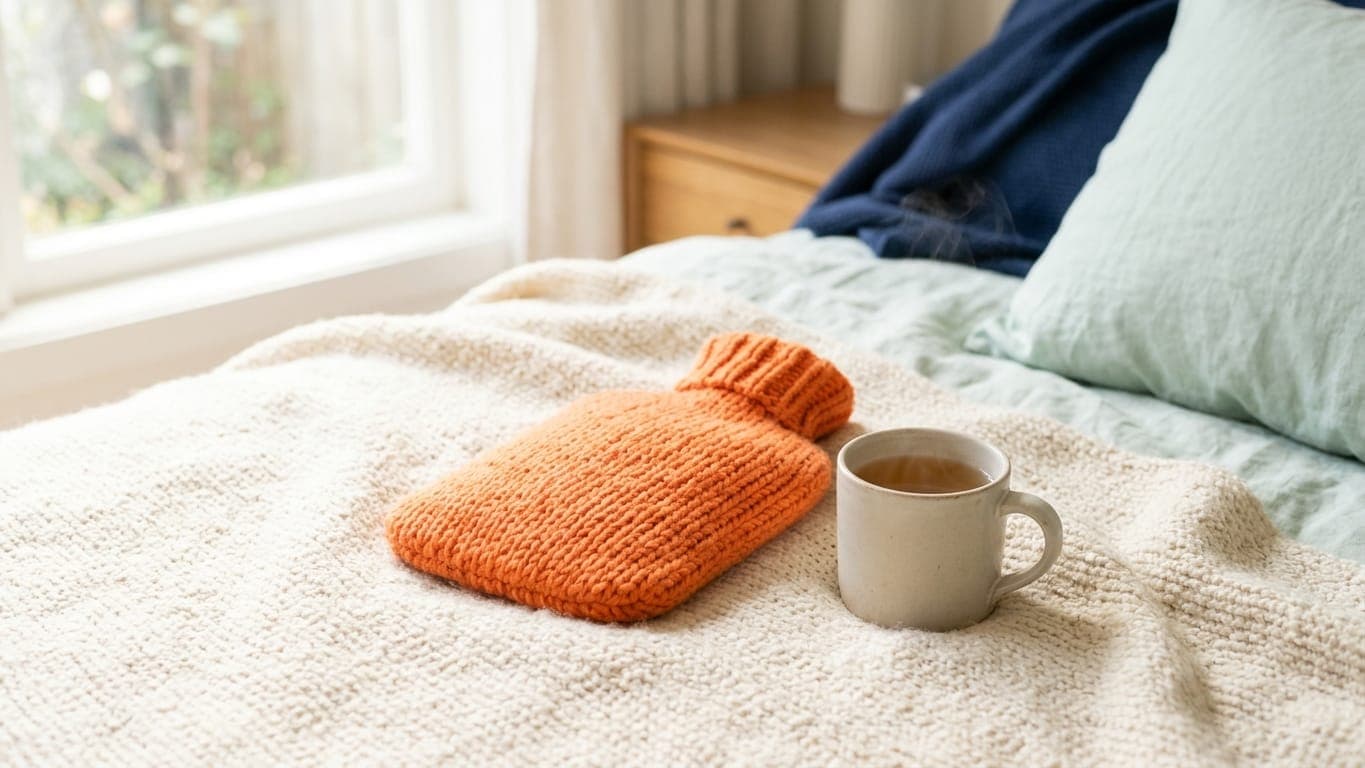
- Apply gentle heat to your tummy. Use a heating pad or a hot water bottle wrapped securely in a tea towel.
- Massage your stomach and lower back. Gentle circular motions can ease localized muscle discomfort.
- Try gentle exercise. Activities such as yoga, swimming, light walking, or cycling can help boost circulation.
- Ask about pain relief. A pharmacist or doctor can tell you which pain relief is suitable for you.
The NHS also notes that cutting down on alcohol and stopping smoking can help reduce period pain over time.
Not every home remedy works equally well for every person. Observing which approaches bring you the greatest relief over several cycles helps you prepare effective remedies for future periods.
When should you see a doctor?
See a doctor urgently on the same day if: your pelvic or period pain is severe or noticeably worse than usual and pain relievers have not helped.
Schedule a routine doctor visit if:
- your periods have become noticeably more painful, heavier, or irregular
- period pain prevents you from doing your normal everyday activities
- you experience pain during sexual intercourse, or when passing urine or opening your bowels
- you experience unexpected bleeding between periods
- you notice a persistent change in how often you urinate or empty your bowels
- you have persistent bloating in your abdomen
- you have lost your appetite
- you are losing weight without trying
A doctor can evaluate the cause of your discomfort, refer you to a gynecologist, or arrange ultrasound scans if needed. If a medical condition is responsible for your cramps, treating that condition relieves the pain. If you suspect your cycle pattern is changing, our guide on irregular menstrual cycle explains what signs to watch.
What medical treatments might a doctor suggest?
If period pain is severe, your doctor may suggest options outlined by the NHS:
- prescription medicines to ease pain, depending on what suits you
- a TENS machine: a small battery-operated device that delivers mild electrical pulses to reduce pain signals
- hormonal treatments that can make bleeding lighter and cramps milder by thinning the womb lining, depending on what suits you
If pain persists or an underlying condition is suspected, you may be referred to a specialist gynecologist. For example, fibroids can be treated with medication or surgical procedures, while pelvic inflammatory disease generally requires antibiotics. You and your doctor determine the best treatment together.
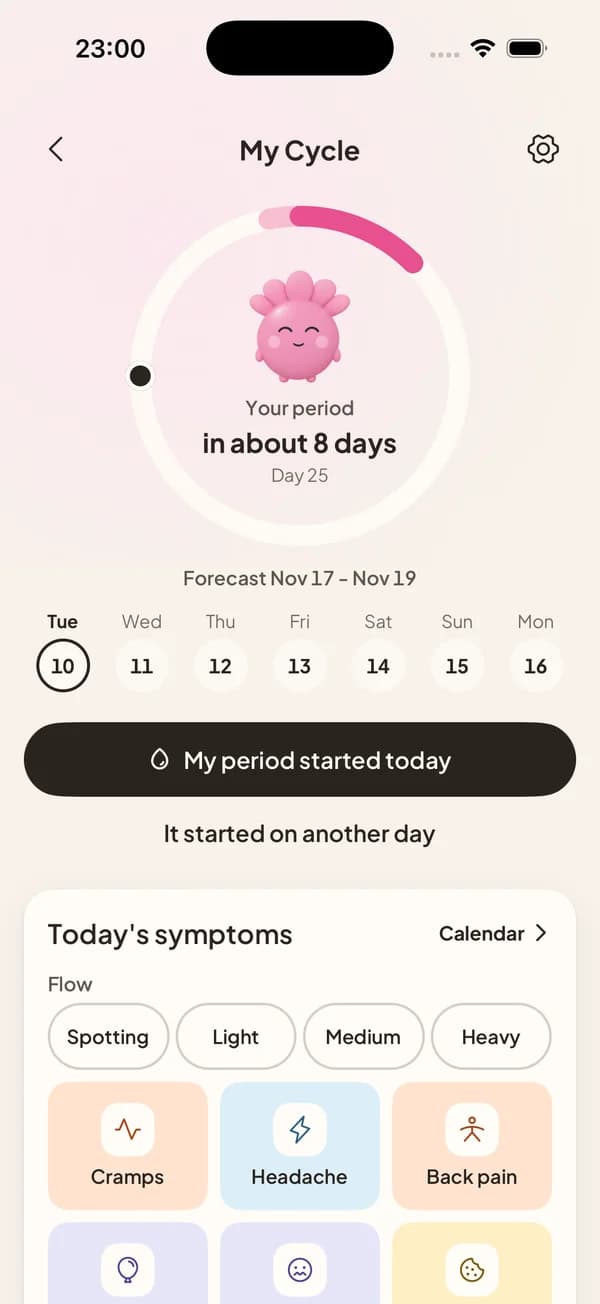
Keep your period calendar in yuuvii
Tap once when your period starts; the next estimate, your symptoms and your mood live in one place. Your entries stay on your phone.
 Coming soonAndroid
 Scan with your phone camera to open the App Store.
Track your pain in your calendar
Mark your period, tick symptoms and see when the next one is likely to start.
Your journal, mood, cycle and tracker records, including saved step counts, are stored on your device. When account backup is available and you are signed in, the app also sends an encrypted copy to our servers to restore and merge your records.
The estimate is not for contraception. yuuvii is not a medical device and does not diagnose or treat.
Your next period prediction is calculated from the average of your last six cycles and appears as a three-day window. All entries remain strictly on your phone; no account registration is needed.
Frequently asked questions
How many days does period pain last?
According to the NHS, period cramps typically last no more than 3 days. If your pain lasts longer or worsens every month, consult a doctor.
Is period pain normal?
Discomfort and pain leading up to or during your period are very common and often an ordinary part of the menstrual cycle. However, if pain interferes with your day-to-day life or feels unusually intense, seeking medical advice is recommended.
Can you get cramps before your period starts?
Yes. The NHS explains that abdominal discomfort and pain can start right before bleeding begins or at the very start of your period. For other changes noticed prior to menstruation, see our guide on symptoms before period.
Can medicine help with menstrual cramps?
Some pain relief can help with period pain. Ask a pharmacist or doctor which option is suitable for you, especially if you have other health conditions or take other medicines.
Can you exercise during period cramps?
Yes. The NHS recommends gentle exercise such as yoga, swimming, walking, or cycling as an effective way to help relieve period pain.
Can an IUD cause period pain?
Yes. The NHS notes that an intrauterine device (IUD) can cause cramping and discomfort, particularly during the first 3 to 6 months after it is fitted.
Sources
Keep your period calendar in yuuvii
Tap once when your period starts; the next estimate, your symptoms and your mood live in one place. Your entries stay on your phone.
Coming soonAndroidScan with your phone camera to open the App Store.