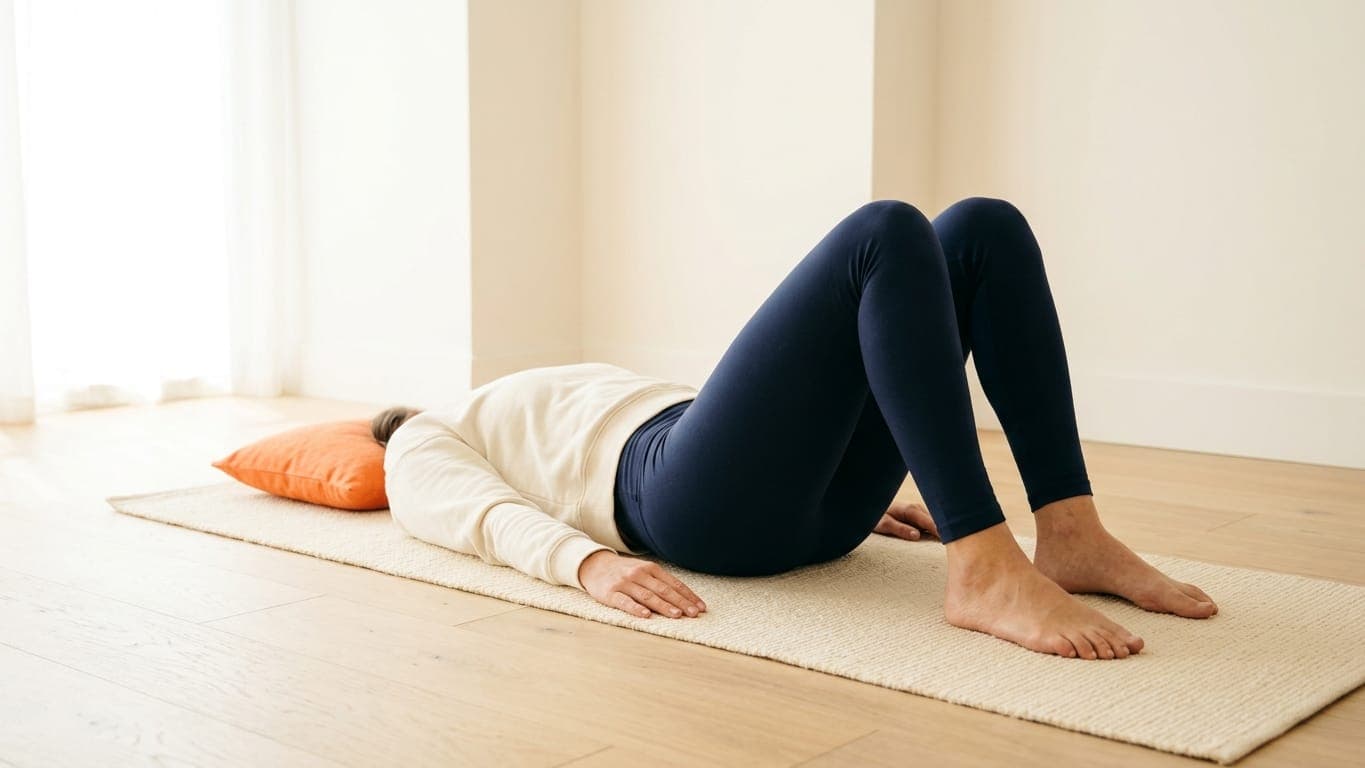
According to the NHS, to do pelvic floor (Kegel) exercises, first identify the right muscles: imagine trying to stop the flow of urine and hold in gas at the same time. Squeeze the muscles firmly, hold for 2 seconds, relax and repeat 10 times. Breathe normally without pulling in your stomach. Gradually build the hold time up to 10 seconds. A physiotherapist can personalize your routine.
What are Kegel exercises?
Kegel exercises consist of systematically contracting and relaxing the muscles of the pelvic floor. The UK National Health Service (NHS) often refers to structured pelvic floor muscle training under the common term Kegel exercises. According to the NHS, these pelvic floor muscles wrap around the bladder neck and urethra, actively managing the closure mechanism that regulates the release of urine.
According to MedlinePlus, the health information service of the US National Library of Medicine, Kegel exercises strengthen the pelvic muscle sling situated beneath the uterus, bladder, and large intestine. Structured training offers significant therapeutic benefit for both women and men experiencing urinary incontinence or bowel control difficulties.
To learn more about pelvic anatomy and why weakness occurs, read our article what are pelvic floor muscles and why do they weaken.
How to contract the pelvic floor
According to the NHS, to locate the correct muscles, imagine attempting to simultaneously stop the flow of urine and prevent the passage of intestinal gas. The NHS postnatal guidance describes two distinct coordinated movements:
- Gently squeeze and draw inward the muscles around your back passage, exactly as if preventing flatulence.
- Simultaneously draw inward the muscles around your vagina and urethra, as if interrupting the flow of urine.
MedlinePlus emphasizes that your thighs, buttocks, and abdominal muscles must remain completely relaxed during the movement. North Bristol NHS Trust advises against clenching your buttocks, squeezing your knees together, or holding your breath. The contraction occurs entirely internally; no visible movement should be observable from the outside.
Never practice by repeatedly stopping your urine stream while actively emptying your bladder on the toilet. North Bristol NHS Trust warns that interrupting normal urination can disrupt healthy bladder emptying reflexes and increase the risk of urinary tract infections.
How to perform pelvic floor exercises
The NHS incontinence clinical guidance recommends the following structured sequence:
- Contract your pelvic floor muscles quickly and firmly, ensuring you do not pull in your upper stomach.
- Hold the contraction steadily for 2 seconds.
- Completely relax the muscles.
- Repeat this sequence 10 times in a row.
Breathe normally throughout each repetition and keep your body calm and relaxed. The NHS recommends gradually increasing your sustained hold time toward a target of 10 seconds per contraction. A complete training session should incorporate both quick contractions and sustained holds.
The NHS postnatal rehabilitation guide outlines these two complementary contraction types:
- Slow endurance holds: Squeeze and hold the contraction for as many seconds as you can manage comfortably, up to a maximum of 10 seconds, then relax fully for several seconds.
- Fast power contractions: Squeeze the muscles rapidly and release immediately, repeating in a brisk rhythm until the muscles begin to fatigue.
You can perform these exercises lying flat on your back, sitting upright on a firm chair, or standing. According to the NHS, once you become familiar with the technique, you can practice discreetly anywhere and at any time.
How many times a day and how many seconds?
The following reference table synthesizes standard NHS recommendations for exercise duration and daily frequency:
| Exercise parameter | NHS clinical recommendation |
|---|---|
| Initial hold time | Begin with 2 seconds, gradually building to 10 seconds |
| Slow endurance holds | Hold firmly for up to 10 seconds, followed by complete relaxation |
| Repetitions per set | Build progressively up to 10 repetitions of each contraction type |
| Daily frequency | Perform at least 3 distinct sets every day |
| Supervised clinical program | At least 8 contractions, 3 times daily, sustained for at least 3 months |
MedlinePlus suggests a slightly adapted daily routine: after emptying your bladder, sit or lie down comfortably. Squeeze the muscles for 3 to 5 seconds, followed by 3 to 5 seconds of full relaxation. Repeat this 10 times per session across three distinct periods: morning, afternoon, and evening. MedlinePlus notes that overexercising can fatigue pelvic tissues and lead to straining during bowel movements.
Minor variations exist across clinical sources. If a physiotherapist or physician has prescribed a customized regimen, follow their specific instructions. The NHS suggests that sitting down on the toilet can serve as a helpful mental prompt to remember your exercises, provided you perform them only after you have finished urinating.
Pelvic floor exercises
This tracker is not available in yuuvii 2.0.1. You can read articles on this topic here.
Who should do pelvic floor exercises?
According to the NHS, almost everyone can benefit from maintaining strong pelvic floor muscles. Pregnancy and childbirth place significant mechanical strain on the tissues supporting bladder control. The NHS notes that strengthening these muscles during pregnancy significantly reduces the risk of postpartum incontinence. Research confirms that pelvic floor training provides measurable improvement for individuals of all genders experiencing stress or urge incontinence.
According to MedlinePlus, pelvic control problems frequently emerge with advancing age, significant weight gain, or following childbirth. Incontinence can also develop after gynecological surgery in women or following prostate surgery in men. Dedicated Kegel training assists both men and women in regaining urinary and fecal continence.
How to tell if you are doing them correctly
A specialized pelvic health physiotherapist or midwife can verify your technique. According to the NHS, your doctor can refer you to a specialist who will evaluate whether you can isolate the muscles and measure the strength and endurance of your contraction. Your exercise prescription is tailored based on this objective clinical assessment.
MedlinePlus recommends asking your healthcare provider if you are uncertain whether you are engaging the correct muscle groups. A clinician can perform a gentle examination to verify proper activation and refer you to a physiotherapist if needed. During pregnancy and after childbirth, consult your midwife. Wye Valley NHS Trust advises discussing pelvic floor technique during routine antenatal and postnatal appointments.
Pelvic floor
This tracker is not available in yuuvii 2.0.1. You can read articles on this topic here.
When should you see a doctor?
The NHS advises speaking to a general practitioner regarding any form of urinary leakage. Incontinence is a very common medical condition, and healthcare professionals discuss it routinely. Seeking clinical advice is the most effective first step toward finding relief.
According to the NHS, you should also schedule an evaluation if you notice:
- A visible lump, bulge, or swelling in or around the vagina
- A persistent dragging sensation of heaviness or pressure in your lower pelvis
- Feeling that your bladder does not empty completely, or needing to urinate with abnormal frequency
- Ongoing bowel issues such as chronic constipation or difficulty passing stool
If you are unsure whether you are performing contractions correctly, or if symptoms of leakage, pelvic heaviness, or pain persist despite regular training, consult a healthcare provider. In an acute emergency, call 911 in the US, 999 in the UK, or 112 in Europe.
Frequently asked questions
How long does it take for Kegel exercises to work?
According to the NHS, it typically takes several months of daily exercise before noticeable clinical improvement occurs. MedlinePlus notes that many individuals experience an initial reduction in symptoms within 4 to 6 weeks, with substantial gains in continence developing over 3 to 6 months.
When should you start Kegel exercises during pregnancy?
The NHS week-by-week pregnancy guide highlights weeks 17 and 25 of the second trimester as ideal times to establish a consistent pelvic floor routine. Gentle daily training during pregnancy helps prevent leakage when laughing, coughing, or exercising. Discuss any pregnancy-specific questions with your midwife or obstetrician.
Sources
- NHS: 10 ways to stop leaks
- NHS: Your post-pregnancy body
- NHS: Urinary incontinence
- NHS: Urinary incontinence, non-surgical treatment
- NHS: Pelvic organ prolapse
- NHS Best Start in Life: 17 weeks pregnant
- NHS Best Start in Life: 25 weeks pregnant
- MedlinePlus: Kegel exercises, self-care
- North Bristol NHS Trust: Pelvic floor exercises for women
- Wye Valley NHS Trust: Pelvic floor health
Pelvic floor exercises
This tracker is not available in yuuvii 2.0.1. You can read articles on this topic here.