
Periods conclude with menopause. According to the UK National Health Service (NHS), menopause typically occurs between ages 45 and 55, with the average age of menopause in the UK being 51; it can also occur earlier. In most cases, periods do not stop abruptly, but become less frequent over several months or years. You are clinically considered to have reached menopause when you have gone 12 consecutive months without a period while not using hormonal contraception.
At what age do periods stop?
According to the NHS, periods continue until you reach menopause. Menopause generally arrives between the ages of 45 and 55, with the average age in the UK being 51. The World Health Organization (WHO) similarly confirms that the majority of women transition into menopause between ages 45 and 55.
The NHS explains that menopause occurs as bodily hormone levels decline. The exact date of your final period is almost never known in advance. Rather than stopping overnight, periods typically become spaced further apart over several months or years before stopping altogether.
Because of this gradual transition, menopause is diagnosed retrospectively. According to the NHS, once you have experienced 12 consecutive months without a period (while not taking hormonal contraceptives), you have officially reached menopause. The WHO also defines natural menopause as occurring after 12 consecutive months of amenorrhea with no other obvious pathological or physiological cause.
What is perimenopause?
Perimenopause refers to the transitional phase leading up to menopause. The NHS describes this as the stage when menstrual cycles become unpredictable. According to the NHS, perimenopause usually starts between the ages of 45 and 55.
According to the WHO, this transition begins when initial clinical signs emerge (most frequently cycle irregularity) and ends 12 months after the final menstrual period. This entire process can span several years.
Are irregular periods a sign of menopause?
Yes, they very often are. The NHS notes that irregular periods are frequently the very first sign of perimenopause. During this transitional time:
- periods may arrive more frequently or less frequently
- menstrual bleeding may become noticeably heavier or lighter
- periods eventually stop completely
Other common symptoms identified by the NHS during perimenopause and menopause include hot flashes, night sweats, sleep disturbances, mood swings and low mood, brain fog or difficulty concentrating, weight gain, vaginal dryness, and urinary tract discomfort. Symptom intensity varies significantly: some women experience pronounced symptoms, while others notice very few or none at all.
According to the NHS, symptoms typically last between 7 and 9 years, though they can persist longer and evolve over time. The NHS also notes that hormonal birth control methods affect bleeding patterns and can mask underlying perimenopausal signs.
There are also many other reasons for irregular bleeding. The NHS lists pregnancy, emotional stress, weight fluctuations, excessive exercise, and certain hormonal birth control methods among the common causes of irregular periods. We cover these factors in irregular menstrual cycle.
What is early menopause?
According to the NHS, menopause can occur before the age of 45; this is termed early menopause. It can result from surgical removal of the ovaries, cancer treatments, or unknown factors. The WHO defines menopause occurring before age 40 as premature menopause. The NHS advises anyone experiencing menopause symptoms to speak with a doctor regardless of their current age.
Should you continue using contraception after your last period?
According to the NHS, contraception is still required for a period of time after your final period: for 1 full year if you are aged 50 or older, and for 2 full years if you are between ages 40 and 49. Discuss which contraceptive approach is best suited to your profile with your healthcare provider.
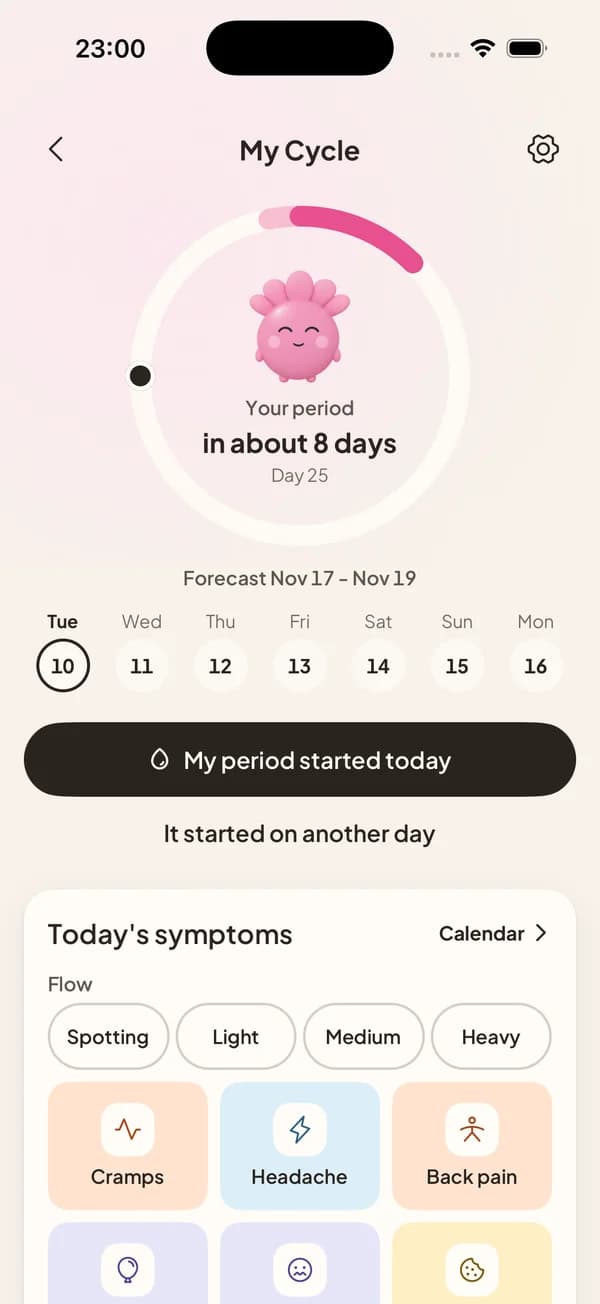
Keep your period calendar in yuuvii
Tap once when your period starts; the next estimate, your symptoms and your mood live in one place. Your entries stay on your phone.
 Coming soonAndroid
 Scan with your phone camera to open the App Store.
When should you see a doctor?
The NHS recommends consulting a doctor if:
- you believe you have symptoms of perimenopause or menopause and want to explore management options
- you experience heart palpitations
- you are still having periods and your bleeding is noticeably heavier than before
- your periods have become irregular or you have missed three consecutive periods
- you experience bleeding between periods or after sexual intercourse
Bleeding after menopause. According to the NHS, any vaginal bleeding occurring after 12 consecutive months without a period must be checked by a doctor. This includes light bleeding, spotting, or unusual pink or brown discharge, even if it happens only once. While postmenopausal bleeding is usually caused by harmless conditions, the NHS notes that it can rarely be an early sign of cancer, which is much easier to treat when detected early.
If you suspect a medical emergency, call 112 in Europe, 999 in the UK, or 911 in the US.
Periods
Mark your period, tick symptoms and see when the next one is likely to start.
Your journal, mood, cycle and tracker records, including saved step counts, are stored on your device. When account backup is available and you are signed in, the app also sends an encrypted copy to our servers to restore and merge your records.
The estimate is not for contraception. yuuvii is not a medical device and does not diagnose or treat.
Frequently asked questions
Is it normal to still have periods at age 50?
Yes. According to the NHS, menopause typically occurs between ages 45 and 55, with the average age being 51 in the UK. Continuing to have periods at age 50 is very common. If your bleeding becomes heavier than before, the NHS suggests seeing a doctor.
Can a test diagnose menopause?
According to the NHS, there is no routine laboratory test to diagnose menopause. Doctors typically make a clinical assessment based on your age, menstrual history, and reported symptoms.
Sources
- NHS: What are menopause and perimenopause?
- NHS: Symptoms of menopause and perimenopause
- NHS: Periods
- NHS: Missed or late periods
- NHS: Irregular periods
- WHO: Menopause
Keep your period calendar in yuuvii
Tap once when your period starts; the next estimate, your symptoms and your mood live in one place. Your entries stay on your phone.
Coming soonAndroidScan with your phone camera to open the App Store.