
The menstrual cycle is the interval from the first day of your period to the day before your next period begins. According to the UK National Health Service (NHS), it averages 28 days, with 21 to 35 days being common. Hormones regulate the cycle: during the first half, the uterine lining thickens and an ovary releases an egg. If pregnancy does not occur, hormone levels drop and the lining sheds as menstrual bleeding.
What is the menstrual cycle?
The NHS defines the menstrual cycle as the time from the first day of your period to the day before the next period starts. The day your period bleeding begins is day 1 of your cycle.
According to the NHS, cycle length varies from woman to woman. The average is around 28 days, and anywhere between 21 and 35 days is considered regular and normal. Cycles can also vary slightly from month to month. We explain these numbers in detail in our guide on how many days is a normal menstrual cycle.
The NHS explains that the cycle is regulated by hormones. Two hormones feature prominently: estrogen and progesterone. The rise and fall of these two hormones drive the physical changes taking place in the uterus and ovaries throughout the cycle.
Phases of the menstrual cycle: what happens throughout
Thinking of your cycle in four main phases makes it easier to understand. The overview below is based on NHS clinical descriptions of the cycle.
1. Menstrual bleeding days
The cycle begins with your period. According to the NHS, a period can last between 2 and 7 days, most often around 5 days. Bleeding is typically heaviest during the first 2 days. On heavier days blood appears red, while on lighter days it may look pink or brown. The total amount of blood lost during an average period is roughly 20 to 90 ml.
2. The first half of the cycle
According to the NHS, estrogen levels begin to rise at the start of the cycle. Rising estrogen encourages an egg inside one of the ovaries to mature and be released; this process is called ovulation. During this same window, the lining of the uterus starts to thicken.
3. The second half of the cycle
After ovulation occurs, progesterone takes the leading role. According to the NHS, progesterone prepares the uterine lining to receive a fertilized egg during the second half of the cycle. The released egg travels down the fallopian tube toward the uterus.
4. If pregnancy does not occur
If fertilization and pregnancy do not take place, estrogen and progesterone levels fall. According to the NHS, this sharp drop causes the thickened uterine lining to break down and leave the body as menstrual bleeding. A new menstrual cycle then begins.
This guide does not present estimating ovulation dates as a method. If you are planning a pregnancy or seeking contraception, discuss your options with a healthcare professional.
What might you feel before your period?
According to the NHS, hormonal shifts leading up to your period can cause symptoms known as premenstrual syndrome (PMS). These symptoms occur during the weeks before your period and can vary from month to month.
Common symptoms identified by the NHS include:
- low mood, irritability, or anxiety
- fatigue and difficulty sleeping
- bloating and abdominal cramps
- breast tenderness
- headaches
- changes in skin, hair, or appetite
The NHS suggests keeping a symptom diary for at least two consecutive cycles to discuss with your doctor. Learn more about pre-period signs in symptoms before period.
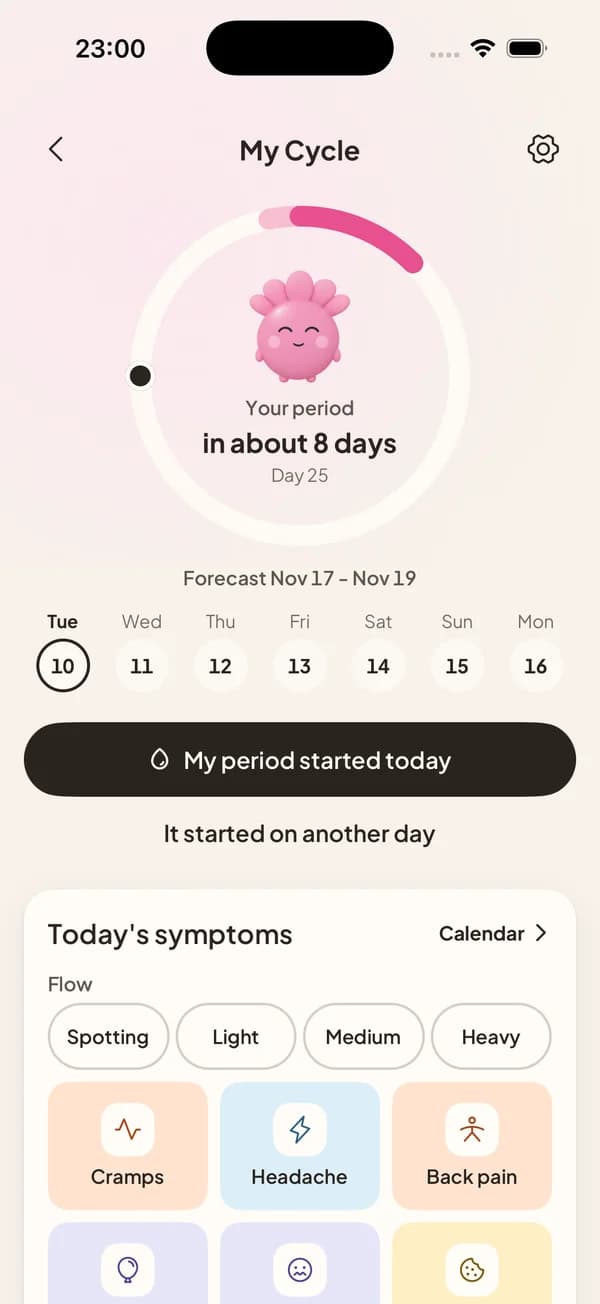
Keep your period calendar in yuuvii
Tap once when your period starts; the next estimate, your symptoms and your mood live in one place. Your entries stay on your phone.
 Coming soonAndroid
 Scan with your phone camera to open the App Store.
Is the cycle the same at every age?
Cycle patterns can change with age. According to the NHS, periods usually begin around age 12, and most girls establish regular cycles between ages 16 and 18. Cycle irregularity is most common when periods first start and when approaching menopause. Periods continue until menopause; in the UK, the average age of menopause is 51.
When should you see a doctor?
The NHS notes that changes in your periods, such as heavier, longer, or lighter bleeding, do not always indicate a serious issue, but should still be evaluated. The NHS recommends consulting a doctor if:
- your periods are irregular or your usual cycle pattern changes
- your period lasts longer than 7 days
- you experience bleeding between periods, after sexual intercourse, or after menopause
- premenstrual symptoms disrupt your daily activities or fail to improve with lifestyle modifications
The NHS urges anyone experiencing thoughts of self-harm or suicide to seek urgent medical help immediately. In the UK call 999 or 111, in the US call 911 or 988, and in Europe call 112.
Periods
Mark your period, tick symptoms and see when the next one is likely to start.
Your journal, mood, cycle and tracker records, including saved step counts, are stored on your device. When account backup is available and you are signed in, the app also sends an encrypted copy to our servers to restore and merge your records.
The estimate is not for contraception. yuuvii is not a medical device and does not diagnose or treat.
Frequently asked questions
Is a period the same as a menstrual cycle?
No. A period refers to the days of active bleeding, which according to the NHS lasts between 2 and 7 days. The menstrual cycle refers to the entire interval starting with the first day of bleeding and ending the day before your next period starts.
What happens if your cycle is shorter than 21 days?
The NHS classifies any cycle where the interval between periods is shorter than 21 days or longer than 35 days as irregular, and recommends seeing a doctor if your cycles become irregular.
Sources
- NHS: Periods and fertility in the menstrual cycle
- NHS: Periods
- NHS: PMS (premenstrual syndrome)
- NHS: Irregular periods
Keep your period calendar in yuuvii
Tap once when your period starts; the next estimate, your symptoms and your mood live in one place. Your entries stay on your phone.
Coming soonAndroidScan with your phone camera to open the App Store.