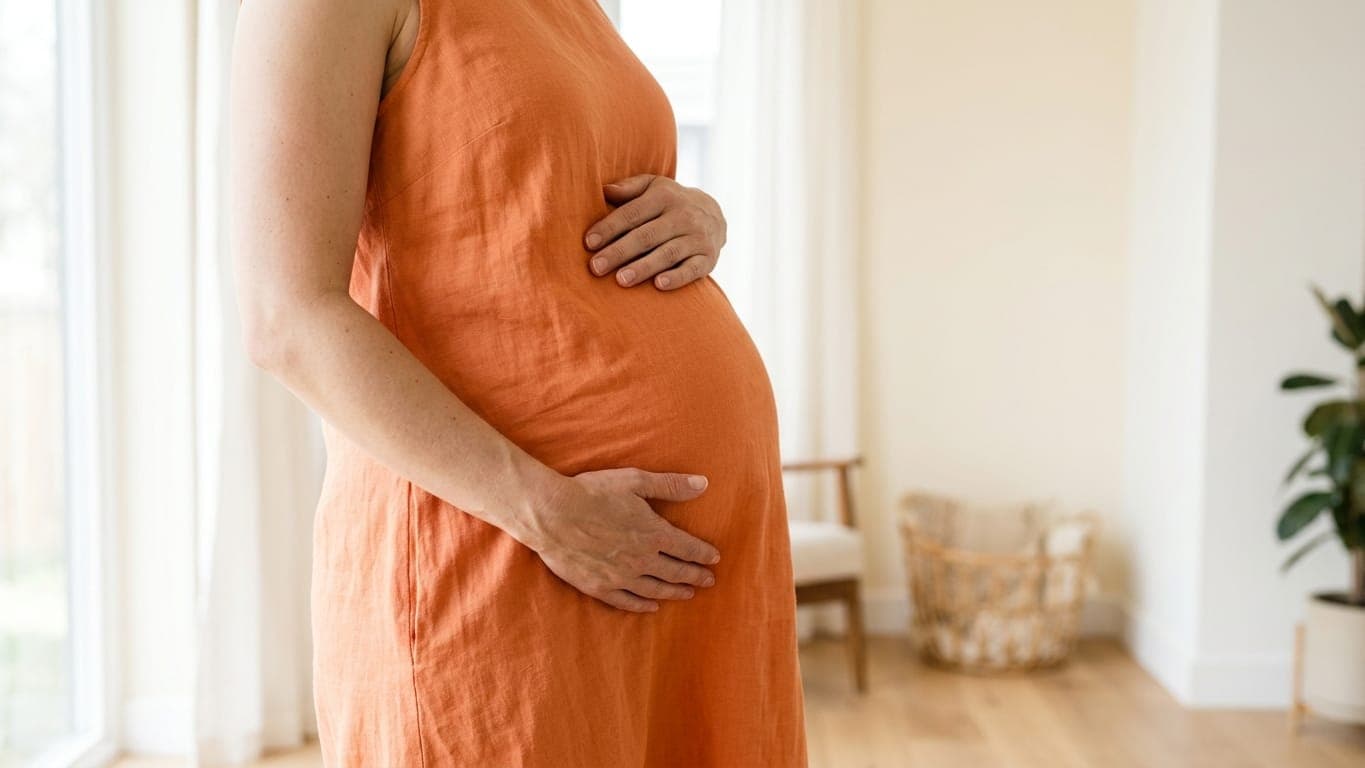
According to the NHS, pregnancy heartburn and acid reflux often improve with practical lifestyle changes: eating smaller, frequent meals, finishing dinner at least 3 hours before bed, sitting upright during meals, reducing caffeine and rich, spicy, or fatty foods, and propping up the head and shoulders in bed. If adjustments are insufficient, safe antacid medications can be prescribed.
What causes heartburn in pregnancy?
According to the UK National Health Service (NHS), indigestion, heartburn, and acid reflux are very common during pregnancy. Symptoms occur when stomach acid irritates the esophageal lining, causing a painful burning sensation in the chest and throat.
The NHS attributes pregnancy heartburn to three primary factors:
- Hormonal changes: Elevated progesterone relaxes the lower esophageal sphincter muscle, allowing stomach acid to flow upward.
- Physical pressure: As the uterus expands, it pushes upward against the stomach, compressing its volume.
- Slower digestion: Pregnancy hormones slow digestive motility, leaving food in the stomach for longer intervals.
Women who had indigestion before pregnancy, those who have been pregnant before, and those in the third trimester face higher likelihood of heartburn.
When does heartburn start during pregnancy?
According to the NHS, heartburn can occur at any stage, but becomes much more frequent after 12 weeks of gestation, often peaking in the third trimester. Symptoms typically develop shortly after eating or drinking, though they can also arise hours later.
Common symptoms listed by the NHS include:
- Burning sensation or pain behind the breastbone
- Feeling uncomfortably full, bloated, or heavy
- Frequent burping or hiccups
- Feeling sick or vomiting
- Acid regurgitation into the mouth or throat
To calculate your current gestational week, review pregnancy due date calculator.
What helps relieve pregnancy acid reflux?
For mild symptoms, simple changes in eating habits and daily routines often provide effective relief:
- Adjust meal frequency: Eat small, frequent meals rather than large feasts. Finish your evening meal at least 3 hours before lying down.
- Sit upright: Sit straight while eating and avoid slumping immediately after meals to minimize abdominal pressure.
- Modify your diet: Limit caffeine, chocolate, citrus juices, tomatoes, and greasy, rich, or spicy dishes that stimulate stomach acid.
- Elevate your sleeping position: Prop your head and shoulders up with extra pillows, or raise the head of your bed. The NHS notes that sleeping on your left side can also reduce acid backflow.
- Avoid smoking and alcohol: Chemicals in tobacco smoke relax the esophageal valve, increasing acid reflux. Smoking also increases risks of preterm birth and low birth weight. Alcohol irritates the stomach and is unsafe during pregnancy.
Pregnancy tracker
This tracker is not available in yuuvii 2.0.1. You can read articles on this topic here.
Can you take medications for pregnancy heartburn?
The NHS says some indigestion medicines can be used in pregnancy, but not all are suitable. Ask your midwife, doctor or pharmacist before taking anything, and always tell the pharmacist you are pregnant.
The NHS emphasizes an important timing rule: leave at least 2 hours between a heartburn remedy and your prenatal iron or folic acid, because some remedies hinder iron absorption. If over-the-counter options prove insufficient, your doctor can prescribe something stronger. Never discontinue prescribed medications without medical advice.
When to seek medical advice
The NHS advises seeing your midwife or doctor if heartburn fails to improve with lifestyle changes, or if you experience:
- Difficulty or pain when swallowing
- Hoarse voice or chronic cough
- Swollen lymph glands in the neck
- Unintended weight loss
- Severe stomach pain
Importantly, the NHS lists severe heartburn that does not respond to antacids as a possible sign of preeclampsia. Preeclampsia is a serious condition involving high blood pressure that develops most often after 20 weeks. Other warning signs include severe persistent headaches, visual changes like blurring or flashing lights, pain directly under the ribs, and sudden swelling of the face, hands, or feet. If these symptoms occur, seek urgent emergency evaluation. In the US call 911; in the UK call 999; in Europe call 112.
Pregnancy
This tracker is not available in yuuvii 2.0.1. You can read articles on this topic here.
Frequently asked questions
Can you distinguish pregnancy heartburn from preeclampsia at home?
Do not attempt to distinguish them yourself. The NHS advises that severe, unremitting heartburn unresponsive to antacids should be evaluated immediately by your maternity unit.
Does sleeping on the left side help acid reflux?
Yes. According to the NHS, resting on your left side positions the stomach below the esophagus, helping prevent acidic fluid from leaking upward.
Sources
- NHS: Indigestion and heartburn in pregnancy
- NHS: Pre-eclampsia
- NHS: Pregnancy symptoms you need to get help for
Pregnancy tracker
This tracker is not available in yuuvii 2.0.1. You can read articles on this topic here.