Symptoms that emerge in the weeks leading up to your period are known as premenstrual syndrome (PMS). The most common symptoms include mood swings, irritability, anxiety, fatigue, sleep disturbances, abdominal bloating or cramps, breast tenderness, headaches, acne flare-ups, and changes in appetite. Symptoms typically improve once bleeding starts and disappear completely within a few days.
What is the premenstrual phase?
The physical and emotional changes experienced prior to menstruation are clinically termed premenstrual syndrome, or PMS. It is also referred to as premenstrual tension (PMT). According to the UK National Health Service (NHS), PMS describes the collection of symptoms that occur in the weeks leading up to your period and can affect anyone who menstruates. Most women experience PMS at some point during their reproductive lives.
Symptoms differ widely between individuals and can shift from one month to the next. A complaint that feels prominent this month may be very mild next month. The NHS states that while the exact cause of PMS is not fully understood, it is linked to changing hormone levels across the menstrual cycle, with some women being more sensitive to these hormonal shifts than others.
According to the NHS, symptoms generally ease when your period starts and vanish within several days.
Most common symptoms before a period
The NHS groups the most frequent PMS symptoms into two main categories:
Emotional symptoms
- mood swings
- feeling depressed, irritable, or bad-tempered
- feeling tearful, anxious, or unusually emotional
Physical symptoms
- tiredness or sleep problems
- bloating or abdominal cramps
- breast tenderness
- headaches
- acne breakouts
- greasy hair
- changes in appetite or specific food cravings
The NHS also identifies reduced interest in sex as a typical PMS manifestation.
Premenstrual headache, bloating, and breast tenderness
These three issues are among the most frequently searched pre-period concerns, and all three appear on the NHS list of core PMS symptoms. The practical tips below apply directly to managing them. If cramps and pelvic discomfort continue during your bleeding, consult our guide on what helps with period cramps.
What can you try to relieve symptoms?
The NHS recommends these practical steps:
- get regular physical exercise
- eat a healthy, balanced diet; eating smaller meals every 2 to 3 hours helps some women stabilize blood sugar
- ensure you get adequate sleep
- try to reduce stress through yoga, gentle stretching, or meditation
- if pain is bothering you, ask a pharmacist or doctor which pain relief is suitable for you
- track your symptoms in a diary for at least two consecutive menstrual cycles to share with your doctor
The NHS also advises not smoking and cutting down on excessive alcohol intake.
The NHS says there is limited evidence for complementary therapies and supplements for PMS. If you are thinking about trying any supplement, talk to a doctor or pharmacist first, especially if you take other medicines.
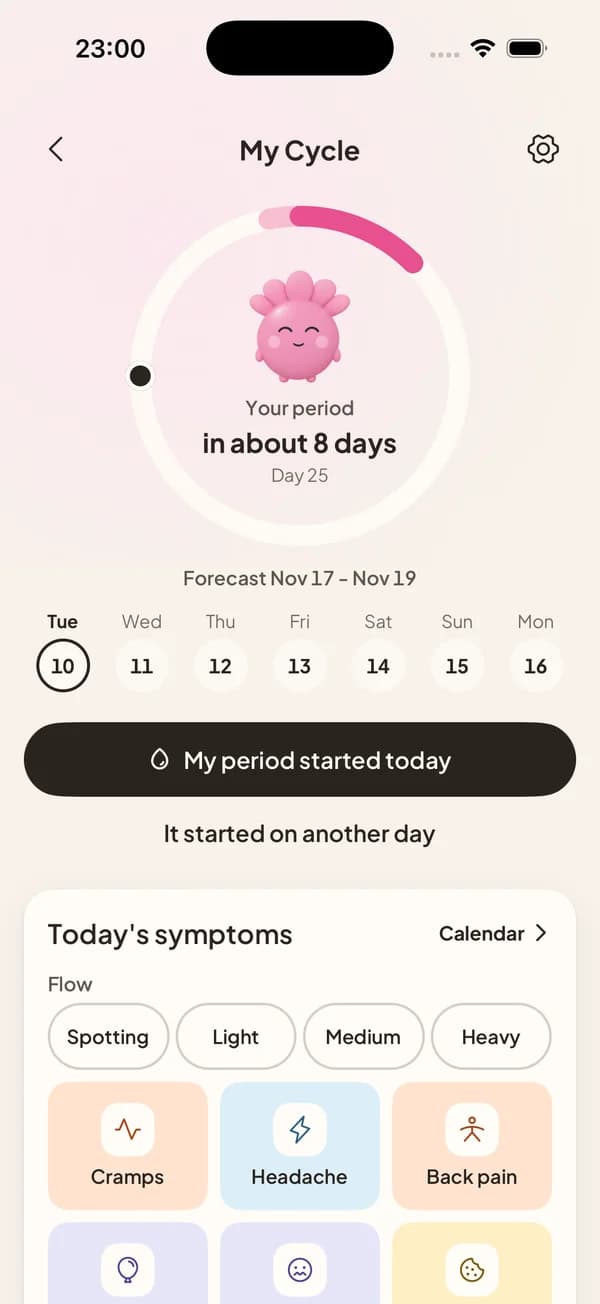
Keep your period calendar in yuuvii
Tap once when your period starts; the next estimate, your symptoms and your mood live in one place. Your entries stay on your phone.
 Coming soonAndroid
 Scan with your phone camera to open the App Store.
How to keep a symptom diary
The NHS recommends recording your symptoms across at least two menstrual cycles and taking this diary to your doctor. Two full cycles provide a solid baseline to see whether symptoms consistently coincide with your cycle phases. When maintaining your diary, keep these guidelines in mind:
- Take a brief note every day. Which symptoms were present, and how noticeable were they? Recording days with zero symptoms is equally important for comparison.
- Mark the start and end of your period. You can only identify how many days before bleeding symptoms begin by logging these exact milestones.
- Record your mood. Half of the symptoms listed by the NHS are emotional: mood swings, irritability, anxiety. These emotional markers are just as clinically significant as physical signs.
- Review your notes after two cycles. Do symptoms cluster predictably in the days leading up to your period, or are they scattered across the entire month? Being able to answer this question at the clinic makes diagnosis much easier.
When should you see a doctor?
According to the NHS, you should consult a doctor if you have PMS symptoms and lifestyle modifications have not helped, or if your symptoms interfere with your daily life and relationships. Your doctor may discuss treatments such as hormonal medicines (like the combined contraceptive pill), cognitive behavioral therapy (CBT), or antidepressant medications. If symptoms persist despite these treatments, you may be referred to a specialist gynecologist, psychiatrist, or clinical psychologist.
In a small number of women, premenstrual symptoms are significantly more severe. This condition is called premenstrual dysphoric disorder (PMDD). Its symptoms mirror PMS but are much more intense, causing severe impairment to daily life. NHS symptoms for PMDD include headaches, joint and muscle aches, binge eating, insomnia, and intense feelings of anxiety, anger, or hopelessness.
If you ever experience thoughts of self-harm or suicide during your premenstrual phase, call 112 in Europe, 999 in the UK, or 911 in the US immediately.
Periods
Mark your period, tick symptoms and see when the next one is likely to start.
Your journal, mood, cycle and tracker records, including saved step counts, are stored on your device. When account backup is available and you are signed in, the app also sends an encrypted copy to our servers to restore and merge your records.
The estimate is not for contraception. yuuvii is not a medical device and does not diagnose or treat.
Frequently asked questions
How many days do premenstrual symptoms last?
According to the NHS, symptoms occur during the weeks before your period, usually ease once your period starts, and disappear completely a few days later.
Can you get headaches before your period?
Yes. Headaches are listed among the most common physical PMS symptoms by the NHS.
Do you experience the same symptoms every month?
Not necessarily. According to the NHS, symptoms vary between different individuals and can change in type and severity from month to month.
Sources
Keep your period calendar in yuuvii
Tap once when your period starts; the next estimate, your symptoms and your mood live in one place. Your entries stay on your phone.
Coming soonAndroidScan with your phone camera to open the App Store.