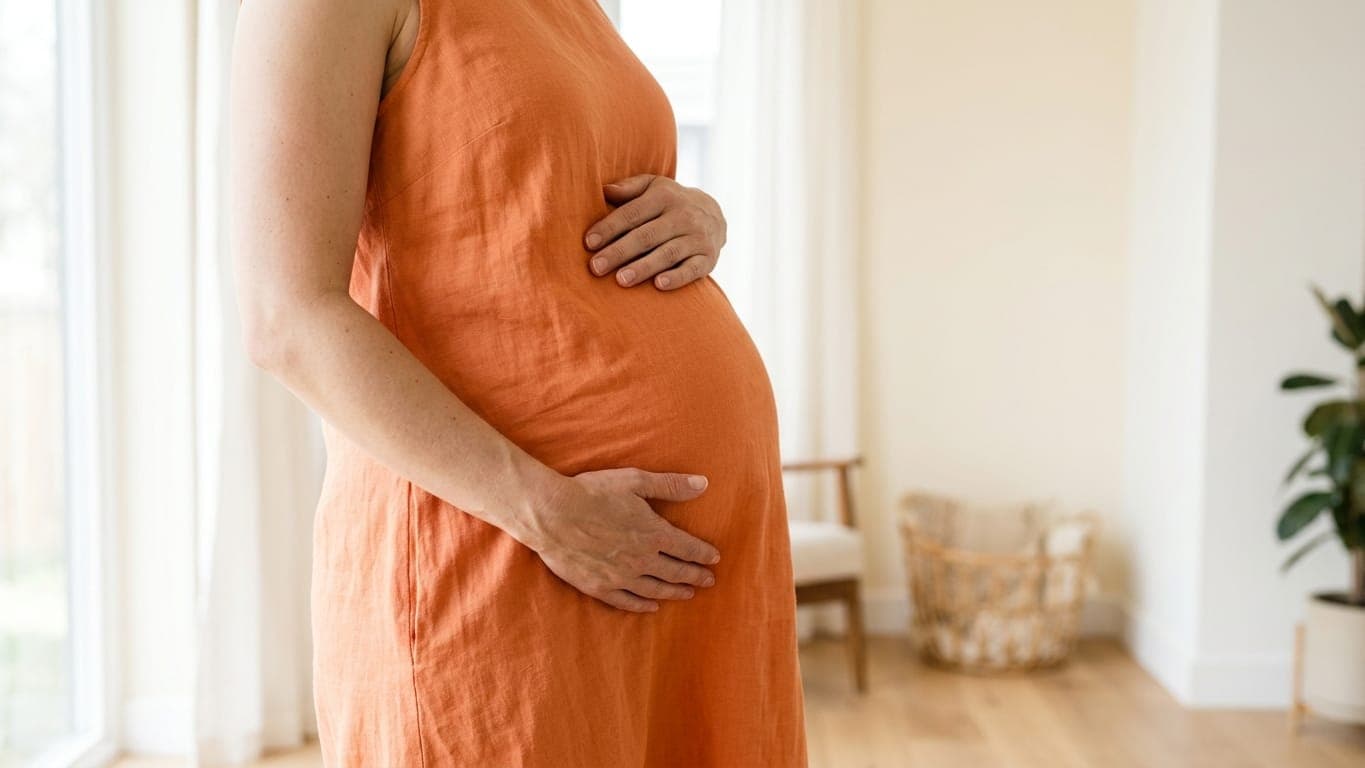
According to the NHS, if pregnancy nausea is mild, start with daily lifestyle adjustments: getting plenty of rest, avoiding triggering foods and odors, eating dry toast or a plain biscuit upon waking, choosing small, frequent low fat meals, and sipping fluids often. There is evidence that ginger and wrist acupressure may help. If these measures do not bring relief, consult your doctor.
When does pregnancy nausea begin?
According to the UK National Health Service (NHS), nausea and vomiting in pregnancy, commonly referred to as morning sickness, is very common during early pregnancy. The NHS notes that about 8 in 10 pregnant women experience nausea, vomiting, or both. The NHS week-by-week guide identifies nausea as one of the hallmark symptoms of the first trimester, which spans from conception through week 12.
The common term is misleading. According to the NHS, nausea can occur at any time of the day or night, and for some women it persists throughout the entire day. The clinical guidance notes that symptoms are often worse immediately after waking up in the morning.
Many expectant mothers wonder when nausea will ease. According to the NHS, symptoms typically improve significantly or resolve completely between weeks 12 and 20 for the majority of women, although for some individuals they may last longer. The NHS reassures expectant parents that standard pregnancy nausea does not pose any health risk to the developing baby.
What causes nausea during pregnancy?
According to the NHS, rapid hormonal surges during the first 12 weeks of pregnancy are likely the primary underlying trigger. You may face a higher likelihood of experiencing noticeable nausea if:
- You are pregnant with twins, triplets, or higher order multiples
- You experienced severe nausea and vomiting during a previous pregnancy
- You have a personal history of motion sickness or car sickness
- You have a clinical history of migraine headaches
- You have a family history of severe pregnancy sickness
- You experienced nausea as a side effect when using estrogen-containing oral contraceptives
- This is your first pregnancy
- Your body mass index (BMI) is 30 or higher
The NHS also reminds pregnant individuals that urinary tract infections can provoke nausea and vomiting, which warrants medical assessment if urinary discomfort is present.
What helps relieve pregnancy nausea?
According to the NHS, there is no single universal remedy that works for every person, because every pregnancy is biologically unique. If your nausea is mild to moderate, the NHS recommends trying the following practical self-care steps first:
- Get plenty of rest. Exhaustion and physical fatigue can noticeably worsen feelings of nausea.
- Steer clear of specific foods and strong aromas that trigger your gag reflex or nausea.
- Eat dry toast or a plain biscuit in bed before getting up. The NHS guidance advises keeping a dry snack right by your bedside table.
- Eat small, frequent meals throughout the day rather than two or three large meals. Focus on plain, high carbohydrate, low fat staples such as bread, rice, crackers, and plain pasta.
- If the smell of hot, freshly cooked food provokes nausea, opt for cold or room-temperature meals instead.
- Drink fluids regularly throughout the day, especially water; taking frequent small sips rather than large gulps helps prevent vomiting.
- Try ginger-based foods and beverages. The NHS notes there is clinical evidence showing that ginger can help reduce nausea and vomiting. Always check with your pharmacist before taking concentrated ginger supplements during pregnancy.
- Try wrist acupressure. There is evidence suggesting that applying gentle pressure to the P6 acupressure point on your inner wrist using a specialized band or your fingers may ease symptoms.
The NHS guide also notes that some pregnant women find relief by sucking on ice cubes. If you cannot keep fluids down at all, do not rely on home remedies alone; contact your midwife or doctor promptly.
Pregnancy tracker
This tracker is not available in yuuvii 2.0.1. You can read articles on this topic here.
Can medication be used for nausea?
According to the NHS, if your nausea and vomiting are severe and lifestyle adjustments do not provide adequate relief, your doctor can prescribe a short course of anti-sickness medication (antiemetics) that has been evaluated as safe for use during pregnancy. Consult your general practitioner or obstetrician to discuss prescription options; they will determine which medication is clinically appropriate for your individual health profile.
What is hyperemesis gravidarum?
In some pregnancies, nausea and vomiting become intensely severe and intractable. The NHS designates this condition hyperemesis gravidarum (HG) and notes it is estimated to affect roughly 1 to 3 in every 100 pregnant women. Hallmark clinical signs include:
- Prolonged, relentless, and severe nausea and vomiting
- Signs of dehydration, including persistent thirst, intense fatigue, dizziness, lightheadedness, infrequent urination, and dark yellow, pungent urine
- Inability to keep food or fluids down for days, accompanied by measurable weight loss
According to the NHS, hyperemesis gravidarum often does not resolve at weeks 16 to 20 like typical morning sickness and frequently requires specialized hospital treatment. Getting early medical assistance helps prevent severe dehydration, electrolyte imbalances, and nutritional deficiencies.
When should you see a doctor?
The NHS recommends contacting your midwife, doctor, or maternity assessment center promptly if you are vomiting and notice any of the following warning signs:
- Your urine is very dark in color or you have not urinated in over 8 hours
- You have been unable to keep any food or fluids down for 24 hours
- You feel extremely weak, dizzy, faint, or lightheaded when standing up
- You experience abdominal pain or cramping
- You develop a high fever
- You vomit blood or material that looks like coffee grounds
- You experience unintended weight loss
The NHS also emphasizes that vomiting can sometimes be a symptom of pre-eclampsia, a serious condition characterized by high blood pressure in pregnancy. Accompanying warning signs include a persistent severe headache, vision disturbances such as blurring or flashing lights, pain just below the ribs, and sudden swelling of your face, hands, or feet. If you notice any of these signs, seek clinical care immediately. Pre-eclampsia occurs most commonly after 20 weeks, but can arise earlier. In an emergency, call 911 in the US, 999 in the UK, or 112 in Europe.
Pregnancy
This tracker is not available in yuuvii 2.0.1. You can read articles on this topic here.
Sources
- NHS: Vomiting and morning sickness
- NHS: Severe vomiting in pregnancy
- NHS Best Start in Life: Week 4
- NHS Best Start in Life: Week 6
- NHS: Pre-eclampsia
Pregnancy tracker
This tracker is not available in yuuvii 2.0.1. You can read articles on this topic here.