
According to the UK National Health Service (NHS), a period typically lasts between 2 and 7 days, most often around 5 days. Bleeding that persists for longer than 7 days is considered a sign of heavy menstrual bleeding, and seeing a doctor is recommended. Possible causes of prolonged bleeding include puberty, the postpartum period, approaching menopause, the first months after receiving a hormonal coil, fibroids, endometriosis, and polycystic ovary syndrome (PCOS).
How many days is considered a prolonged period?
According to the NHS, a period can last between 2 and 7 days, most often around 5 days. Menstrual bleeding is usually heaviest during the first 2 days.
The clinical threshold set by the NHS is 7 days. If your period lasts longer than 7 days, the NHS classifies it as a sign of heavy menstrual bleeding and recommends consulting a doctor. Having heavy periods that continue over several cycles is also a reason to seek medical advice. Logging how many days your period lasts across several months provides clear, objective evidence for your doctor. For typical durations, see how many days does a period last.
Why do periods last so long?
According to the NHS, heavy or prolonged periods can simply be normal for some women. Periods are especially likely to be heavier and longer during specific life stages:
- when periods first begin during puberty
- following pregnancy and childbirth
- when approaching menopause
The NHS notes that prolonged bleeding can also stem from underlying medical conditions:
- conditions affecting the womb or ovaries: PCOS, fibroids, endometriosis, adenomyosis, and pelvic inflammatory disease (PID)
- bleeding disorders that impair clotting, such as Von Willebrand disease
- certain medicines and medical treatments, such as blood thinners and chemotherapy medications
The NHS points out that heavy or prolonged bleeding can rarely be a sign of womb cancer. Because of this, consulting a doctor to investigate the cause is always the safest course of action.
Why periods lengthen: IUS coils and perimenopause
Hormonal coil (IUS). According to the NHS, in the first 3 to 6 months after receiving a hormonal coil (intrauterine system), periods can become longer, irregular, or more frequent, and light spotting between periods may occur. This is expected to improve within a few months. If irregular or heavy bleeding persists for longer than 6 months, speaking with a doctor or nurse is recommended.
Menopause transition. According to the NHS, one of the first signs of perimenopause is often a noticeable change in periods; bleeding can become more or less frequent, and flow can increase or decrease. If you are still having periods and your bleeding is noticeably heavier or longer than before, the NHS suggests consulting a doctor.
Why do periods last long and does it relate to irregularity?
The NHS explains that in an irregular cycle, the interval between periods, the amount of blood lost, and how many days bleeding lasts can all vary considerably from month to month. This variation is common in adolescence and immediately before menopause; switching birth control methods can also disrupt cycle rhythms. We discuss this further in irregular menstrual cycle.
What happens if a period lasts too long?
A prolonged or heavy period does not always require treatment. However, the NHS notes that heavy or prolonged menstrual bleeding is one of the most common causes of iron deficiency anemia. Symptoms of iron deficiency anemia include:
- tiredness and marked lack of energy
- shortness of breath
- noticeable heart palpitations
- pale skin
- persistent headaches
The NHS also lists feeling frequently tired or short of breath as warning signs of heavy periods. A doctor can request routine blood tests to check for underlying anemia. For more on heavy bleeding symptoms and medical treatments, see our guide on how heavy is too heavy.
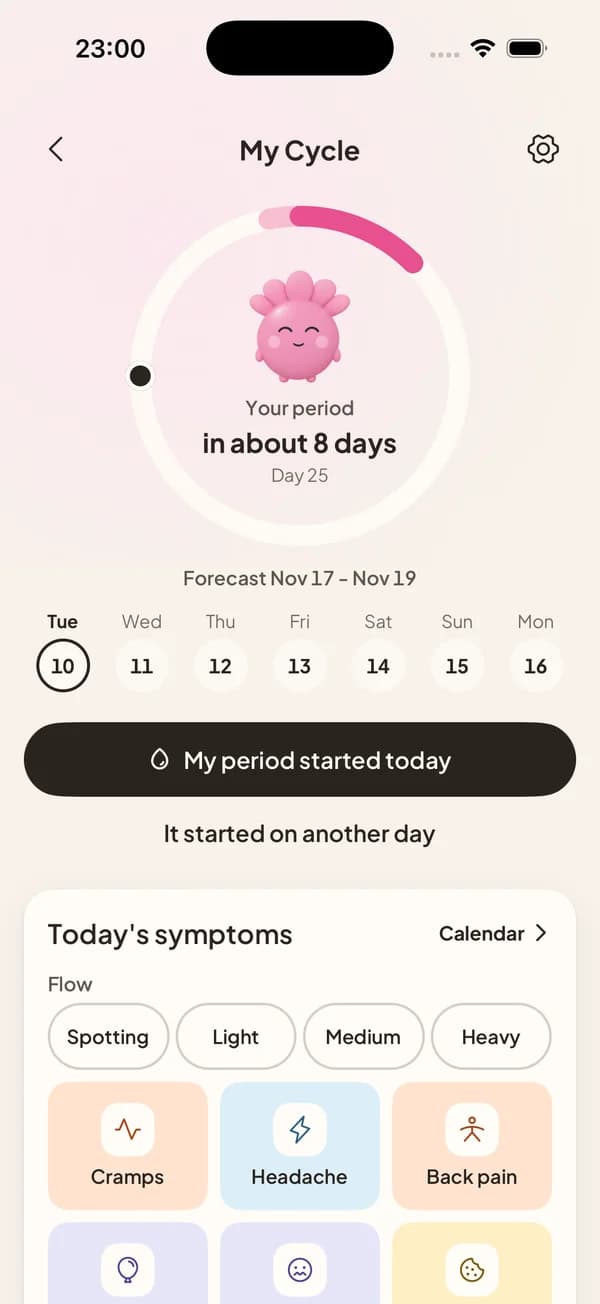
Keep your period calendar in yuuvii
Tap once when your period starts; the next estimate, your symptoms and your mood live in one place. Your entries stay on your phone.
 Coming soonAndroid
 Scan with your phone camera to open the App Store.
When should you see a doctor?
The NHS recommends consulting a doctor if:
- your period lasts longer than 7 days
- heavy bleeding disrupts your daily life or has continued for several cycles
- you experience severe abdominal or pelvic pain during your period
- you experience bleeding between periods or after sexual intercourse
- heavy bleeding is accompanied by pain when urinating, having a bowel movement, or during intercourse
- you suspect you might have iron deficiency anemia
If you are pregnant and experience bleeding accompanied by severe abdominal pain, shoulder tip pain, dizziness, or bleeding heavy enough to soak a pad within a short time, call emergency services immediately (112 in Europe, 999 in the UK, 911 in the US).
Periods
Mark your period, tick symptoms and see when the next one is likely to start.
Your journal, mood, cycle and tracker records, including saved step counts, are stored on your device. When account backup is available and you are signed in, the app also sends an encrypted copy to our servers to restore and merge your records.
The estimate is not for contraception. yuuvii is not a medical device and does not diagnose or treat.
Frequently asked questions
What should I do if my period lasts 10 days?
The NHS recommends seeing a doctor if your bleeding lasts longer than 7 days, so discussing a 10-day period with your physician is strongly advised. If you are pregnant and experiencing heavy bleeding or severe pain, seek emergency medical care immediately.
Are blood clots in periods normal?
The NHS identifies passing blood clots larger than about 2.5 cm (roughly the size of a 10p coin or US quarter) as a sign of heavy bleeding. If you observe clots of this size, inform your doctor.
Can periods be prolonged after childbirth?
Yes. According to the NHS, periods can be heavier and longer following pregnancy. If the heaviness or duration becomes overwhelming, consult your healthcare provider.
Sources
- NHS: Periods
- NHS: Heavy periods
- NHS: Irregular periods
- NHS: Period problems
- NHS: Iron deficiency anaemia
- NHS: Symptoms of menopause and perimenopause
- NHS: IUS side effects and risks
- NHS: Vaginal bleeding in pregnancy
Keep your period calendar in yuuvii
Tap once when your period starts; the next estimate, your symptoms and your mood live in one place. Your entries stay on your phone.
Coming soonAndroidScan with your phone camera to open the App Store.