
To build a new habit, pick a simple action you can do every day. Repeat it at the same time or after the same event each day. According to a paper in the British Journal of General Practice, repetition makes the behavior automatic over time. In a study cited, this took 66 days on average. Missing an occasional day does not derail the process.
What is a habit?
In everyday language, habit means something done often. In psychology, the definition is narrower. According to a 2012 paper by Benjamin Gardner, Phillippa Lally and Jane Wardle, a habit is a behavior prompted automatically by a specific situational cue. A cue is a moment or situation previously paired with the action. Buckling a seatbelt upon getting into a car is one example: getting into the car is the cue, and fastening the belt is the behavior.
How do habits form?
According to the paper, repeating a simple behavior in the same context connects the action to that context through associative learning. Over time, encountering the cue becomes enough to initiate the behavior. At that stage, conscious attention and motivation become less necessary. The paper notes that habits tend to persist even when interest or motivation dips. When frequent actions run automatically, mental energy is freed up for other tasks.
The paper describes the habit journey in three stages:
| Stage | What happens |
|---|---|
| Initiation | You select the new behavior and the context where you will do it. |
| Learning | You repeat the action in that context and the association strengthens. |
| Stability | The habit forms and persists with minimal conscious effort. |
How to build a habit
The paper outlines five key steps:
- Start with a behavior you choose yourself. According to the authors, an action aligned with personal values becomes a habit more easily than one chosen to please someone else.
- Keep it small and simple. The authors recommend manageable changes because early difficulties can discourage effort. Simpler behaviors also become automatic faster. The NHS mental wellbeing site Every Mind Matters suggests setting small, achievable targets and building on them gradually.
- Attach it to an established cue. Pick a regular daily moment, such as "after breakfast" or "when starting lunch." According to the paper, an existing routine provides a reliable starting anchor.
- Repeat it consistently. The authors note that variety may reduce boredom, but it requires conscious effort and works against automaticity. Their example is eating a piece of fruit in the same way with breakfast every morning.
- Mark off your days. The authors suggest that a simple progress chart can support commitment during the learning period. How to set one up is explained in how to use a habit tracker.
According to the paper, achieving small wins can build self-efficacy. Successfully establishing one habit can provide confidence for future routines.
Start something new instead of quitting
According to the paper, it is difficult to form a habit around not doing something. The authors recommend choosing a constructive replacement action rather than trying to suppress an existing behavior. For instance, eating an apple instead of reaching for fried snacks. Breaking an established habit involves distinct and often more demanding strategies than building a fresh routine.
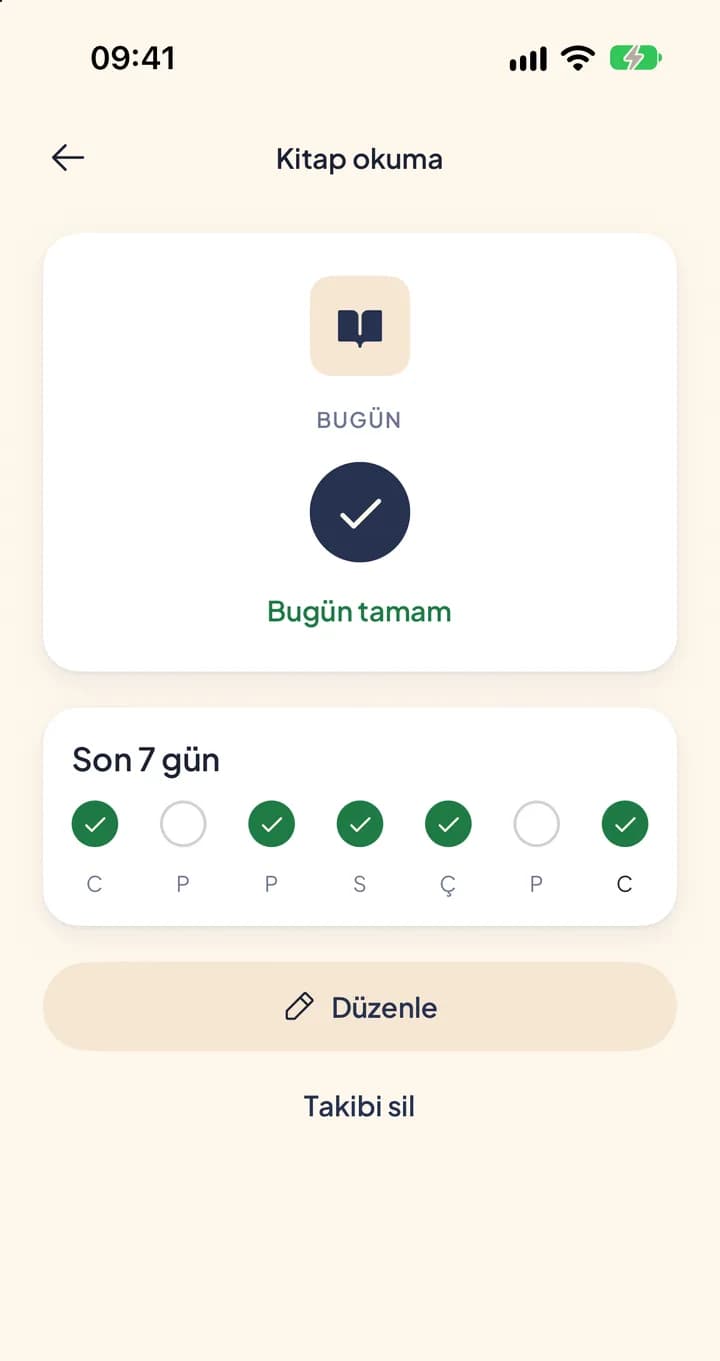
Habit tracker
Name your own habit or daily count, pick an icon and see your week.
 Coming soonAndroid
 Scan with your phone camera to open the App Store.
How long does it take to form a habit?
In the study cited by the paper, participants repeated a healthy action of their choice, such as eating fruit or taking a walk. They did this once a day in response to the same cue, like after breakfast. Automaticity rose rapidly at first, then leveled off at an average of 66 days. Differences among individuals and behaviors were substantial. The authors suggest planning for around 10 weeks of practice.
The common claim that habits take 21 days originates from anecdotal observations about plastic surgery patients adjusting to changes in appearance. The authors emphasize that knowing a behavior becomes progressively easier over time helps people maintain persistence until the habit settles in.
If you miss a day
According to the paper, missing an occasional opportunity did not derail the overall process. Progress resumed quickly after a single missed day. NHS Every Mind Matters also advises against giving up after a pause. Treat a missed day as an opportunity to review what worked, remembering that building new routines takes patience and everyone starts somewhere.
Habits
Name your own habit or daily count, pick an icon and see your week.
Your journal, mood, cycle and tracker records, including saved step counts, are stored on your device. When account backup is available and you are signed in, the app also sends an encrypted copy to our servers to restore and merge your records.
Frequently asked questions
How to change an existing habit?
Breaking an old habit requires different strategies than forming a new one. Research suggests choosing a positive new action to replace the unwanted behavior rather than trying to stop cold turkey.
How to use a habit tracker?
Mark each day you complete your chosen behavior. Research suggests reviewing progress weekly by noting whether you completed it at least five days and rating how automatic it feels. Learn more in how to use a habit tracker.
Sources
- British Journal of General Practice (NIH PMC): Making health habitual, the psychology of habit formation and general practice
- NHS Every Mind Matters: Be active for your mental health
- NHS Every Mind Matters: Staying on top of things
Habit tracker
Name your own habit or daily count, pick an icon and see your week.
Coming soonAndroidScan with your phone camera to open the App Store.