
A menstrual cycle is considered irregular when the time between periods is shorter than 21 days or longer than 35 days. According to the UK National Health Service (NHS), common causes include puberty, approaching menopause, pregnancy, hormonal contraception, significant weight loss or gain, stress and anxiety, and extreme exercise. Irregularity is often not a sign of a serious issue; nevertheless, if your cycle pattern changes, consult a doctor.
What is an irregular period?
The time from the first day of one period to the first day of the next period is called a menstrual cycle. According to the NHS, this averages around 28 days and can be slightly shorter or longer. In most women, periods arrive every 21 to 35 days.
A period is considered irregular when the time between periods is fewer than 21 days or longer than 35 days. Irregularity is most commonly seen during two phases: during the teenage years when periods first begin, and when approaching menopause.
A period itself can last between 2 and 7 days, most often around 5 days. Bleeding is usually heaviest in the first 2 days. For more details on these ranges, see our guide on how many days does a period last.
How to count your menstrual cycle
Noticing irregularity starts with counting your cycle days. As described by the NHS:
- The first day your period bleeding starts is day 1 of your cycle.
- The final day of your cycle is the day before your next period begins.
- If you record these dates across several months, you can see the range within which your cycle fluctuates.
The NHS notes that tracking your period with an app or in a notebook can help you see whether it is irregular. A single short or long month alone does not tell the whole story; once several cycle dates sit side by side, the pattern becomes clear.
What causes irregular periods?
Common causes identified by the NHS include:
- Puberty: the first few years after periods start
- The start of menopause: usually between ages 45 and 55
- Pregnancy: a missed period is often one of the earliest signs of pregnancy
- Hormonal contraception: such as the progestogen-only pill, contraceptive injection, and hormonal intrauterine system (IUS)
- Losing or gaining a lot of weight
- Stress and anxiety
- Extreme exercise
Sometimes an underlying medical condition causes irregularity. The NHS points to examples such as polycystic ovary syndrome (PCOS) and thyroid disorders.
If your period did not arrive when expected, you can first review the steps in why is my period late. If there is a chance of pregnancy and your period has stopped, you could be pregnant; the NHS recommends seeing a doctor if your pregnancy test is negative but you have missed 3 periods in a row.
During puberty and approaching menopause
The two life stages where irregularity is most frequent each follow their own course. According to the NHS, periods usually begin around age 12; some girls start earlier or later, and a later start is usually not a cause for concern. Most girls' periods become regular by the time they reach 16 to 18 years of age.
Periods continue until menopause. Menopause typically occurs between the mid-40s and mid-50s; in the UK, the average age is 51. During this phase, periods do not usually stop suddenly: they become less frequent over several months or years before stopping altogether. Because of this, cycles lengthening or shortening as menopause approaches is common.
Which symptoms should you look out for?
The main sign of irregularity is often the cycle length itself: the period arrives much earlier or later than anticipated. In addition, the NHS recommends speaking to a doctor if:
- your periods are irregular
- your period lasts longer than 7 days
- irregular periods are accompanied by weight gain, fatigue, facial hair growth, or dry or oily skin
- you experience bleeding between periods
- your periods are irregular and you are struggling to get pregnant
The NHS also notes that changes such as periods lasting longer or becoming lighter do not necessarily signal a problem, but they should still be investigated. Bleeding between periods, after sexual intercourse, or after menopause must be checked by a doctor.
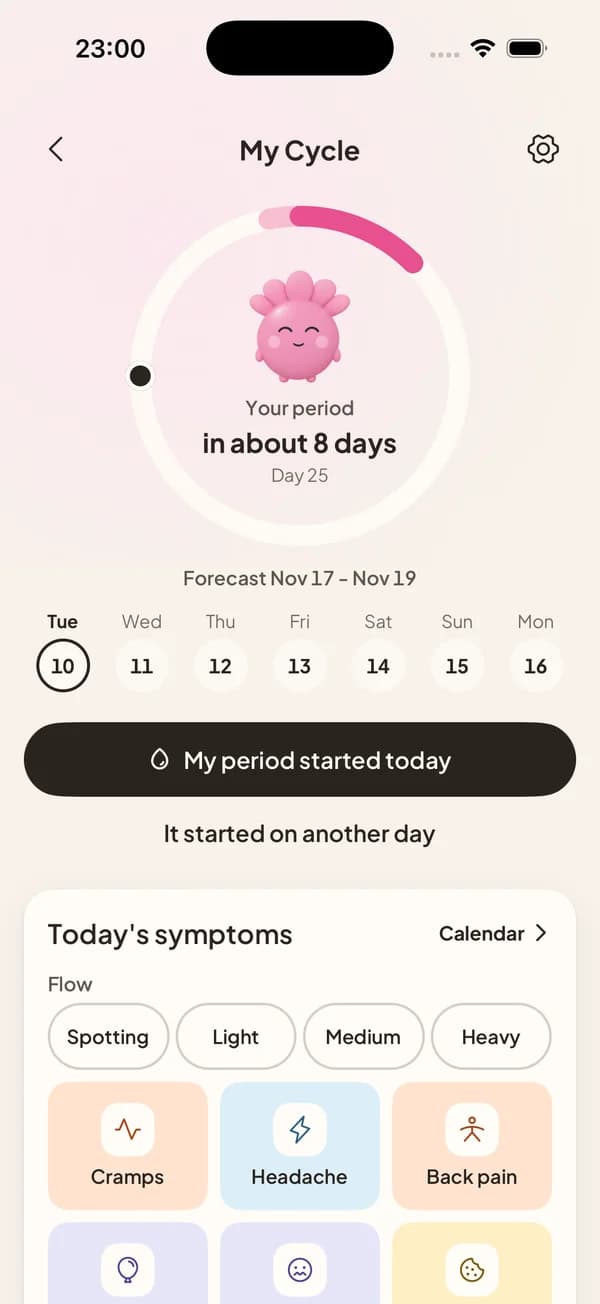
Keep your period calendar in yuuvii
Tap once when your period starts; the next estimate, your symptoms and your mood live in one place. Your entries stay on your phone.
 Coming soonAndroid
 Scan with your phone camera to open the App Store.
What helps with irregular periods?
According to the NHS, irregular periods do not always require treatment. When necessary, treatment depends on the underlying cause and is decided by your doctor:
- Your doctor may refer you to a specialist if further tests are needed to identify the cause.
- If irregularity is caused by PCOS, the combined contraceptive pill may help make periods more regular.
- Other hormonal conditions, such as thyroid disorders, can be treated with targeted medication.
Bringing your recorded dates with you to the clinic makes the assessment much easier: when each period began, how many days it lasted, and how long the cycles were.
See your cycle pattern in your calendar
Mark your period, tick symptoms and see when the next one is likely to start.
Your journal, mood, cycle and tracker records, including saved step counts, are stored on your device. When account backup is available and you are signed in, the app also sends an encrypted copy to our servers to restore and merge your records.
The estimate is not for contraception. yuuvii is not a medical device and does not diagnose or treat.
You can also log symptoms like cramps, headache, bloating, fatigue, mood swings, and breast tenderness day by day. You can export your dated logs into a file from your Account screen to show your doctor. Your records remain private on your device and are never sent to us; no account registration is required.
Frequently asked questions
How many days between periods is normal?
According to the NHS, the average is around 28 days, and anywhere between 21 and 35 days is common. Cycles falling outside this range are considered irregular.
Are irregular periods dangerous?
According to the NHS, irregular periods are usually not a sign of a serious problem. Still, if your periods are irregular or your usual pattern has shifted, speaking with a doctor is recommended.
Are irregular periods normal during puberty?
According to the NHS, irregular cycles are more likely during the first few years after periods start, and most girls develop regular cycles by age 16 to 18.
Can stress cause irregular periods?
Yes. The NHS lists stress and anxiety among the common causes of irregular menstrual cycles.
Sources
Keep your period calendar in yuuvii
Tap once when your period starts; the next estimate, your symptoms and your mood live in one place. Your entries stay on your phone.
Coming soonAndroidScan with your phone camera to open the App Store.