
Set aside a few minutes at the same time each day to log your mood. Name your underlying feelings clearly, note what influenced your state, and record what helped. The US National Institute of Mental Health (NIMH) recommends journaling because tracking triggers and positive responses helps reduce anxiety. The NHS also notes that writing thoughts down helps clear mental clutter.
What is a mood tracker used for?
A mood tracker is a journal where you record how you feel and what accompanied your day through brief daily notes. You can write in a physical notebook or use an app on your phone.
The UK National Health Service (NHS) publishes Every Mind Matters, a dedicated mental wellbeing platform. According to this guidance, putting your thoughts onto paper or into a note taking app helps clear mental clutter. This makes it easier to review concerns one by one rather than feeling overwhelmed.
According to the NHS, when you understand what pulls your mood down, finding effective ways to handle it becomes easier. A mood tracker provides a simple structure to document these triggers day by day.
The NHS mindfulness guidance also emphasizes naming emotions. Many people find it helpful to label their internal feelings, such as saying quietly "this is anxiety." Stepping back from thoughts allows you to start recognizing recurring emotional patterns.
How to use a mood tracker
There is no single correct way to journal. NIMH points out that discovering what works best for you involves gentle trial and error. Here is a practical starting routine compiled from NHS and NIMH recommendations:
- Pick the same time every day. The NHS suggests setting aside 10 to 15 minutes of "worry time" before sleeping to write down racing thoughts and review practical solutions. You can tie your mood journal to a similarly regular daily window.
- Name your mood and specific emotions. According to the NHS, low mood can present as sadness, worry, anger, frustration, or low self-esteem. Instead of simply writing "bad," specify which feelings you are experiencing.
- Note what influenced your day. The NHS lists common low mood factors including workplace pressure, relationship conflicts, financial worries, illness, and bereavement. Note your sleep as well. According to MedlinePlus, poor sleep directly impacts emotional regulation, making irritability more likely.
- Record what helped you feel better. Note positive actions like talking with a close friend, going for a brisk walk, or heading to bed early. NIMH highlights that identifying your personal coping mechanisms is an essential wellness step.
- Close the entry with something positive. One NHS stress management recommendation is writing down three things you are grateful for or that went well at the end of each day. MedlinePlus also advises practicing daily gratitude.
- Review your entries weekly. Over time, patterns emerge showing which emotions correlate with specific days or events. The NHS notes that our thoughts, feelings, and actions are deeply interconnected and continually influence one another.
Example of a daily mood journal entry
An entry does not need to be long. A few lines are sufficient:
| Section | Example |
|---|---|
| Day and time | Tuesday, 10:00 PM |
| Overall mood | Tense |
| Emotions | Anxious, fatigued, slightly disappointed |
| What happened | Meeting ran late, skipped lunch |
| Sleep | Went to bed late last night |
| What helped | Phone call with my brother in the evening |
| Positive highlight | Completed the project report ahead of deadline |
If a negative thought keeps looping, you can apply the NHS "catch it, check it, change it" approach. Write down the thought, then ask yourself:
- What is the realistic probability that the feared outcome will occur?
- Is there solid evidence supporting this interpretation?
- Are there alternative explanations or possible outcomes?
- What would you say to a friend thinking the same thing?
The NHS provides a seven question thought record exercise for this purpose. You will not always be able to reframe a difficult thought, and the NHS emphasizes that there are no right or wrong answers.
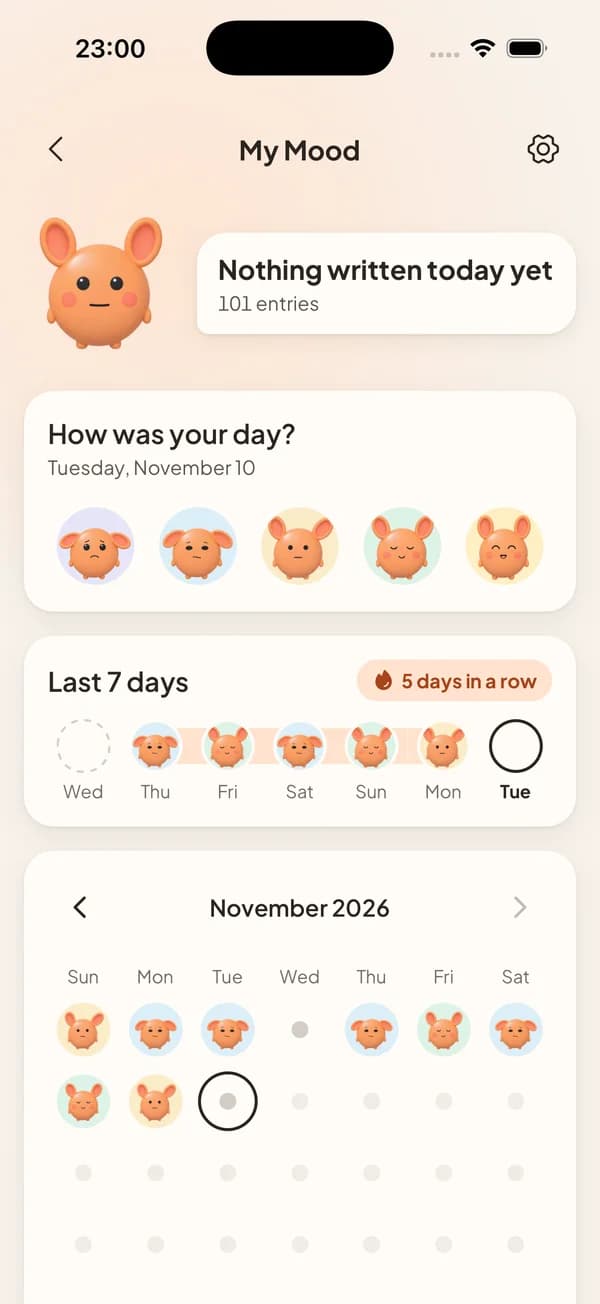
Mood journal
One check-in a day: your mood, the feelings behind it and a note if you want.
 Coming soonAndroid
 Scan with your phone camera to open the App Store.
Mood
One check-in a day: your mood, the feelings behind it and a note if you want.
Your journal, mood, cycle and tracker records, including saved step counts, are stored on your device. When account backup is available and you are signed in, the app also sends an encrypted copy to our servers to restore and merge your records.
When to consult a doctor
Only a qualified medical professional can properly assess mental health. The NHS recommends consulting a doctor under the following circumstances:
- Your mood has been persistently low for more than 2 weeks
- You are struggling to cope with daily life and responsibilities
- Self-care strategies and lifestyle changes are not helping
According to the NHS, a low mood lasting 2 weeks or longer can be a sign of clinical depression.
If you ever feel that life is not worth living, or you have thoughts of self-harm, reach out for immediate help. In emergencies, call your local emergency services such as 911 in the US, 999 in the UK, or 112 in Europe, or contact the 988 Suicide & Crisis Lifeline.
One check-in a day: your mood, the feelings behind it and a note if you want.
Your journal, mood, cycle and tracker records, including saved step counts, are stored on your device. When account backup is available and you are signed in, the app also sends an encrypted copy to our servers to restore and merge your records.
Frequently asked questions
Why does mood change constantly?
Daily mood fluctuations have numerous physiological and environmental causes. The NHS notes that sometimes feelings dip without an obvious external reason. We cover common causes in our guide on anxiety why it happens.
How can you improve low mood?
The NHS notes that low mood often lifts within several days or weeks. Small lifestyle adjustments, resolving an immediate worry, and getting more rest frequently help. We summarized these steps in stress how to reduce.
Sources
- NIMH: I'm So Stressed Out Fact Sheet
- NHS Every Mind Matters: Tackling your worries
- NHS Every Mind Matters: Reframing unhelpful thoughts
- NHS: Mindfulness
- NHS: Low mood, sadness and depression
- NHS: 10 stress busters
- MedlinePlus: How to Improve Mental Health
- NHS Every Mind Matters: Low mood and depression
- NHS: Where to get urgent help for mental health
Mood journal
One check-in a day: your mood, the feelings behind it and a note if you want.
Coming soonAndroidScan with your phone camera to open the App Store.