
According to the NHS, low mood and everyday stress often improve within a few days or weeks. Making small lifestyle adjustments usually helps, such as addressing a specific issue, improving sleep, eating regular meals, staying physically active, and talking through your feelings with someone you trust. If your low mood lasts more than two weeks, consult a doctor.
What causes low mood and stress?
According to the UK National Health Service (NHS), experiencing periods of low mood is a normal human response to challenging events and life transitions. Difficult circumstances frequently trigger sadness, anxiety, or reduced confidence. Common contributors listed by the NHS include:
- Work: excessive workload, job insecurity, or retirement transitions
- Family: relationship friction, separation, divorce, or caregiving responsibilities
- Finances: sudden expenses, debt, or economic uncertainty
- Health: injury, chronic health conditions, or sudden illness
- Loss: bereavement or significant life changes
Even positive milestones like buying a home, having a baby, or planning a wedding can induce temporary stress and emotional exhaustion. The NHS notes that sometimes a low mood emerges without any obvious external cause. The Every Mind Matters service adds that upbringing, childhood environments, life history, and individual temperament also shape our mental resilience.
Recognizing low mood
The NHS states that low mood can make you feel sad, anxious, panicky, angry, frustrated, or lacking in confidence. It frequently leads to persistent fatigue or disturbed sleep. Every Mind Matters notes that a low mood can withdraw you from activities you normally enjoy and cause you to pull back from family and friends.
NHS guidance on managing low mood and stress
The NHS outlines practical dos and don'ts for coping with periods of stress and low mood:
| Recommended actions | Habits to avoid |
|---|---|
| Talk about your feelings with a trusted friend, family member, healthcare professional, or counselor | Trying to fix everything at once; establish small, achievable daily goals |
| Consider peer support where people with similar experiences support one another | Dwelling on things outside your control; focus energy on self-care and small positive steps |
| Engage in regular exercise, which benefits emotional wellbeing and sleep quality | Assuming you are alone; low mood is an experience shared by most people at times |
| Eat balanced meals at regular intervals to maintain steady physical energy | Turning to alcohol, smoking, gambling, or recreational drugs to cope |
| Practice mindfulness techniques that ground your attention in the present moment |
The NHS 5 steps to mental wellbeing follow similar principles: connecting with others, being physically active, learning new skills, giving to others, and paying attention to the present moment.
Practical daily steps to boost wellbeing
Every Mind Matters suggests small, realistic adjustments to support daily recovery:
- List important and enjoyable activities. Low mood makes people avoid them. Choose a couple from your list each day, starting with the easiest tasks.
- Examine your sleep routine. Low mood causes fatigue, and exhaustion further depresses mood. Aim for consistent sleep and wake hours.
- Use music mindfully. Create a playlist for low moments, beginning with gentle tracks and gradually moving toward uplifting melodies.
- Incorporate daily movement. Taking the stairs or stretching your legs during long sitting periods can provide a noticeable mental boost.
- Reach out to someone. Confiding in trusted friends, family, coworkers, or a helpline helps alleviate emotional isolation.
To observe which steps make a difference for you, consider keeping daily notes. We discuss how to start in our guide on how to use a mood tracker.
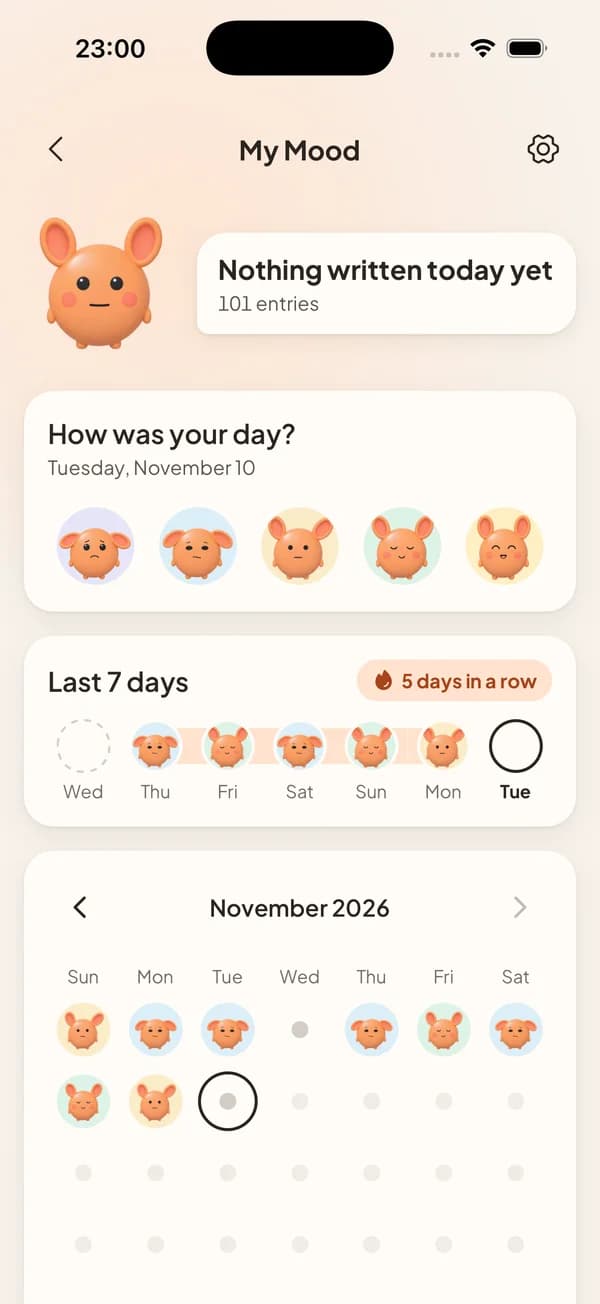
Mood journal
One check-in a day: your mood, the feelings behind it and a note if you want.
 Coming soonAndroid
 Scan with your phone camera to open the App Store.
Mood
One check-in a day: your mood, the feelings behind it and a note if you want.
Your journal, mood, cycle and tracker records, including saved step counts, are stored on your device. When account backup is available and you are signed in, the app also sends an encrypted copy to our servers to restore and merge your records.
When to see a doctor
The NHS notes that medical advice is important if low mood persists and lifestyle adjustments are insufficient. Consult a healthcare provider if:
- Your mood has been consistently low for more than 2 weeks
- You find it difficult to manage daily tasks and personal responsibilities
- Your self-care efforts have not brought relief
A low mood lasting 2 weeks or longer may indicate depression. Other common signs include loss of pleasure in daily life, feelings of hopelessness, and difficulty concentrating. Every Mind Matters also highlights that certain physical health conditions and medication side effects can cause depressive symptoms, making a medical review important.
If you experience thoughts of self-harm or feel unable to keep yourself safe, seek immediate assistance. In an emergency, call 911 in the US, 999 in the UK, 112 in Europe, or call or text the 988 Suicide & Crisis Lifeline.
One check-in a day: your mood, the feelings behind it and a note if you want.
Your journal, mood, cycle and tracker records, including saved step counts, are stored on your device. When account backup is available and you are signed in, the app also sends an encrypted copy to our servers to restore and merge your records.
Frequently asked questions
What causes persistent nervous tension?
The NHS points to overlapping pressures in work, finances, relationships, and physical health. Stress often stems from feeling that situations are beyond our control. Sometimes, persistent tension develops without an obvious single trigger.
Why does mood fluctuate from day to day?
Daily mood changes arise from hormonal shifts, sleep quality, workload, and psychological factors. We outline common causes and self-care tips in our guide on anxiety why it happens.
Sources
- NHS: Low mood, sadness and depression
- NHS Every Mind Matters: Low mood and depression
- NHS: 5 steps to mental wellbeing
- NHS: Stress
- NHS: Where to get urgent help for mental health
Mood journal
One check-in a day: your mood, the feelings behind it and a note if you want.
Coming soonAndroidScan with your phone camera to open the App Store.