
A menstrual cycle can naturally shorten or lengthen slightly from month to month, making fluctuations of a few days very common. The UK National Health Service (NHS) classifies a cycle as irregular when the interval between periods exceeds 35 days. Common reasons for delayed bleeding include pregnancy, emotional stress, sudden weight loss, extreme physical training, and certain hormonal birth control methods. If you have missed three periods in a row, consult a doctor.
How many days late is a period considered normal?
There is no single fixed number of days that applies to everyone, because the answer depends directly on your personal cycle length. According to the NHS, the time between periods averages around 28 days and can naturally be slightly shorter or longer. Periods commonly arrive every 21 to 35 days.
The NHS considers any cycle where the interval between periods is shorter than 21 days or longer than 35 days to be irregular. This means that if your cycle usually lasts 28 days and your period arrives a few days late this month, it is an expected variation that many women experience from time to time. However, if a period arrives more than 35 days after the previous start date, that cycle falls into the irregular range.
In the words of the NHS, a late or missed period is often not a reason for medical concern, though speaking with a doctor is always sensible if patterns shift. Knowing your own average cycle is the most dependable way to evaluate delays. We explain how to calculate your average in how to use a period tracker.
Why is my period late?
The NHS lists several common causes for late or missed periods:
- pregnancy
- emotional stress
- perimenopause, typically occurring between ages 45 and 55
- polycystic ovary syndrome (PCOS)
- sudden weight loss
- being overweight
- excessive physical exercise
- hormonal contraception, such as birth control pills, injections, or an intrauterine system
- breastfeeding
Sometimes the time between periods changes continually, causing bleeding to arrive early some months and late others. This is termed an irregular cycle; we explore this in detail in irregular menstrual cycle. The NHS also notes that underlying medical conditions like heart disease, diabetes, or an overactive or underactive thyroid gland can cause periods to stop.
During puberty and approaching menopause
Menstrual cycles do not follow the exact same rhythm at every life stage. According to the NHS, cycle irregularity is significantly more likely during the early teenage years when periods first start, and when approaching menopause.
- The early years. Periods typically begin around age 12, though they can start earlier or later. The NHS notes that most girls establish regular periods between ages 16 and 18. Cycle delays are very common during these developmental years.
- In your 40s. The menopausal transition (perimenopause) typically begins between ages 45 and 55, and the NHS identifies this as a frequent cause of delayed periods.
The NHS also recommends consulting a doctor if you reach age 15 and your periods have not yet started.
If there is a chance of pregnancy
According to the NHS, if you missed a period and recently had unprotected sexual intercourse, you could be pregnant. In this situation, taking a pregnancy test is the recommended first step:
- Most home pregnancy tests can be taken from the first day your period is late, which is the day after it was expected, and provide their most reliable results from that day onwards.
- If you do not know when your period was due, take the test at least 21 days after unprotected sex.
- Test kits are available at pharmacies and supermarkets and can be performed with urine collected at any time of day.
- A positive result is almost certainly accurate. A negative result is less conclusive: it can be inaccurate if taken too early or if package directions were not followed.
- If your test is negative but you still suspect pregnancy, wait a few days and test again. If the second test is also negative and bleeding does not arrive, consult a doctor.
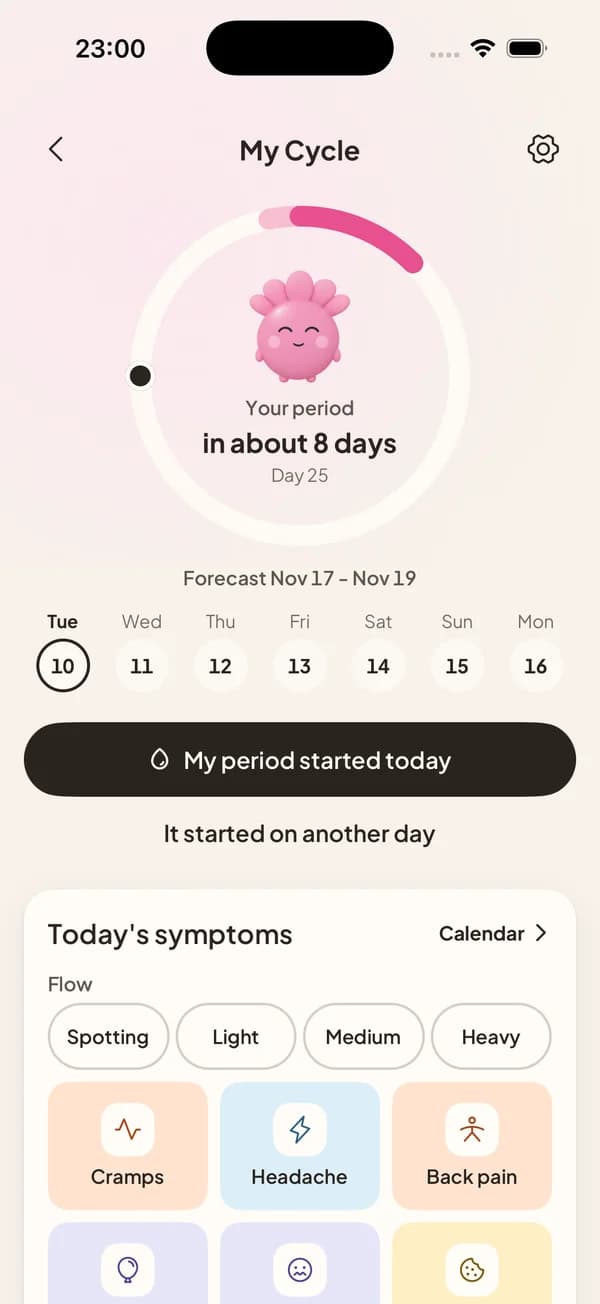
Keep your period calendar in yuuvii
Tap once when your period starts; the next estimate, your symptoms and your mood live in one place. Your entries stay on your phone.
 Coming soonAndroid
 Scan with your phone camera to open the App Store.
When should you see a doctor?
The NHS recommends consulting a doctor if:
- you have missed three consecutive periods
- you have reached age 15 and your periods have not yet started
- you missed a period and have other symptoms like weight changes, fatigue, facial hair growth, or dry or oily skin
- your menstrual cycle has become irregular
Medical treatment depends on the underlying cause. According to the NHS, a doctor will review your general health, may arrange blood tests to find the cause, and can refer you to a specialist gynecologist or endocrinologist if needed. They can also offer guidance on managing stress and maintaining a healthy weight.
Seeing cycle delays in your calendar
Mark your period, tick symptoms and see when the next one is likely to start.
Your journal, mood, cycle and tracker records, including saved step counts, are stored on your device. When account backup is available and you are signed in, the app also sends an encrypted copy to our servers to restore and merge your records.
The estimate is not for contraception. yuuvii is not a medical device and does not diagnose or treat.
Frequently asked questions
Can a period be 10 days late?
For someone whose cycle typically lasts 28 days, a 10-day delay pushes the interval to 38 days; the NHS classifies any cycle over 35 days as irregular. If there is a possibility of pregnancy, take a pregnancy test first. If you miss three consecutive periods or your cycle pattern has shifted, see a doctor.
Can stress delay your period?
Yes. The NHS explicitly lists emotional stress among common reasons for late or missed periods.
Can birth control pills delay your period?
The NHS lists hormonal contraceptive methods, including birth control pills, contraceptive injections, and intrauterine systems, among the common causes of delayed or missed periods. Consult your doctor with questions regarding your specific method.
Sources
Keep your period calendar in yuuvii
Tap once when your period starts; the next estimate, your symptoms and your mood live in one place. Your entries stay on your phone.
Coming soonAndroidScan with your phone camera to open the App Store.