
Cramps, bloating, breast tenderness, and mood changes are well-known premenstrual symptoms (PMS) occurring in the weeks before menstruation. Notably, breast tenderness, fatigue, and emotional shifts also occur in early pregnancy. According to the UK National Health Service (NHS), common causes of delayed or missed periods include pregnancy, stress, sudden weight loss, and extreme exercise. If you have had unprotected sex, take a pregnancy test. If you miss three consecutive periods, see a doctor.
Period symptoms but no period: why does this happen?
The physical and emotional changes taking place before menstruation are called premenstrual syndrome, or PMS. According to the NHS, these symptoms emerge in the weeks leading up to your period and vary from person to person and from cycle to cycle. Common symptoms identified by the NHS include:
- mood swings, irritability, or feeling low
- anxiety or feeling unusually emotional
- fatigue or sleep difficulties
- bloating or abdominal cramps
- breast tenderness
- headaches
- acne flare-ups and greasy hair
- changes in appetite or specific food cravings
Experiencing these sensations does not guarantee that your bleeding will arrive on the exact calendar day you anticipated. Your period might simply be delayed this month. According to the NHS, a late or missed period is common and often not a reason for medical concern. Still, to understand why bleeding is delayed, the possibility of pregnancy should be evaluated first. We explore pre-period changes further in symptoms before period.
Period symptoms and a late period: could it be pregnancy?
Yes, it could. The NHS lists pregnancy as one of the most common reasons for a delayed period, noting that a missed period is often the earliest sign of pregnancy.
The difficulty lies in how much the symptoms overlap. The NHS lists early pregnancy signs including:
- a missed period
- very light bleeding or spotting around the time your period was due (implantation bleeding)
- nausea or vomiting at any time of day
- profound tiredness, even after routine daily tasks
- sore, swollen, and tender breasts; the NHS notes this can feel identical to pre-period breast changes
- urinating more frequently than usual
- unexpected mood shifts
According to the NHS, these early signs typically begin around weeks 4 to 6 of pregnancy, and not everyone experiences all of them. This means you cannot distinguish PMS from early pregnancy based solely on physical sensations. A pregnancy test is the only reliable way to know.
Most home pregnancy tests can be carried out from the first day of a missed period. If you are unsure when your period was due, take the test at least 21 days after unprotected intercourse. We explain testing timelines and how to interpret results in when to test for pregnancy.
Period symptoms but late: what else could it be?
Periods can be delayed for several reasons unrelated to pregnancy. Common causes outlined by the NHS include:
- emotional stress and anxiety
- perimenopause, typically occurring between ages 45 and 55
- polycystic ovary syndrome (PCOS)
- sudden weight loss or excess weight
- extreme physical training or overexercising
- certain hormonal contraceptives like the pill, injection, or intrauterine system
- breastfeeding
The NHS also notes that underlying medical conditions such as heart disease, diabetes, or an overactive or underactive thyroid gland can cause periods to stop.
If your periods sometimes arrive early and sometimes late, you may have an irregular cycle. The NHS classifies any cycle with fewer than 21 days or more than 35 days between periods as irregular, listing stress and anxiety among frequent triggers. For a broad overview of delayed bleeding, see our guide on why is my period late.
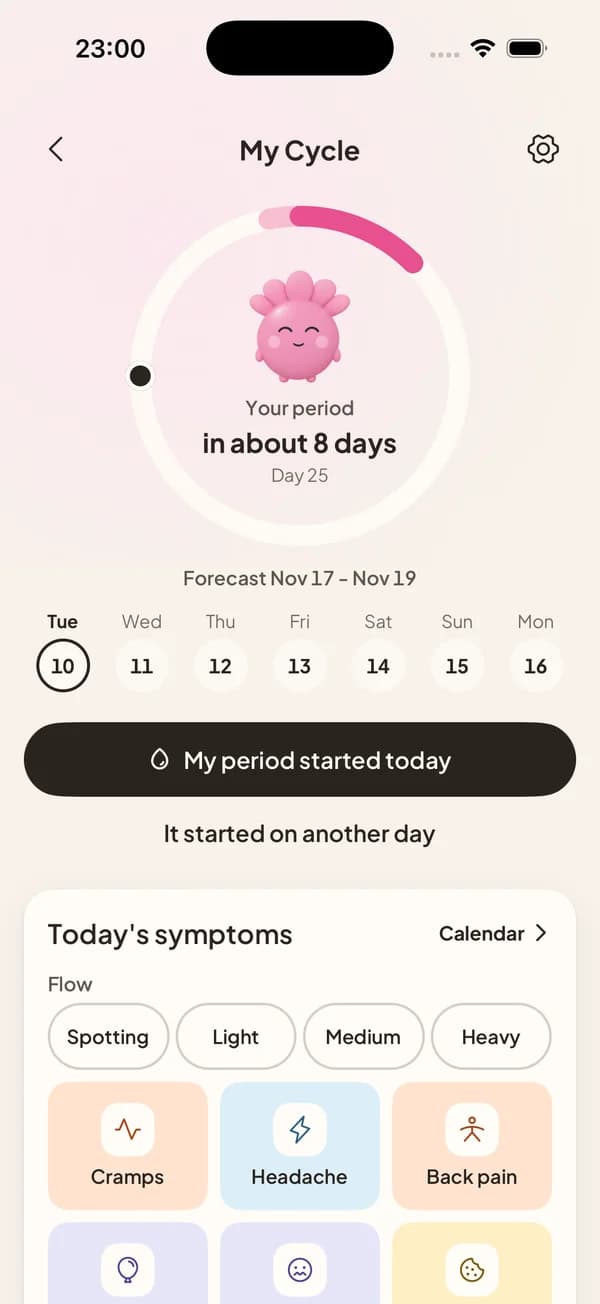
Keep your period calendar in yuuvii
Tap once when your period starts; the next estimate, your symptoms and your mood live in one place. Your entries stay on your phone.
 Coming soonAndroid
 Scan with your phone camera to open the App Store.
When should you see a doctor?
The NHS recommends consulting a doctor if:
- you have missed three consecutive periods
- you have reached age 15 and your periods have not yet started
- you missed a period and have other symptoms like weight changes, fatigue, facial hair growth, or dry or oily skin
- your menstrual cycle has become irregular
- your pregnancy test was negative twice and your period still has not arrived
If you suspect you might be pregnant and experience vaginal bleeding, severe abdominal pain, or pelvic cramping, seek medical evaluation promptly. If PMS symptoms disrupt your daily routine or fail to improve with lifestyle modifications, discuss them with your doctor. In an emergency, call 112 in Europe, 999 in the UK, or 911 in the US.
Periods
Mark your period, tick symptoms and see when the next one is likely to start.
Your journal, mood, cycle and tracker records, including saved step counts, are stored on your device. When account backup is available and you are signed in, the app also sends an encrypted copy to our servers to restore and merge your records.
The estimate is not for contraception. yuuvii is not a medical device and does not diagnose or treat.
Frequently asked questions
Is it normal to have period symptoms without bleeding?
According to the NHS, delayed or missed periods are common and often not a sign of a serious issue. If there is any chance of pregnancy, take a pregnancy test first. If you miss three consecutive periods, consult a doctor.
Can stress delay your period?
Yes. The NHS lists stress among the common reasons why a period may be late or missed entirely. Premenstrual symptoms themselves are associated with changing hormone levels across the cycle, though the precise mechanism is still being investigated.
What should I do if my test is negative but my period is still missing?
According to the NHS, a negative test result is less reliable than a positive result, especially if the test was taken too early. Wait several days and repeat the test. If the second test is also negative and bleeding does not arrive, schedule a visit with your doctor.
Sources
- NHS: Missed or late periods
- NHS: PMS (premenstrual syndrome)
- NHS: Signs and symptoms of pregnancy
- NHS: Doing a pregnancy test
- NHS: Irregular periods
Keep your period calendar in yuuvii
Tap once when your period starts; the next estimate, your symptoms and your mood live in one place. Your entries stay on your phone.
Coming soonAndroidScan with your phone camera to open the App Store.