According to the UK National Health Service (NHS), your period may be considered heavy if you need to change your pad or tampon every 1 to 2 hours, if you need to use two sanitary products together, if bleeding lasts longer than 7 days, or if you pass blood clots larger than 2.5 cm (about the size of a 10p coin or US quarter). While heavy bleeding can be normal for some women, if it interferes with your daily life, consult a doctor; effective medical treatments are available.
How to tell if your period is heavy
According to the NHS, an average period involves losing approximately 20 to 90 ml (about 1 to 5 tablespoons) of blood, though some women bleed more heavily. Bleeding is typically heaviest during the first 2 days, and a period can last between 2 and 7 days.
According to the NHS, you may have heavy periods if:
- you need to change your pad or tampon every 1 to 2 hours, or empty your menstrual cup more often than recommended
- you have to use two sanitary products simultaneously (such as a tampon plus a pad)
- your period bleeding lasts longer than 7 days
- you pass blood clots that are larger than about 2.5 cm
- menstrual bleeding leaks through onto your clothing or bedsheets
- you avoid daily activities like exercise or take time off work because of your bleeding
- you frequently feel unusually tired or short of breath
To understand typical bleeding durations, see our guide on how many days does a period last.
What causes heavy menstrual bleeding?
According to the NHS, heavy periods can simply be normal for you. Menstrual flow is often heavier when periods first begin, after pregnancy, and as you approach menopause.
Sometimes heavy bleeding is caused by an underlying health condition:
- conditions affecting the womb or ovaries: polycystic ovary syndrome (PCOS), fibroids, endometriosis, adenomyosis, and pelvic inflammatory disease (PID)
- bleeding disorders that impair clotting, such as Von Willebrand disease
- certain medicines and medical treatments, including blood-thinning anticoagulants and chemotherapy drugs
The NHS notes that heavy bleeding can, in rare cases, be a warning sign of womb cancer. Fibroids are non-cancerous growths that are very common and do not always produce symptoms; when symptoms do occur, heavy or painful periods are among the most frequent.
Prolonged periods are discussed in detail in why am i so tired on my period.
Can heavy periods cause fatigue?
Yes, they can. The NHS points out that heavy periods are one of the most common causes of iron deficiency anemia. When your iron stores drop, symptoms include severe tiredness and lack of energy, shortness of breath, heart palpitations, noticeably pale skin, and persistent headaches. If you suspect you might have iron deficiency anemia, the NHS recommends seeing a doctor, who will typically check your levels with a routine full blood count test.
What medical options can a doctor provide?
According to the NHS, heavy periods do not always require medical treatment, but if your symptoms interfere with your daily life, effective treatments exist. When describing your flow to a doctor, explain how often you need to replace your pads, tampons, period underwear, or menstrual cup. Your doctor may carry out a physical examination, request blood tests, or arrange an ultrasound scan to determine the cause.
Options outlined by the NHS include hormonal contraceptives like the hormonal coil (IUS) or combined contraceptive pill, medicines that reduce bleeding, and prescription pain relief. If initial treatments do not help or if an underlying condition is suspected, your doctor can refer you for further clinical tests or specialist gynecological care. You and your doctor determine the best approach together.
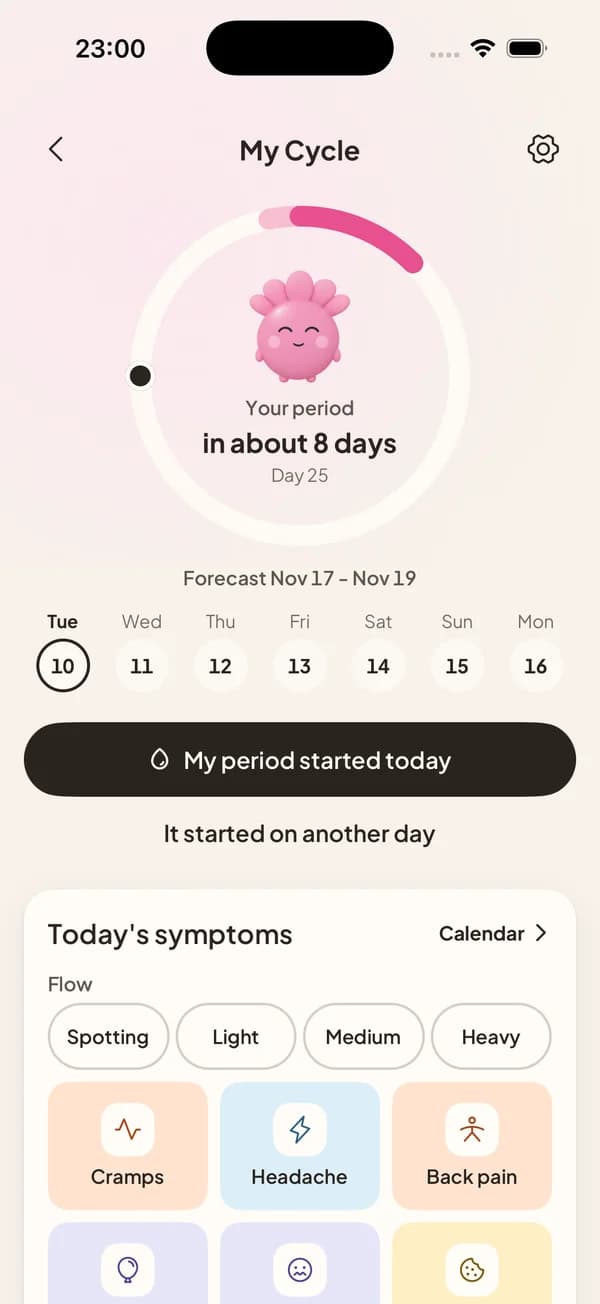
Keep your period calendar in yuuvii
Tap once when your period starts; the next estimate, your symptoms and your mood live in one place. Your entries stay on your phone.
 Coming soonAndroid
 Scan with your phone camera to open the App Store.
When should you see a doctor?
The NHS recommends consulting a doctor if:
- heavy periods are disrupting your quality of life
- you have had heavy periods for several cycles
- you experience severe abdominal or pelvic pain during your period
- you experience bleeding between periods or after sexual intercourse
- heavy bleeding is accompanied by pain when urinating, having a bowel movement, or during intercourse
The NHS also advises consulting a doctor if you are approaching menopause and your bleeding is noticeably heavier than before, or if you experience any vaginal bleeding after going 12 consecutive months without a period.
If you are pregnant and experience bleeding heavy enough to soak a pad within a short time, severe abdominal or shoulder tip pain, or feeling faint, call emergency services immediately (112 in Europe, 999 in the UK, 911 in the US).
Whether or not you are pregnant, get urgent medical help if you are soaking through pads or tampons every hour for several hours, or if heavy bleeding comes with dizziness, feeling faint, shortness of breath or chest pain: call 112 in Europe, 999 in the UK or 911 in the US.
Periods
Mark your period, tick symptoms and see when the next one is likely to start.
Your journal, mood, cycle and tracker records, including saved step counts, are stored on your device. When account backup is available and you are signed in, the app also sends an encrypted copy to our servers to restore and merge your records.
The estimate is not for contraception. yuuvii is not a medical device and does not diagnose or treat.
Frequently asked questions
Is a heavy period normal?
According to the NHS, many women experience heavy periods and it may simply be normal for your body. However, if your bleeding interferes with your day-to-day routine, medical treatments can help reduce your flow.
When are blood clots concerning?
The NHS lists blood clots larger than about 2.5 cm (roughly the size of a coin) as a sign of heavy bleeding. If you pass clots of this size, mention this directly to your doctor.
Which doctor should you see for heavy periods?
Start by seeing your general practitioner or primary care doctor. If lifestyle adjustments or first-line medical treatments do not help, your doctor can refer you to a specialist gynecologist for further investigation.
Sources
- NHS: Heavy periods
- NHS: Periods
- NHS: Period problems
- NHS: Iron deficiency anaemia
- NHS: Fibroids
- NHS: Symptoms of menopause and perimenopause
- NHS: Vaginal bleeding in pregnancy
Keep your period calendar in yuuvii
Tap once when your period starts; the next estimate, your symptoms and your mood live in one place. Your entries stay on your phone.
Coming soonAndroidScan with your phone camera to open the App Store.