
According to the NHS, most people experience temporary stress, low mood, or anxiety at times. Common factors affecting emotional balance include psychological stress, insufficient sleep, premenstrual hormonal shifts, perimenopause, and major life changes. Thoughts, feelings, and actions also reinforce each other. If emotional shifts interfere with daily functioning, speak with a doctor.
Why do mood swings and anxiety occur?
According to Every Mind Matters from the UK National Health Service (NHS), how we think, feel, and behave are intimately linked. A thought influences an emotion, which in turn influences behavior.
The NHS illustrates this with a common example: you think "nobody wants to spend time with me." This thought generates sadness, anxiety, or rejection. Consequently, you stop replying to friends' messages. As social isolation grows, the initial thought feels increasingly true. The NHS describes this pattern as a vicious cycle.
In addition to cognitive feedback loops, physical and environmental factors directly impact emotional regulation.
Common reasons for fluctuating mood
| Cause | Evidence and medical context |
|---|---|
| Stress | According to the NHS, stress can cause irritability, sleep disruption, and appetite changes. It frequently arises from feeling a loss of personal control. |
| Inadequate sleep | MedlinePlus reports that poor sleep directly harms emotional stability. Sleep deprived individuals experience quicker irritation and heightened emotional reactivity. |
| Fatigue | Every Mind Matters notes that low mood drains physical energy, and persistent exhaustion further pulls down mood. |
| Premenstrual shifts | The NHS lists mood swings, irritability, and anxiety among the most frequent signs of premenstrual syndrome (PMS). |
| Perimenopause transition | The NHS states that hormonal transitions during perimenopause and menopause can cause sudden mood changes, aggravated by poor sleep and night sweats. |
| Pregnancy | The NHS recognizes pregnancy as a demanding transition that can significantly affect mental health. |
| Life events | The NHS cites career changes, relationship strain, bereavement, and financial challenges as key mood triggers. |
| Caffeine and alcohol | The National Institute of Mental Health (NIMH) advises monitoring caffeine and alcohol intake, as both can worsen anxiety and disrupt sleep. |
Premenstrual mood fluctuations
According to the NHS, premenstrual syndrome (PMS) frequently involves mood swings, heightened irritability, anxiety, and tearfulness in the days leading up to menstruation. Fatigue and insomnia can accompany these emotional shifts. Symptoms vary from person to person and across cycles. While the precise cause of PMS is not fully understood, it is linked to changing hormone levels during the menstrual cycle.
In a smaller subset of women, premenstrual emotional symptoms are severe and significantly disrupt daily functioning. The NHS refers to this condition as premenstrual dysphoric disorder (PMDD).
Sudden mood changes and stress
The NHS points out that people do not always realize that irritability or sudden emotional reactions are driven by underlying stress. High cumulative pressure can overwhelm usual emotional coping strategies. Identifying what is triggering your stress makes it easier to implement practical management techniques. Viewing your mood alongside sleep, workload, and cycle days helps reveal these links.
Mood
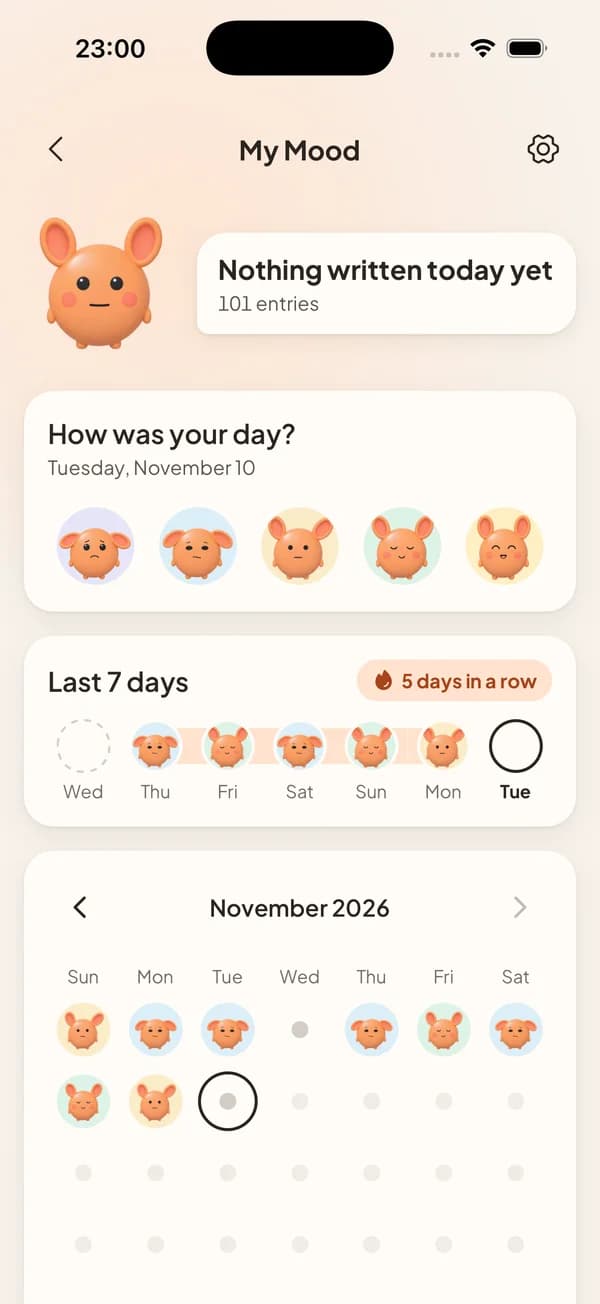
One check-in a day: your mood, the feelings behind it and a note if you want.
Your journal, mood, cycle and tracker records, including saved step counts, are stored on your device. When account backup is available and you are signed in, the app also sends an encrypted copy to our servers to restore and merge your records.
Mood journal
One check-in a day: your mood, the feelings behind it and a note if you want.
 Coming soonAndroid
 Scan with your phone camera to open the App Store.
When to see a doctor
The NHS recommends consulting a healthcare professional if:
- Your mood has been consistently low for more than 2 weeks
- You are struggling to cope with anxiety, low mood, or stress
- Self-help strategies and lifestyle modifications have not helped
- Premenstrual symptoms disrupt your daily activities or personal relationships
- You suspect perimenopause or menopause and want to discuss care options
The NHS advises tracking symptoms across at least two cycles to share with your physician. We explain how to keep records in our guide on how to use a mood tracker.
If you experience thoughts of self-harm or feel that life is not worth living, seek immediate emergency help. In the US call 911 or call or text 988; in the UK call 999 or 111; in Europe call 112.
One check-in a day: your mood, the feelings behind it and a note if you want.
Your journal, mood, cycle and tracker records, including saved step counts, are stored on your device. When account backup is available and you are signed in, the app also sends an encrypted copy to our servers to restore and merge your records.
Frequently asked questions
How can you improve low mood?
The NHS notes that low mood often resolves within a few days or weeks with small lifestyle adjustments, adequate sleep, and gentle activity. We cover these methods in stress how to reduce.
How does pregnancy affect mood?
Pregnancy involves significant physiological changes and emotional adjustments. The NHS advises discussing any mood concerns openly with your midwife or doctor during routine antenatal visits.
Sources
- NHS Every Mind Matters: Self-help CBT techniques
- NHS Every Mind Matters: Reframing unhelpful thoughts
- NHS: Stress
- NHS: Anger
- MedlinePlus: How to Improve Mental Health
- NHS Every Mind Matters: Low mood and depression
- NHS: PMS (premenstrual syndrome)
- NHS: Symptoms of menopause and perimenopause
- NHS: Mental health in pregnancy
- NHS: Low mood, sadness and depression
- NIMH: Caring for Your Mental Health
- NHS: Where to get urgent help for mental health
Mood journal
One check-in a day: your mood, the feelings behind it and a note if you want.
Coming soonAndroidScan with your phone camera to open the App Store.