
Habit tracking means marking each day you complete a single behavior you want to form. A paper in the British Journal of General Practice recommends a daily tracking chart when building a new habit. At the end of each week, rate how automatic the behavior feels on a scale from 1 to 10. Missing an occasional day does not derail your progress.
What is habit tracking?
In everyday speech, a habit means something we do frequently. In psychology, the meaning is more specific. A 2012 study by Benjamin Gardner, Phillippa Lally and Jane Wardle defines a habit as a behavior prompted automatically by situational cues. Washing hands after using the restroom or fastening a seatbelt when entering a car are common examples.
According to the authors, repeating a simple action in the same context links the behavior to that context over time. A habit tracker makes this repetition visible. During the learning stage, maintaining a simple record of completed days helps sustain focus.
How to use a habit tracker
A patient guide developed from the research outlines these steps:
- Choose a meaningful health goal, such as eating more vegetables each day.
- Select a simple, practical action that moves you toward that goal.
- Plan when and where to do it. Pick a consistent time and place you encounter every day.
- Each time you face that moment, complete the action and record it on your tracker.
- At the end of each week, rate how automatic the action feels on a scale from 1 to 10.
An example plan from the paper: "After eating lunch at home, I will eat a piece of fruit." The cue can be an established event or a specific time, such as arriving at work or finishing breakfast. Linking an action to an existing routine provides a reliable foundation.
How to structure a habit tracking chart
The research suggests a ten-week chart. For each week, include seven daily check-ins and two evaluation questions. You can set this up in a notebook, planner or spreadsheet:
| Section | What to record |
|---|---|
| Week | Week 1 through Week 10 |
| Days | Monday through Sunday, marking each day completed |
| Completed 5 or more days? | Yes or No |
| How automatic does it feel? | Rating from 1 (not at all) to 10 (completely) |
According to the paper, the weekly rating helps you see how automaticity grows over time. Whether you use paper or an app, consistency in where you log each day is what matters.
Tips to sustain your tracking
- Start small. The paper advises focusing on small, manageable adjustments to prevent frustration. In one study, adopting a simple action like drinking water formed faster than doing 50 sit-ups.
- Keep expectations realistic. The NHS mental wellbeing site Every Mind Matters notes that overly demanding targets can cause burnout. Setting accessible goals and celebrating incremental milestones helps sustain motivation.
- Keep going after a missed day. Research shows that occasionally missing an opportunity does not disrupt the long-term habit formation process. Progress resumes quickly once you pick the routine back up.
- Track positive additions rather than omissions. Habits form around constructive actions. Choose a healthy replacement behavior, such as eating an apple rather than dwelling on eliminating snacks.
- Repeat the action in the same context. Consistency in your environment strengthens associative learning, whereas varying circumstances requires ongoing mental effort.
- Review your progress periodically. Every Mind Matters suggests reflecting every few weeks on your wellbeing routines to observe what is working well.
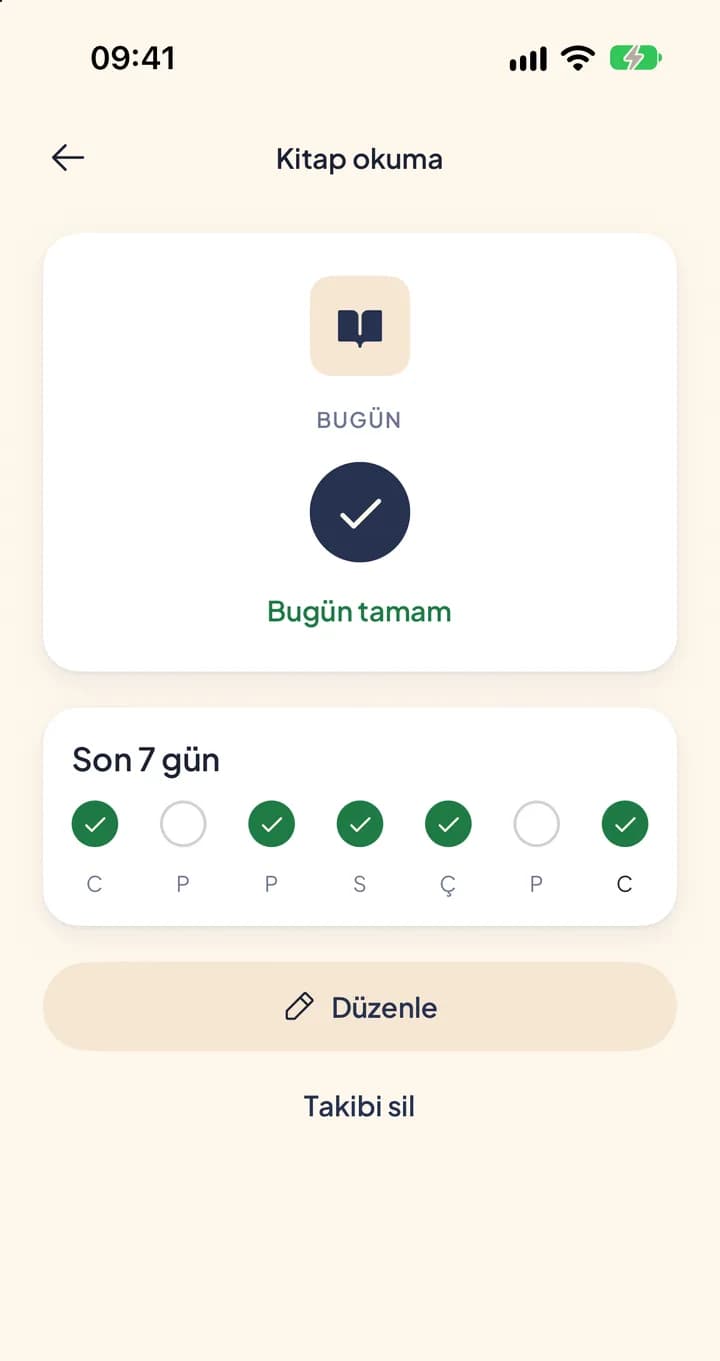
Habit tracker
Name your own habit or daily count, pick an icon and see your week.
 Coming soonAndroid
 Scan with your phone camera to open the App Store.
How long should you track a habit?
In a study cited by the authors, participants practiced a self-chosen health behavior daily in response to a set cue. Automaticity peaked after an average of 66 days, though individual timelines varied widely. The authors recommend planning for roughly 10 weeks of practice. The popular 21-day rule originated from anecdotal accounts regarding surgical recovery rather than scientific evidence. Read more in how to build a habit.
Habits
Name your own habit or daily count, pick an icon and see your week.
Your journal, mood, cycle and tracker records, including saved step counts, are stored on your device. When account backup is available and you are signed in, the app also sends an encrypted copy to our servers to restore and merge your records.
Frequently asked questions
How many days does it take to form a habit?
Research shows it took an average of 66 days for behaviors to become automatic, though timelines varied depending on the person and complexity of the habit. Planning for about 10 weeks of regular practice is a practical target.
Can you track habits with a notebook or spreadsheet?
Yes. The research tool was originally a paper chart. You only need columns for daily check-ins, a weekly review of whether you met your goal, and a 1 to 10 automaticity rating.
Sources
- British Journal of General Practice (NIH PMC): Making health habitual, the psychology of habit formation and general practice
- NHS Every Mind Matters: Be active for your mental health
- NHS Every Mind Matters: Staying on top of things
Habit tracker
Name your own habit or daily count, pick an icon and see your week.
Coming soonAndroidScan with your phone camera to open the App Store.