
A menstrual cycle does not have to be the exact same length every month; it can shorten or lengthen by a few days. The UK National Health Service (NHS) considers a cycle irregular if the time between the start of two periods is shorter than 21 days. Common causes of irregular cycles where periods arrive sometimes early and sometimes late include puberty, perimenopause, hormonal birth control methods, stress, marked weight changes, and extreme exercise.
How many days early is a period considered normal?
According to the NHS, the time between the start of two consecutive periods averages around 28 days and can occasionally be slightly shorter or longer. Having a period arrive every 21 to 35 days is common.
Because of this natural variation, if your cycle usually lasts 28 days and your period arrives two or three days earlier than anticipated this month, it is usually just an expected fluctuation within that healthy range. The clinical threshold used by the NHS is straightforward: if the interval between two periods is shorter than 21 days or longer than 35 days, the cycle is considered irregular.
What is considered "early" takes on meaning relative to your personal baseline. Rather than looking at a single isolated month, knowing your average across several cycles provides a clearer picture. We explain how to calculate cycle length with practical examples in our guide on how many days does a period last.
Why does a period come early?
The NHS lists several common reasons for irregular cycles where periods may arrive early or late:
- puberty, during the first few years after periods start
- the beginning of menopause, typically between ages 45 and 55
- hormonal contraception, such as the progestogen-only pill, contraceptive injection, and hormonal coil (intrauterine system or IUS)
- significant weight loss or weight gain
- stress and anxiety
- excessive physical exercise
According to the NHS, conditions like polycystic ovary syndrome (PCOS) and thyroid disorders can also trigger irregular bleeding. The NHS notes that changing your birth control method can also disrupt your familiar cycle.
If you notice your cycle varying noticeably from month to month, our article on irregular menstrual cycle explains this in greater detail.
Why periods arrive early by age
According to the NHS, periods are more prone to irregularity during two main life stages: the early teenage years of puberty, and when approaching menopause.
During the initial years, periods typically begin around age 12, and most girls develop regular cycles between ages 16 and 18. During this developmental phase, periods arriving early some months and late other months is very frequent.
In your 40s, the NHS explains that one of the first signs of perimenopause is often a noticeable change in periods. Periods can arrive more frequently or less frequently, and menstrual flow can become heavier or lighter.
Can an IUS coil cause periods to arrive early?
According to the NHS, in the first 3 to 6 months after a hormonal coil (IUS) is inserted, periods may become longer, irregular, or more frequent, and light spotting between periods may occur. This usually settles after a few months. If irregular or heavy bleeding persists for longer than 6 months, speaking with a doctor or nurse is recommended.
Early bleeding might not be a period
Not all vaginal bleeding is menstrual bleeding. The NHS advises that bleeding between periods, bleeding after sexual intercourse, and bleeding after menopause should always be investigated by a doctor. Possible causes include infections, cervical changes, or rarely, more serious conditions.
If there is a chance of pregnancy, keep in mind that the NHS lists implantation bleeding (which can happen when a fertilized egg attaches to the uterine wall in very early pregnancy) as a possible cause of light early bleeding. Information on testing can be found in our guide on why is my period late.
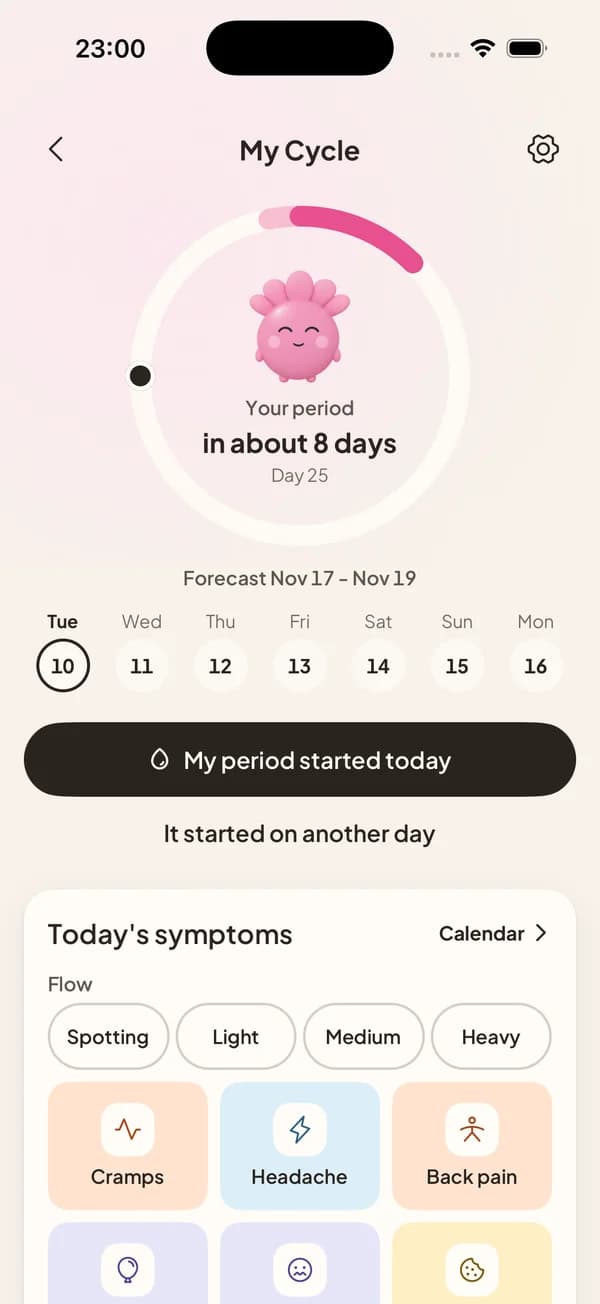
Keep your period calendar in yuuvii
Tap once when your period starts; the next estimate, your symptoms and your mood live in one place. Your entries stay on your phone.
 Coming soonAndroid
 Scan with your phone camera to open the App Store.
When should you see a doctor?
The NHS recommends consulting a doctor if:
- your period is irregular or your established cycle pattern changes
- your period lasts longer than 7 days
- irregular cycles are accompanied by weight changes, fatigue, facial hair growth, or sudden changes in skin texture
- you experience bleeding between periods
- your periods are irregular and you are having difficulty conceiving
According to the NHS, irregular periods do not always require medical treatment. Your doctor can investigate underlying causes and refer you to a specialist if necessary.
If you are pregnant and experience heavy bleeding, severe abdominal pain, shoulder tip pain, or feeling faint, seek emergency medical care immediately by calling 112 in Europe, 999 in the UK, or 911 in the US.
Periods
Mark your period, tick symptoms and see when the next one is likely to start.
Your journal, mood, cycle and tracker records, including saved step counts, are stored on your device. When account backup is available and you are signed in, the app also sends an encrypted copy to our servers to restore and merge your records.
The estimate is not for contraception. yuuvii is not a medical device and does not diagnose or treat.
Frequently asked questions
Can a period come twice a month?
If there are fewer than 21 days between the start of two periods, the NHS classifies the cycle as irregular. Periods may also be more frequent during the first months after receiving a hormonal coil. Any unexpected bleeding occurring between periods should be checked by a doctor; if you are unsure of the cause, consult your healthcare provider.
Can stress make your period arrive early?
The NHS lists stress and anxiety among common causes of irregular periods. In an irregular cycle, bleeding can arrive earlier or later than anticipated.
Does changing birth control methods affect the cycle?
Yes. The NHS indicates that switching contraceptive methods can disrupt your established menstrual pattern. If you have questions about your specific method, consult your doctor.
Sources
- NHS: Irregular periods
- NHS: Periods
- NHS: Period problems
- NHS: Missed or late periods
- NHS: Symptoms of menopause and perimenopause
- NHS: IUS side effects and risks
- NHS: Vaginal bleeding in pregnancy
Keep your period calendar in yuuvii
Tap once when your period starts; the next estimate, your symptoms and your mood live in one place. Your entries stay on your phone.
Coming soonAndroidScan with your phone camera to open the App Store.