Tummy time can begin from birth, building neck and upper body strength that enables sitting. According to the CDC, most babies prop themselves on their hands while sitting at 6 months and sit completely unsupported by 9 months. The AAP notes that when placed upright, infants often sit without arm support between 6 and 8 months. Every child develops at their own pace.
How tummy time supports sitting milestones
Sitting upright is a gradual developmental achievement. An infant first develops head control, followed by trunk and pelvic stability. The US Centers for Disease Control and Prevention (CDC) defines developmental milestones as skills achieved by at least 75 percent of children by that age.
The motor progression toward independent sitting unfolds as follows:
- 4 months: Holds head steady unsupported when held upright; pushes up onto elbows or forearms while lying on tummy
- 6 months: Pushes up with straight arms during tummy time; leans forward on hands to support self when sitting (tripod position)
- 9 months: Moves into a sitting position independently; sits steadily without arm support
When do babies sit upright?
According to the American Academy of Pediatrics (AAP) HealthyChildren site, once an infant can lift their head, they begin arching their back and pushing up against their forearms. These tummy exercises strengthen upper back, shoulder, and neck muscles essential for sitting balance.
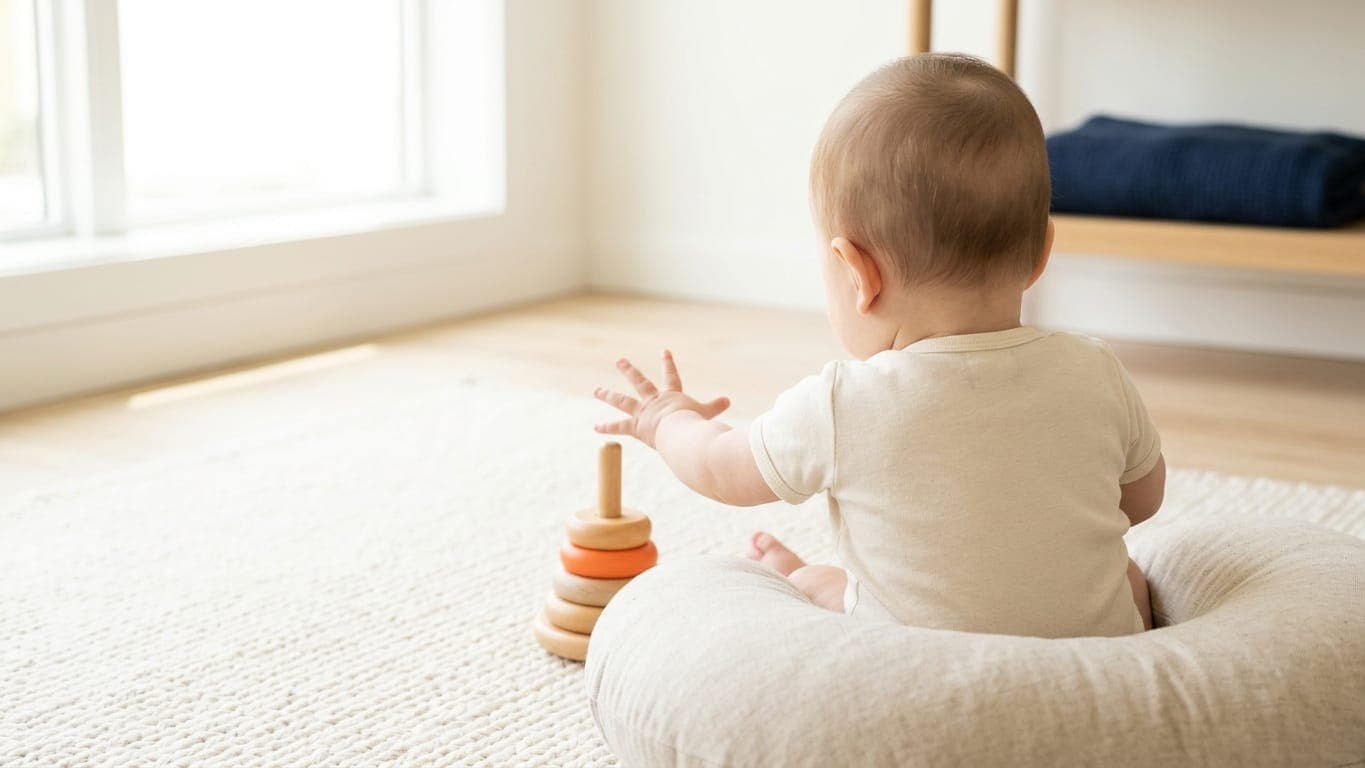
During initial sitting attempts, babies lean forward and brace themselves on extended arms. Unassisted sitting takes practice: the AAP notes that between 6 and 8 months, many infants can sit upright without arm props. Placing engaging toys within reach helps develop balance and core engagement.
Supported sitting typically begins around 6 months, and unsupported sitting emerges between 6 and 9 months for most infants. Crawling often follows; the NHS reports that most babies begin crawling between 7 and 10 months, while some advance by bottom shuffling.
When to start tummy time and how to practice
Tummy time provides the physical foundation for independent mobility. The NHS advises that tummy time can start from birth by resting your baby chest-to-chest, provided you are fully awake and alert. Gradually increase daily tummy duration, transitioning to a firm floor mat as head control develops. This builds neck, back, and shoulder muscles.
Guidance from NHS paediatric services includes:
- Supported sitting: Sit your baby between your legs facing outward with hands on their knees; encourage them to reach forward for balance
- Lap play: Gentle forward and backward rocking on your lap builds vestibular balance
- Unsupported sitting: Allow independent sitting only when your baby shows steady head and trunk control
- Supervision: Always maintain direct visual supervision to prevent accidental falls
- Firm surfaces: Practice on the floor or a firm rug; avoid soft beds or high couches
- Toy placement: Place soft toys in front of your baby, gradually moving them slightly further away to encourage reaching
Baby tracker
This tracker is not available in yuuvii 2.0.1. You can read articles on this topic here.
Baby development
This tracker is not available in yuuvii 2.0.1. You can read articles on this topic here.
When to seek medical evaluation
The CDC recommends speaking with your pediatrician and requesting developmental screening if:
- Your baby has not reached one or more age expected milestones
- Your child loses previously acquired motor skills
- You have persistent concerns regarding muscle tone or movement
According to the NHS, consult a healthcare professional if your baby shows no signs of moving or rolling by 12 months. Seek immediate emergency care if your baby is floppy, unresponsive, or experiencing respiratory distress. In the US call 911; in the UK call 999; in Europe call 112.
Frequently asked questions
My baby is 6 months old and cannot sit unsupported. Is this normal?
Yes. The CDC 6 month milestone expects leaning on hands for support (tripod sitting). Independent, unsupported sitting is a 9 month milestone. The AAP places unsupported sitting between 6 and 8 months.
How much time passes between sitting and crawling?
Timelines vary. The NHS notes that crawling typically begins between 7 and 10 months. Review our guides on baby milestones by month and baby milestones when to worry.
Sources
- NHS Best Start in Life: Baby moves
- NHS Cambridgeshire and Peterborough: Learning to sit
- CDC: Milestones by 4 months
- CDC: Milestones by 6 months
- CDC: Milestones by 9 months
- AAP HealthyChildren: Movement, babies 4 to 7 months
- NHS: Is your baby or toddler seriously ill?
Baby tracker
This tracker is not available in yuuvii 2.0.1. You can read articles on this topic here.