
According to the NHS, resetting your sleep schedule starts with going to bed and waking up at the same time each day, including weekends. Only go to bed when tired, avoid sleeping in after a restless night, and skip daytime naps. Wind down quietly during the hour before bed without digital screens, and stop caffeine, alcohol, and nicotine at least 6 hours before sleeping.
What defines a healthy sleep schedule?
A restorative sleep routine combines two core elements: sufficient duration and consistent timing. According to the UK National Health Service (NHS), most healthy adults need 7 to 9 hours of sleep per night. The American Academy of Sleep Medicine (AASM) notes that healthy sleep requires adequate duration, appropriate timing, daily regularity, and freedom from sleep disturbances.
According to Every Mind Matters from the NHS, maintaining consistent wake and sleep times programs your internal biological clock. Adhering to this rhythm on weekends prevents social jet lag. The US Centers for Disease Control and Prevention (CDC) similarly places waking up and going to bed at identical times every day at the top of healthy sleep habits. To check age specific requirements, review sleep how many hours.
How to reset a broken sleep schedule
Restoring a disrupted routine begins in the morning. Guidelines from the NHS and the US National Heart, Lung, and Blood Institute (NHLBI) recommend the following steps:
- Anchor your wake up time. Wake up and get out of bed at the exact same hour every day. The NHLBI recommends keeping weekend wake times within an hour of weekday schedules.
- Go to bed only when sleepy. Stepping into bed while wide awake encourages tossing, turning, and sleep related anxiety.
- Do not sleep in after a rough night. Compensatory morning sleep delays your circadian phase, making it difficult to fall asleep the following evening.
- Avoid daytime naps. If you struggle to fall asleep at night, eliminate daytime naps entirely or limit them to 20 minutes before early afternoon.
- Get outdoors in morning sunlight. Daylight exposure synchronizes the circadian pacemaker. The NHS suggests daily physical exercise, avoiding intense workouts in the 4 hours before bedtime.
Evening habits that support restful sleep
Health agencies share uniform recommendations for evening wind down routines:
- Dedicate the final hour to winding down. The NHS suggests beginning relaxation at least 1 hour before bed. Every Mind Matters recommends reading a book, listening to calming music, or practicing gentle breathing exercises.
- Put screens away. Every Mind Matters advises turning off smartphones, tablets, and computers an hour before bed, as blue light delays melatonin secretion. The CDC suggests turning off electronic screens at least 30 minutes before sleep.
- Set a caffeine cutoff. The NHS recommends stopping tea, coffee, alcohol, and smoking at least 6 hours before bed. The NHLBI notes that caffeine can linger in the body for up to 8 hours.
- Avoid heavy late meals. Digesting large meals late in the evening disrupts deep sleep cycles.
- Do not rely on alcohol. While alcohol induces initial drowsiness, Every Mind Matters points out that it disrupts later sleep architecture, leading to frequent night awakenings.
- Write down your worries. If looping thoughts keep you awake, write a quick to-do list for tomorrow before turning off the lights.
Setting up your bedroom and handling sleepless nights
The NHS advises keeping the bedroom quiet, dark, and comfortable. The CDC emphasizes keeping the room pleasantly cool. Every Mind Matters recommends earplugs, blackout curtains, an eye mask, and turning clocks away from view.
If sleep does not come, do not lie in bed struggling. Every Mind Matters advises getting out of bed if you are still awake after about 20 minutes. Move to another dimly lit room, read quietly, and return to bed only when drowsiness returns. This stimulus control method strengthens the mental association between bed and sleep. For persistent difficulties, see our guide on insomnia what helps.
Shift work and schedule adjustments
The NHS identifies shift work and travel across time zones as frequent contributors to sleep disruption. The NHLBI suggests shift workers prioritize sufficient sleep windows, use blackout curtains, restrict caffeine to the early part of their shift, and keep work lighting bright. The NHLBI advises talking to a doctor if you cannot sleep during the day or cannot adjust to your shifts.
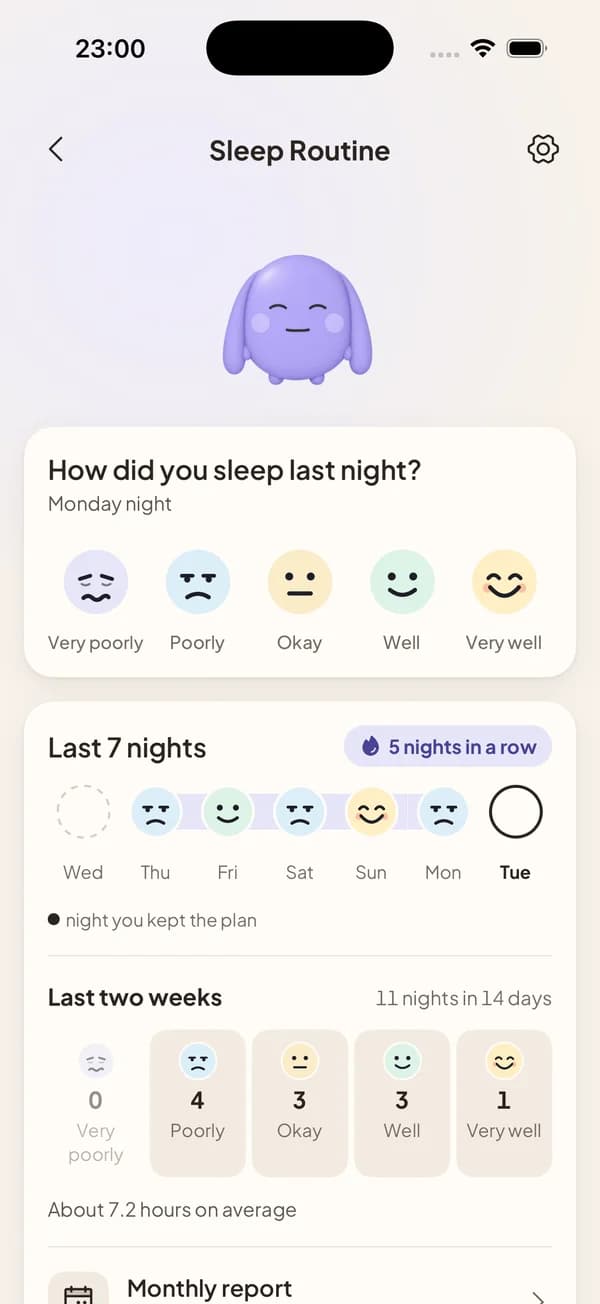
Sleep tracker
Rate last night each morning, keep a bedtime plan and see your last two weeks.
 Coming soonAndroid
 Scan with your phone camera to open the App Store.
Sleep
Rate last night each morning, keep a bedtime plan and see your last two weeks.
Your journal, mood, cycle and tracker records, including saved step counts, are stored on your device. When account backup is available and you are signed in, the app also sends an encrypted copy to our servers to restore and merge your records.
When to see a doctor
The NHS notes that occasional poor nights are normal. Consult a doctor if:
- Sleep hygiene adjustments fail to bring improvement
- You have struggled with sleep for months
- Daytime sleepiness impairs your ability to work, study, or drive safely
- You suspect a medication is interfering with your sleep
- Perimenopause or menopause symptoms are disrupting your sleep
A physician can evaluate for underlying sleep disorders such as obstructive sleep apnea. Never drive when drowsy. If distress feels unmanageable, seek immediate emergency help. In the US call 911; in the UK call 999; in Europe call 112.
Frequently asked questions
How many days does it take to fix a sleep schedule?
Public health agencies note that resetting circadian rhythms takes patience. Consistent wake times and daylight exposure typically produce noticeable improvements within two to three weeks.
Should you pull an all-nighter to reset your sleep schedule?
No. Medical guidelines advise against sleep deprivation nights, as severe exhaustion compromises immune function and daytime safety without stabilizing circadian timing.
Sources
- NHS: Insomnia
- NHS Every Mind Matters: Fall asleep faster and sleep better
- NHS Every Mind Matters: Sleep problems
- CDC: About sleep
- NHLBI: Healthy sleep habits
- NHLBI: Insomnia treatment
- AASM: Seven or more hours of sleep per night, a health necessity for adults
Sleep tracker
Rate last night each morning, keep a bedtime plan and see your last two weeks.
Coming soonAndroidScan with your phone camera to open the App Store.