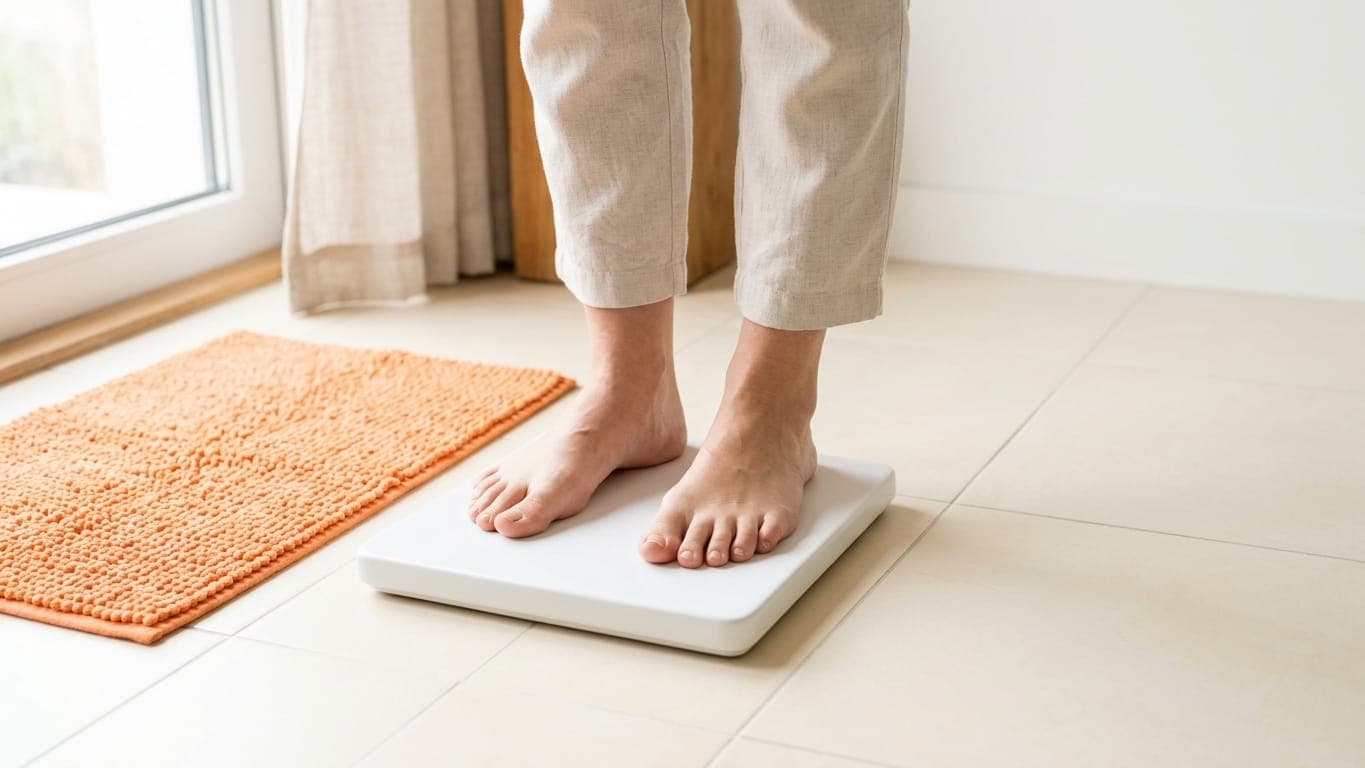
Weight tracking involves weighing yourself at regular intervals, using the same scale and time of day, and logging the result with its date. NHS England recommends morning weigh-ins at weekly to monthly intervals, while the US NIDDK advises weighing at least once a week. Logging over time reveals your true trajectory and helps you evaluate your progress toward personal health goals.
Why tracking your weight supports long term success
The UK National Health Service (NHS) recommends that individuals seeking to manage their weight create a structured plan with realistic goals and regular weigh-ins. The National Institute of Diabetes and Digestive and Kidney Diseases (NIDDK), part of the US National Institutes of Health (NIH), highlights research showing that people who track their weight and physical activity reach their goals more reliably than those who do not.
According to the NIDDK, recording your progress highlights your successes and helps identify areas for adjustment. Tracking helps maintain focus and spot setbacks early. The NIDDK reminds us that a setback is not a failure but a normal part of habit change; the priority is resuming your routine promptly.
Step by step guide to tracking your weight
NHS England's digital weight management guidance divides accurate weighing into five core steps:
- Keep your scale stationary. Use the same scale in the same location on a hard, flat floor, such as bathroom tile.
- Weigh at the same time. Step on the scale at the same time of day, ideally upon waking in the morning.
- Wear consistent attire. Weigh without shoes and in minimal, similar clothing each time.
- Position yourself evenly. Stand with weight distributed equally on both feet. Zero manual scales beforehand.
- Record after the number settles. Wait until the display locks in, then enter the value in your log.
For details on timing and intervals, read our companion guide on how often should I track my weight.
What to include in a weight log
A weight tracking chart can be kept in a notebook, note taking app, or dedicated mobile tracker. The NIDDK notes that paper charts, mobile notes, and apps are all effective. The NHS 12-week weight loss plan includes weekly entries for weight and waist circumference.
A practical tracking table can track:
| Column | Information recorded |
|---|---|
| Date and time | Day and hour of weigh-in |
| Weight | Numerical reading in kg or lb |
| Waist measurement | Optional weekly check, as in the NHS plan |
| Context notes | Sleep quality, activity levels, and general wellbeing |
The US Centers for Disease Control and Prevention (CDC) suggests also noting nutrition, movement, sleep, and stress levels. The NIDDK adds that recording how you feel is valuable, because emotional states play an important role in cementing lasting healthy habits.
Setting healthy, achievable weight targets
The NHS recommends aiming for a steady, sustainable weight loss rate of 0.5 to 1 kg per week, advising against rapid crash diets. The CDC similarly advises a steady pace of 1 to 2 pounds (roughly 0.5 to 1 kg) per week. CDC evidence shows that people who lose weight gradually are more successful at keeping it off. The NHS notes that losing even 5 to 10 percent of your body weight provides significant metabolic benefits.
The NHS uses Body Mass Index (BMI) as an initial screening tool, calculated by dividing weight in kilograms by height in meters squared. For most adults, a BMI between 25 and 29.9 is categorized as overweight, and 30 or above as living with obesity.
Because BMI does not distinguish between muscle and body fat, the NHS also recommends measuring waist circumference, aiming to keep your waist to less than half your height. Standard adult BMI calculators are not intended for pregnant women, individuals under 18, or those with eating disorders.
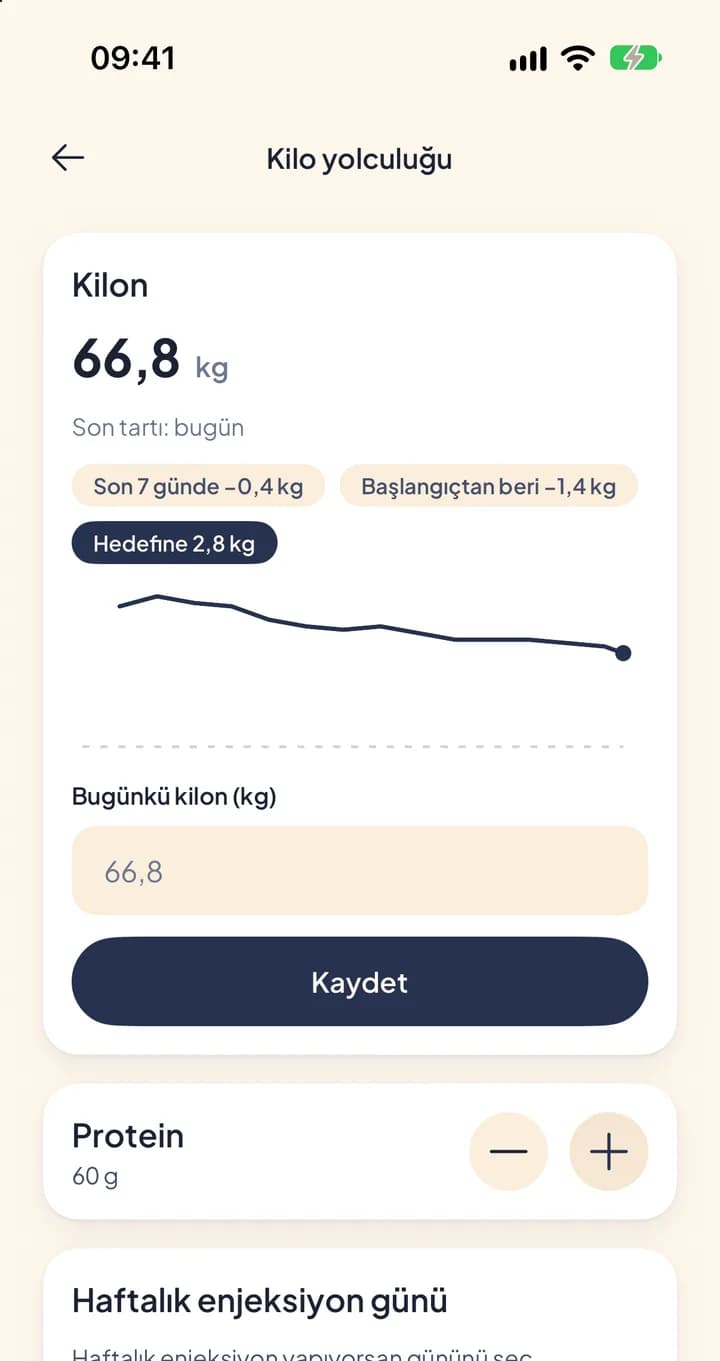
Weight tracker
Log weigh-ins, set your own goal and count water and protein on the same screen.
 Coming soonAndroid
 Scan with your phone camera to open the App Store.
Weight
Log weigh-ins, set your own goal and count water and protein on the same screen.
Your journal, mood, cycle and tracker records, including saved step counts, are stored on your device. When account backup is available and you are signed in, the app also sends an encrypted copy to our servers to restore and merge your records.
When to see a doctor
The NHS recommends speaking with a healthcare professional if your BMI falls into overweight or obesity ranges and:
- You want structured support to manage your weight
- Your waist circumference exceeds half your height
- You have prediabetes, diabetes, high blood pressure, joint pain, elevated cholesterol, sleep apnea, or heart disease
- You have a personal or family history of eating disorders
The NHS advises talking to a doctor before changing your habits if you have a health condition, follow a special diet for medical reasons, or have or have had an eating disorder.
If you are losing weight unintentionally without dieting or increasing exercise, the NHS advises prompt medical evaluation, especially if other symptoms are present.
Frequently asked questions
Can you keep a weight tracking chart on paper?
Yes. The NIDDK notes that printed charts and notebooks are completely valid tools. The NHS 12-week program suggests printing its tracking sheet and placing it on a visible spot like the refrigerator. Consistency of weighing conditions is what matters most.
Why does weight loss stall during a diet?
The NHS notes that weight plateaus are a normal, temporary adaptation during sustained weight loss. We cover the physiological causes and management strategies in weight loss plateau why.
Sources
- NHS: Overweight and obesity in adults
- NHS: Tips to help you lose weight
- NHS: Calculate your body mass index (BMI) for adults
- NHS: Unintentional weight loss
- NHS Better Health: How to lose weight
- NHS: Losing weight, getting started, Week 1
- NHS England: How to record your weight
- NIDDK: Your game plan to prevent type 2 diabetes
- NIDDK: Changing your habits for better health
- CDC: Steps for losing weight
Weight tracker
Log weigh-ins, set your own goal and count water and protein on the same screen.
Coming soonAndroidScan with your phone camera to open the App Store.