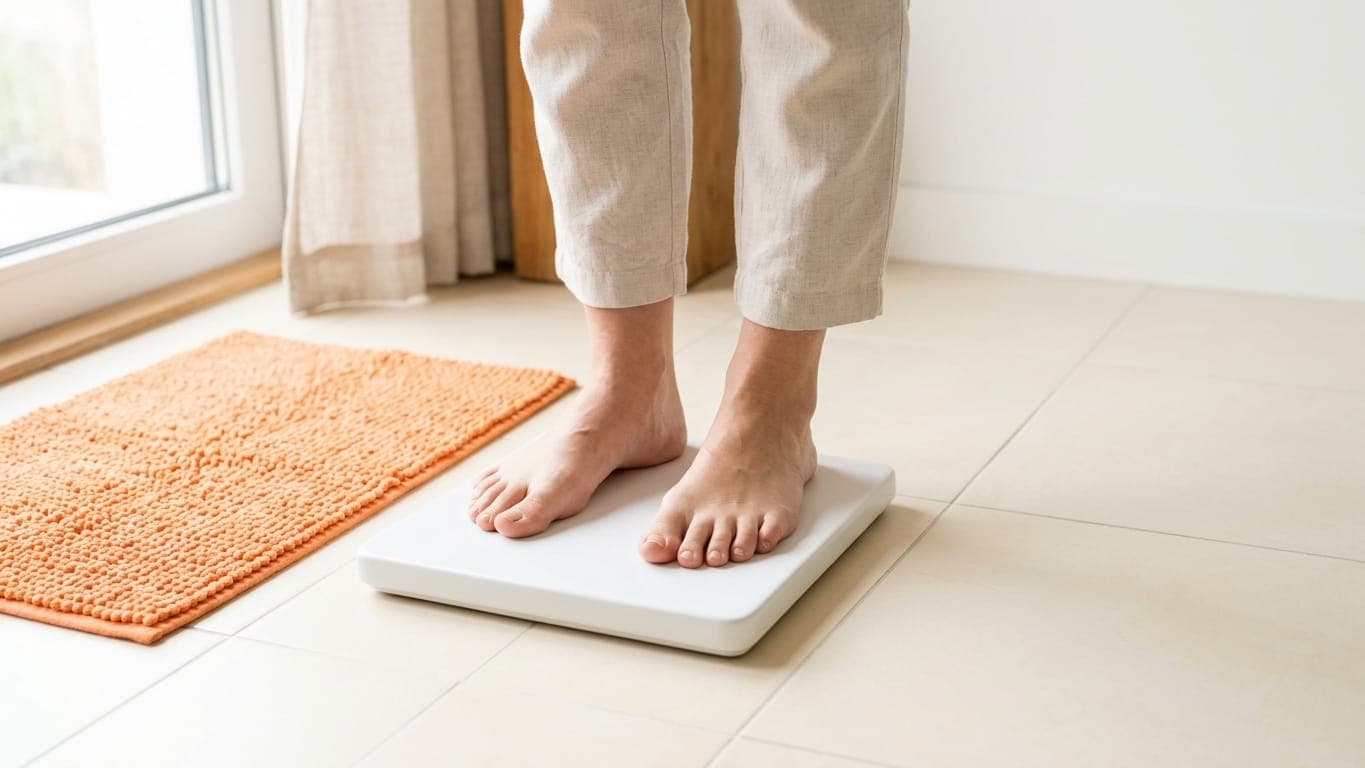
According to NHS England, you should weigh yourself consistently at the same time of day, preferably in the morning. Use the same scale placed on a hard, flat surface. Weigh yourself wearing minimal clothing, without shoes, and wearing similar attire each time. For frequency, NHS England recommends regular intervals ranging from weekly to monthly, while NIDDK suggests weighing at least once a week.
What is the best time of day to weigh yourself?
NHS England publishes guidance on recording weight as part of its digital weight management program. The guidance emphasizes that consistency is key: weigh yourself at the same time of day on each occasion, with morning being the preferred time.
Weighing in the morning after using the bathroom and before eating breakfast minimizes confounding fluctuations from food and water consumption. Stepping on the scale in the morning one day and in the evening the next will show misleading differences that reflect daily fluid shifts rather than true body mass changes.
What is your true weight?
Medical authorities do not define a single magic moment for "true weight." The goal of consistent weighing conditions is comparability: the same time of day, the same calibrated scale, the same flat location, and minimal clothing. This consistency allows you to observe genuine multi-week trajectories.
Avoid overinterpreting daily fluctuations. In its weight loss guidance, the NHS notes that healthy weight changes can be small enough from day to day to be masked by water retention or digestive contents.
How often should you step on the scale?
Major health organizations recommend consistent, periodic monitoring:
| Source | Recommended weighing frequency |
|---|---|
| NHS England | At regular intervals, from weekly to monthly |
| NIDDK (US NIH) | At least once a week |
| NHS 12-week weight loss guide | Weight and waist circumference checked at the start and end of each week |
The NHS encourages people working on weight management to check progress regularly. The National Institute of Diabetes and Digestive and Kidney Diseases (NIDDK) highlights that individuals who track their weight and physical activity achieve their goals more consistently. None of these guidelines mandate daily weigh-ins; weighing once a week at the same morning hour aligns with NHS and NIDDK advice.
How to weigh yourself accurately
Proper technique ensures reliable measurements. NHS England recommends the following protocol:
- Place your scale on a hard, flat floor; bathroom tiles or hardwood are ideal.
- Ensure the scale is level and calibrated; zero manual dial scales before stepping on.
- Step onto the center of the scale with weight evenly distributed between both feet.
- Wear minimal clothing, remove shoes, and empty your pockets.
- Wear similar lightweight clothing for every measurement.
- Stand still until the digital display locks in, then record the number.
For practical steps on setting up a log, explore our guide on weight tracker app.
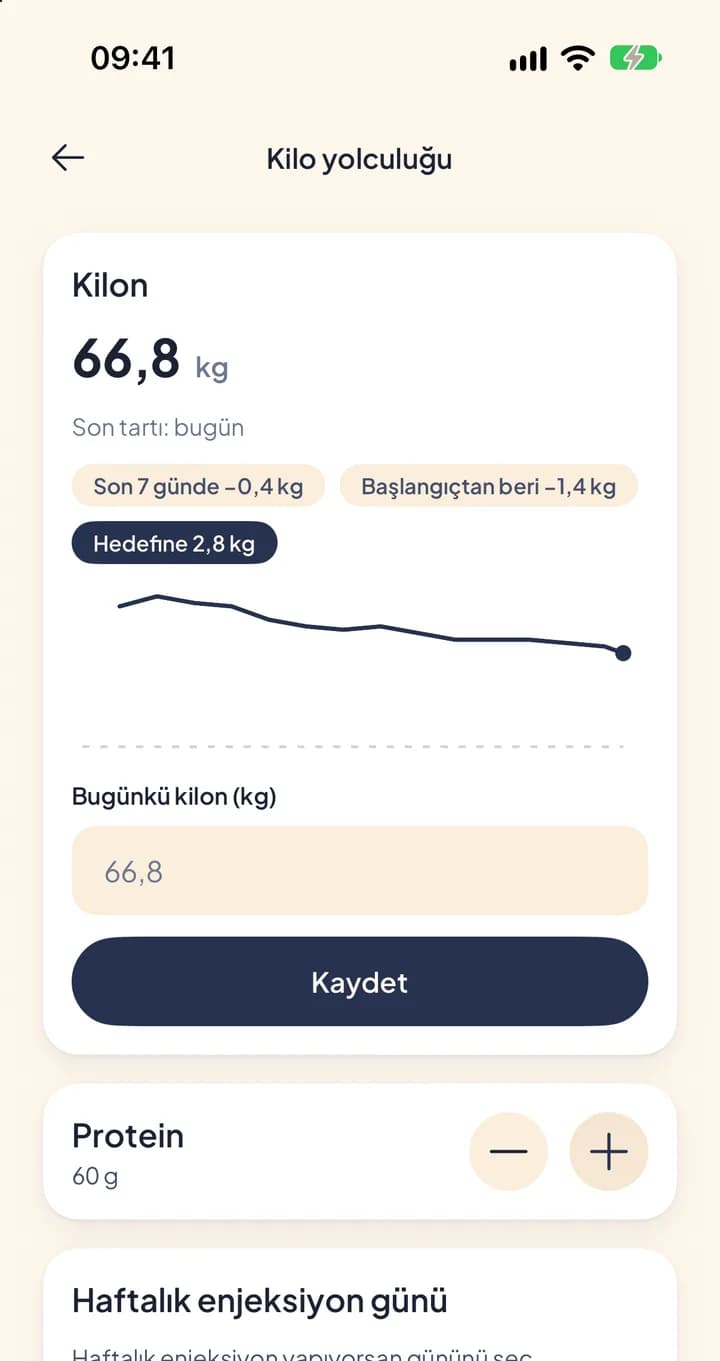
Weight tracker
Log weigh-ins, set your own goal and count water and protein on the same screen.
 Coming soonAndroid
 Scan with your phone camera to open the App Store.
What if your weight does not change for weeks?
The NHS notes that during any sustained weight loss effort, progress naturally slows down and may pause altogether. This is known as a plateau. We review why this occurs and practical adjustments in weight loss plateau why.
Weight
Log weigh-ins, set your own goal and count water and protein on the same screen.
Your journal, mood, cycle and tracker records, including saved step counts, are stored on your device. When account backup is available and you are signed in, the app also sends an encrypted copy to our servers to restore and merge your records.
When to consult a physician
Periodic weighing also helps detect unexpected health changes that warrant medical attention:
- Unexplained weight loss: The NHS advises consulting a doctor if you are losing weight without changes to your diet, activity, or lifestyle. If accompanied by other symptoms, seek timely evaluation.
- Significant unintended reduction: MedlinePlus advises medical assessment if you unintentionally lose more than 4.5 kg (10 pounds) or more than 5 percent of your baseline body weight over 6 to 12 months.
- Sudden rapid weight gain: The NHS identifies sudden unexplained weight gain and fluid retention as potential signs of heart failure, especially when accompanied by swelling in the ankles, legs, or abdomen, or shortness of breath when lying flat.
Seek urgent emergency care if you experience severe breathlessness, chest tightness, or blue, grey, or pale lips. In the US call 911; in the UK call 999; in Europe call 112.
Frequently asked questions
Should you weigh yourself every single day?
Health guidelines do not require daily weighing. NHS England recommends weekly to monthly tracking, while NIDDK suggests at least once weekly. If you prefer daily weighing, take the weekly average to smooth out normal hydration variations.
How can you weigh yourself if you do not own a scale?
NHS England suggests using scales available at community pharmacies, healthcare centers, or gyms. A friend's scale can also work, provided you return to the exact same device for consistency.
Sources
- NHS England: How to record your weight
- NIDDK: Your game plan to prevent type 2 diabetes
- NHS: Overweight and obesity in adults
- NHS: Losing weight, getting started, Week 11
- NHS: Unintentional weight loss
- MedlinePlus: Weight loss, unintentional
- NHS: Heart failure
- NHS: Calculate your body mass index (BMI) for adults
Weight tracker
Log weigh-ins, set your own goal and count water and protein on the same screen.
Coming soonAndroidScan with your phone camera to open the App Store.