Public health authorities recommend around 2 to 2.5 liters of total daily fluids for adults. The UK NHS provides practical guidance of 6 to 8 cups or glasses per day, including water, lower fat milk, and tea or coffee. Fluid needs rise in hot climates, during exercise, throughout pregnancy, and while breastfeeding. The NHS highlights pale, clear urine as a reliable sign of adequate hydration.
How much fluid should you drink per day?
Official fluid intake guidelines vary slightly between public health bodies, but all emphasize regular hydration throughout the day.
The UK National Health Service (NHS) cites government guidance recommending 6 to 8 glasses or mugs of fluid daily. The NHS notes that this serves as a general baseline rather than an inflexible rule.
MedlinePlus, published by the US National Library of Medicine, notes an adequate total water intake reference of approximately 2.7 liters daily for adult women and 3.7 liters for adult men. This total includes water obtained from both food and beverages, with roughly 20 percent typically coming from foods.
| Organization | General fluid guideline | Scope |
|---|---|---|
| European and national authorities | 2.0 liters for women, 2.5 liters for men | Total daily fluid intake |
| UK NHS | 6 to 8 glasses or mugs daily | Water, lower fat milk, unsweetened tea, coffee |
| MedlinePlus (US) | 2.7 liters (women) to 3.7 liters (men) | Total water from all food and beverages combined |
None of these organizations impose an identical fixed quantity for every individual, because body size, climate, and activity levels alter daily needs.
Estimating your personal daily water needs
A common practical estimate suggests approximately 30 to 35 mL of fluid per kilogram of body weight. For an adult weighing 70 kilograms, this translates to roughly 2.1 to 2.4 liters of fluids per day.
This calculation provides a useful baseline, but environmental and metabolic factors can elevate your requirements.
Is 8 glasses of water a day sufficient?
Health authorities view the conventional "8 glasses a day" goal as a sensible, achievable target for many people. However, individual requirements fluctuate. The NHS notes that 6 to 8 glasses provides a helpful guide, while identifying specific situations where intake should be increased.
Factors that increase your fluid needs
According to the NHS and CDC, you need to consume more fluids when:
- You are in hot, humid, or dry environments
- You engage in prolonged physical activity or heavy labor
- You are pregnant or breastfeeding
- You are recovering from illness, fever, vomiting, or diarrhea
- Your diet is unusually high in dietary protein or sodium
Public health agencies note that adults aged 65 and older experience a decreased natural thirst sensation, making regular fluid consumption throughout the day particularly important.
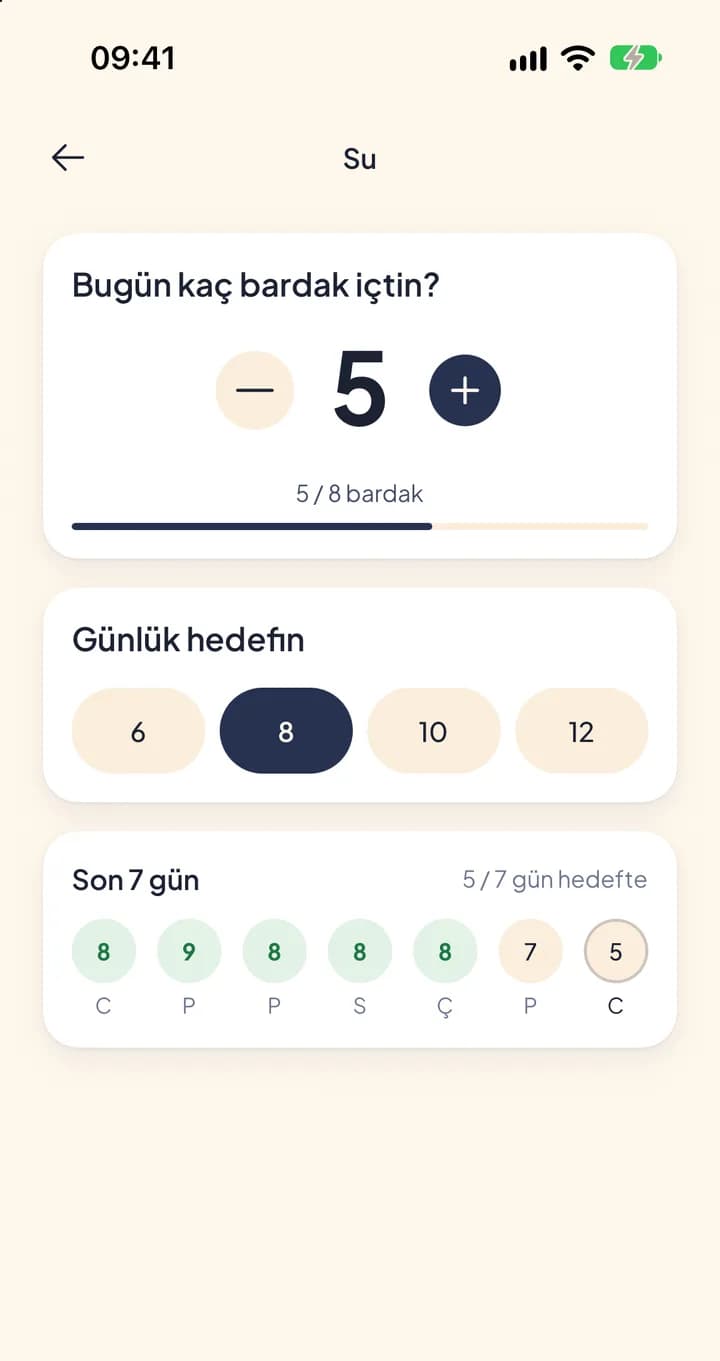
Water tracker
Count glasses through the day against a goal you pick.
 Coming soonAndroid
 Scan with your phone camera to open the App Store.
How to tell if you are drinking enough water
The NHS emphasizes that the most practical way to assess your hydration is urine color: aim for a clear, pale yellow color throughout the day. Dark yellow or amber urine suggests you need more fluids. MedlinePlus notes that if you drink when thirsty and include fluids with meals, you generally maintain adequate hydration.
If dark urine is accompanied by headaches, dry mouth, or lethargy, review our guide on low water intake symptoms.
Hydration
Count glasses through the day against a goal you pick.
Your journal, mood, cycle and tracker records, including saved step counts, are stored on your device. When account backup is available and you are signed in, the app also sends an encrypted copy to our servers to restore and merge your records.
When to consult a physician
According to the NHS, dehydration can escalate into a serious issue if left unaddressed. Contact a healthcare provider promptly if:
- You feel unusually tired, drowsy, or confused
- You experience persistent dizziness upon standing up
- Your urine is persistently dark or you urinate very infrequently
- You have an abnormally rapid pulse or fast breathing
Seek emergency medical attention if severe signs occur, such as cold or clammy skin, blue or pale lips, or loss of responsiveness. In the US call 911; in the UK call 999; in Europe call 112.
Frequently asked questions
Do fluid requirements change during pregnancy and breastfeeding?
Yes. Fluid needs increase during pregnancy and lactation to support expanded blood volume and milk production. Discuss your personal hydration goals with your midwife or obstetrician.
Do tea, coffee, and other beverages count toward your water intake?
According to the NHS, water, skimmed or lower fat milk, and sugar free drinks including tea and coffee all count toward your daily fluid total. The NHS advises enjoying caffeine in moderation and limiting fruit juices and smoothies to one small glass daily due to natural sugar content. Alcohol does not contribute to hydration because of its diuretic effect.
Sources
- Turkish Ministry of Health: Healthy fluid consumption in summer
- NHS: Water, drinks and hydration
- NHS: Dehydration
- MedlinePlus: Water in diet
- CDC: About Water and Healthier Drinks
Water tracker
Count glasses through the day against a goal you pick.
Coming soonAndroidScan with your phone camera to open the App Store.