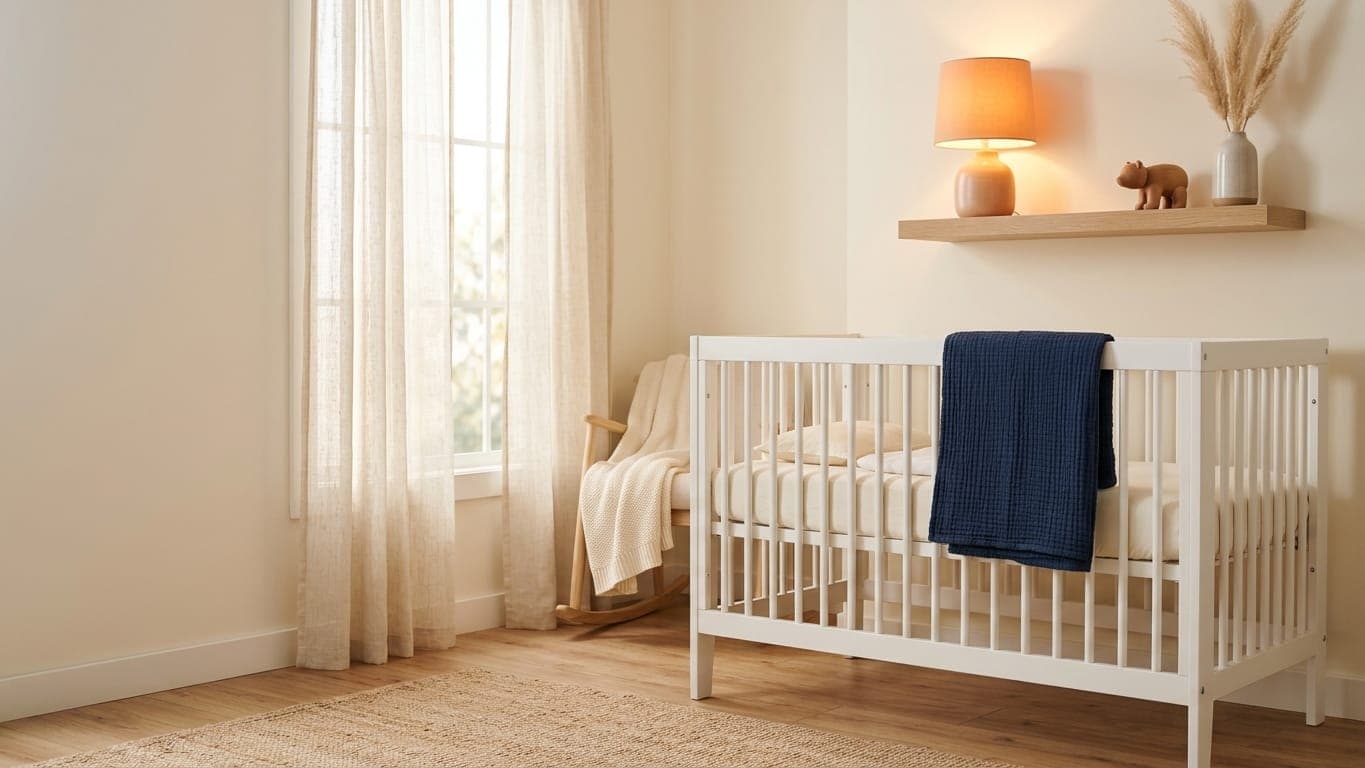
There is no single universal date when baby sleep settles. According to the NHS, newborns wake frequently for nighttime feeding and gradually learn that night is for sleeping. Night feedings typically decrease between 3 and 6 months, and some babies sleep up to 12 hours at night between 6 and 12 months. Always place your baby on their back in their own crib in your room.
When does infant sleep improve?
The UK National Health Service (NHS) emphasizes that sleep patterns vary substantially between individual babies. Some infants sleep for longer stretches early on, while others take shorter naps. Differences between your baby and others do not indicate a problem.
The general developmental timeline outlined by the NHS includes:
- First weeks and months: Newborns drift into brief naps during feedings and wake multiple times throughout the night.
- 3 to 6 months: Night feedings decrease. According to the NHS, some babies sleep 5 to 8 continuous hours at night, though many still wake.
- 6 to 12 months: Night feedings may no longer be necessary. NHS Best Start in Life guidance notes that stretches up to 12 hours become possible, though teething and hunger can still cause awakenings.
Sleep schedules naturally fluctuate. Growth spurts, teething, illness, and developmental leaps can temporarily disrupt previously established routines. Total sleep durations are reviewed in baby sleep how many hours.
Managing the demanding newborn stage
Expecting a rigid sleep schedule during the first weeks creates unnecessary strain. The NHS notes that newborns wake frequently because of their small stomach capacity. Temperature extremes also disrupt sleep. If breastfeeding, your baby may fall asleep at the breast; continue feeding until they show satiety or fall deeply asleep.
During early weeks, babies often prefer sleeping while being held. The NHS normalizes this stage. Sharing nighttime care with a partner or trusted family member helps manage fatigue.
Helping your baby distinguish day from night
The NHS advises using environmental cues to teach your baby the difference between daytime and nighttime hours:
During daytime:
- Open curtains and let natural sunlight into the home
- Play and interact during alert periods
- Carry on with normal household sounds during naps; there is no need to enforce silence during the day
During nighttime:
- Dim the lights, lower your voice, and keep interactions calm
- Return your baby to their crib promptly after feeding and diapering
- Change diapers only when necessary, avoiding stimulating nighttime play
A predictable, calming bedtime routine helps soothe your infant. A warm bath, clean diaper, gentle massage, dim lighting, and a soft lullaby signal that it is time to sleep.
Baby tracker
This tracker is not available in yuuvii 2.0.1. You can read articles on this topic here.
Safe infant sleep guidelines
Establishing safe sleep practices is essential. The NHS and The Lullaby Trust emphasize these evidence-based safety rules:
- Place your baby on their back for every sleep, day and night, with feet near the foot of the crib
- Keep your baby in their own crib in your bedroom for at least the first 6 months, which lowers the risk of sudden infant death syndrome (SIDS)
- Use a flat, firm mattress with no loose bedding, pillows, duvets, bumpers, or soft toys
- Maintain bedroom temperature between 16 and 20 degrees Celsius; check temperature by feeling your baby's chest or back of the neck
- Ensure a strictly smoke free environment
- Never sleep with your baby on a sofa, armchair, or couch
The Lullaby Trust advises following these steps until your baby is 12 months old. For babies born prematurely, the NHS advises following safer sleep advice for a year from their due date.
Baby development
This tracker is not available in yuuvii 2.0.1. You can read articles on this topic here.
When to seek medical advice
The NHS recommends consulting a healthcare professional if sleep disruptions persist or if you need guidance on bedtime routines. Seek urgent emergency care if:
- Your baby is difficult to wake or cannot be woken
- The baby appears unusually floppy or unresponsive
- Breathing is rapid, strained, grunting, or involves chest retractions
- Skin, lips, or tongue appear blue, grey, pale, or mottled
- The baby has a weak, high pitched, or continuous cry
- An infant produces no wet diapers for 12 hours
If feeding stops or you suspect serious illness, seek immediate evaluation. In the US call 911; in the UK call 999; in Europe call 112.
Frequently asked questions
Should I keep the house completely silent during daytime naps?
No. The NHS advises allowing regular household sounds during daytime sleep. This helps infants learn to differentiate day from night.
Why does my baby wake up frequently after sleep had improved?
Sleep regressions frequently accompany growth spurts, teething, illness, or learning new motor skills like rolling over. See our overview in baby milestones by month.
Sources
- NHS: Helping your baby to sleep
- NHS Best Start in Life: Your baby's sleep patterns
- NHS: Reduce the risk of sudden infant death syndrome (SIDS)
- NHS: Is your baby or toddler seriously ill?
- The Lullaby Trust: Safer sleep information
Baby tracker
This tracker is not available in yuuvii 2.0.1. You can read articles on this topic here.