
According to the UK National Health Service (NHS), a period can last between 2 and 7 days, and on lighter days the blood may appear pink or brown. Having a short or light period is therefore not inherently a sign of a medical problem. Contraceptive methods like the hormonal coil and transitioning into menopause can noticeably reduce flow. If your bleeding changes significantly or if there is a chance of pregnancy, consulting a doctor is recommended.
How long does a period last and how much bleeding is normal?
According to the NHS, a period can last between 2 and 7 days, most often around 5 days. Menstrual bleeding is typically heaviest during the first 2 days. On the heaviest days blood appears bright red, while on lighter days it may look pink or brown.
The NHS states that an average period involves losing approximately 20 to 90 ml (about 1 to 5 tablespoons) of blood. This represents a wide clinical range, and some women bleed more heavily. Because of this natural variation, evaluating changes against your own personal pattern is far more useful than comparing yourself to others: the NHS recommends investigating any significant change in your menstrual flow.
Why is menstrual bleeding light?
Clinical NHS guidance links several circumstances to a noticeably lighter menstrual flow:
Hormonal coil (IUS). According to the NHS, an intrauterine system can shorten periods, make bleeding lighter, or stop bleeding altogether.
Other hormonal contraceptive methods. The NHS explains that the progestogen-only pill, hormonal implant, and contraceptive injection can also cause periods to become irregular, significantly lighter, or stop entirely.
Transitioning into menopause. The NHS notes that one of the first signs of perimenopause is often a noticeable change in periods. Menstrual bleeding can become more or less frequent, and flow can increase or decrease. This transitional phase usually begins between ages 45 and 55.
Why is flow light and does it relate to irregularity?
The NHS explains that in an irregular menstrual cycle, three factors can vary widely from month to month: the interval between periods, the amount of blood lost, and how many days bleeding lasts. Therefore, having light flow one month and heavier flow another month can simply be part of an irregular cycle.
According to the NHS, irregular cycles are particularly common during puberty and leading up to menopause; changing your contraceptive method can also alter your cycle. Common triggers of irregularity include emotional stress, anxiety, marked weight loss or gain, and excessive exercise. Polycystic ovary syndrome (PCOS) and thyroid disorders can also cause light or irregular periods. For more information, see our guide on irregular menstrual cycle.
Why is a period short?
A period lasting 2 or 3 days falls comfortably within the typical 2 to 7 day range outlined by the NHS. If your periods have always lasted this long, this may simply be your normal baseline.
A sudden change, however, warrants attention. The NHS explains that periods can shift, becoming lighter or lasting fewer days. While a change does not always mean an illness, the underlying cause should be evaluated by a healthcare professional. You can discuss changes with your general practitioner or at a women's health clinic. Additional details on bleeding duration are available in how many days does a period last.
Can light bleeding be a sign of pregnancy?
According to the NHS, early pregnancy can involve seeing pink, red, or brown spots on your underwear or toilet paper. Known causes of bleeding in early pregnancy include implantation bleeding, which occurs when a fertilized egg implants into the uterine lining. The NHS reminds that if you missed a period and have had sex, you could be pregnant. Information on testing can be found in our guide on why is my period late.
If you are pregnant and experience light bleeding or spotting, the NHS recommends contacting a healthcare professional urgently. Call emergency services immediately (112 in Europe, 999 in the UK, 911 in the US) if bleeding is accompanied by severe abdominal pain, shoulder tip pain, dizziness, or if bleeding is heavy enough to soak a pad within a short time.
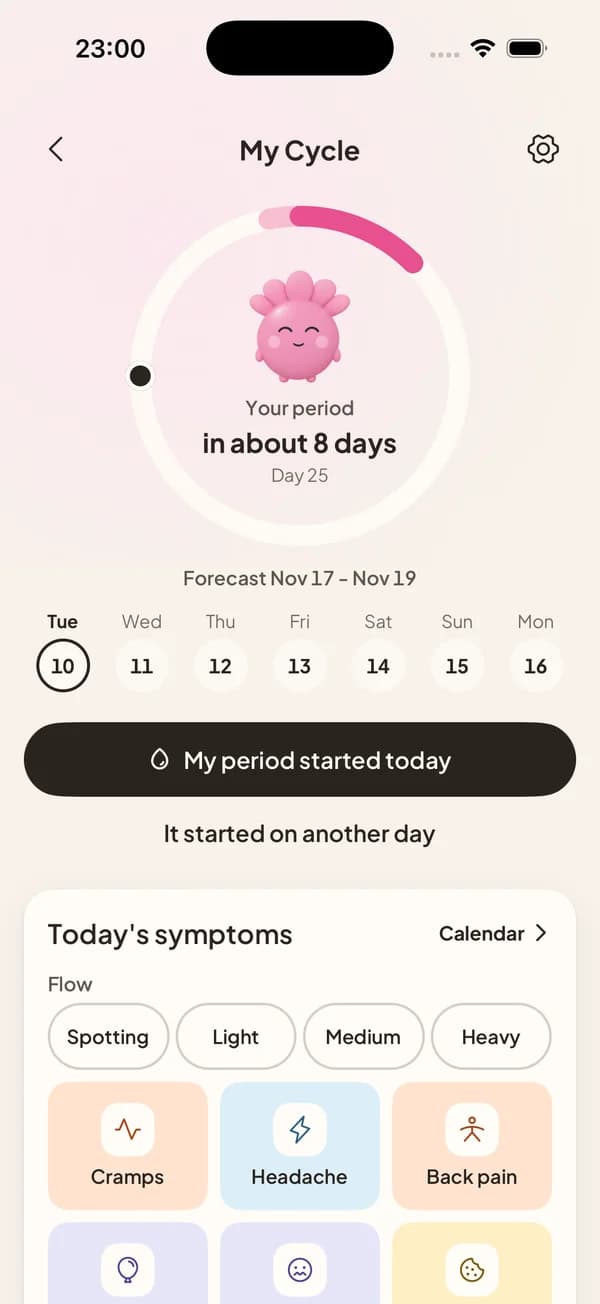
Keep your period calendar in yuuvii
Tap once when your period starts; the next estimate, your symptoms and your mood live in one place. Your entries stay on your phone.
 Coming soonAndroid
 Scan with your phone camera to open the App Store.
When should you see a doctor?
The NHS recommends consulting a doctor if:
- your period is irregular or your established cycle pattern changes
- irregular cycles are accompanied by weight changes, fatigue, facial hair growth, or dry or oily skin
- you experience bleeding between periods
- your periods are irregular and you are struggling to conceive
- you have missed three consecutive periods
- irregular bleeding persists for longer than 6 months after having a hormonal coil fitted
- you experience any vaginal bleeding after going 12 months without a period
Periods
Mark your period, tick symptoms and see when the next one is likely to start.
Your journal, mood, cycle and tracker records, including saved step counts, are stored on your device. When account backup is available and you are signed in, the app also sends an encrypted copy to our servers to restore and merge your records.
The estimate is not for contraception. yuuvii is not a medical device and does not diagnose or treat.
Frequently asked questions
Is it normal if a period lasts only 2 days?
According to the NHS, a period can last anywhere between 2 and 7 days, meaning 2 days falls within the normal range. However, if your periods previously lasted longer and suddenly became shorter, the NHS advises having this change evaluated.
Is brown menstrual discharge normal?
According to the NHS, menstrual blood can appear pink or brown on light flow days. However, if you have not had a period for 12 months, the situation is different: the NHS recommends having any pink or brown discharge checked by a doctor.
Can stress lighten your period?
The NHS lists stress and anxiety among common causes of irregular menstrual cycles. In an irregular cycle, the total amount of blood lost can naturally vary from month to month.
Sources
- NHS: Periods
- NHS: Period problems
- NHS: Irregular periods
- NHS: Missed or late periods
- NHS: Symptoms of menopause and perimenopause
- NHS: IUS (hormonal coil), what is it
- NHS: IUS side effects and risks
- NHS: Vaginal bleeding in pregnancy
Keep your period calendar in yuuvii
Tap once when your period starts; the next estimate, your symptoms and your mood live in one place. Your entries stay on your phone.
Coming soonAndroidScan with your phone camera to open the App Store.