Tracking water intake involves counting the glasses you drink against a clear daily target. Start by establishing a personal baseline; the UK NHS suggests 6 to 8 cups or glasses of fluid daily as a healthy guideline. Log each glass as you finish it to see your progress at a glance. Pale, straw colored urine confirms you are drinking enough.
How to track and increase your daily water intake
Building a consistent water habit involves four straightforward steps:
- Choose your daily target. The NHS recommends 6 to 8 glasses of fluid daily as a general baseline. This amount may need adjustment based on activity and weather.
- Log each glass immediately. Tapping your phone or marking a note as you drink prevents end of day guesswork.
- Review your evening total. Check how close you came to your chosen target.
- Track your weekly consistency. See how many days out of the last seven you achieved your hydration goal.
What fluids count toward your daily total?
According to the NHS, plain water is the healthiest and most cost effective choice, but other beverages contribute to your daily fluid intake. Food also supplies a portion of your daily water needs.
| Beverage | Tracking guidance |
|---|---|
| Plain water | Ideal choice; zero sugar and calorie free |
| Lower fat milk | Counts toward fluids while providing protein and calcium |
| Tea and coffee | Counts toward fluids; the NHS suggests moderating caffeine intake |
| Fruit juices and smoothies | Counts toward fluids; NHS recommends limiting to one small glass daily |
| Sugary sodas and energy drinks | Discouraged by health guidelines due to high added sugars and dental risks |
| Alcoholic drinks | Does not hydrate; alcohol acts as a diuretic promoting fluid excretion |
Choosing your personal hydration target
General guidelines offer a solid starting point. Daily fluid targets typically sit around 2 liters for adult women and 2.5 liters for adult men. Weight based estimates suggest roughly 30 to 35 mL per kilogram of body weight. For detailed calculations, see how much water should I drink a day.
Certain conditions call for increased fluids. The NHS notes that hot weather, vigorous exercise, pregnancy, breastfeeding, and illness with fever require higher daily intake.
Simple ways to drink more water throughout the day
The NHS advises drinking steadily across the day rather than drinking huge quantities all at once. Drinking water with meals, during breaks, and around physical activity establishes a sustainable rhythm.
The US Centers for Disease Control and Prevention (CDC) recommends practical tips to increase water intake:
- Carry a reusable water bottle when leaving home
- Keep a glass of water on your desk or dining table
- Choose water instead of sugary beverages when dining out
- Add a slice of lemon, lime, or cucumber for natural flavor
The NHS also suggests sparkling water if you find plain tap water unappealing.
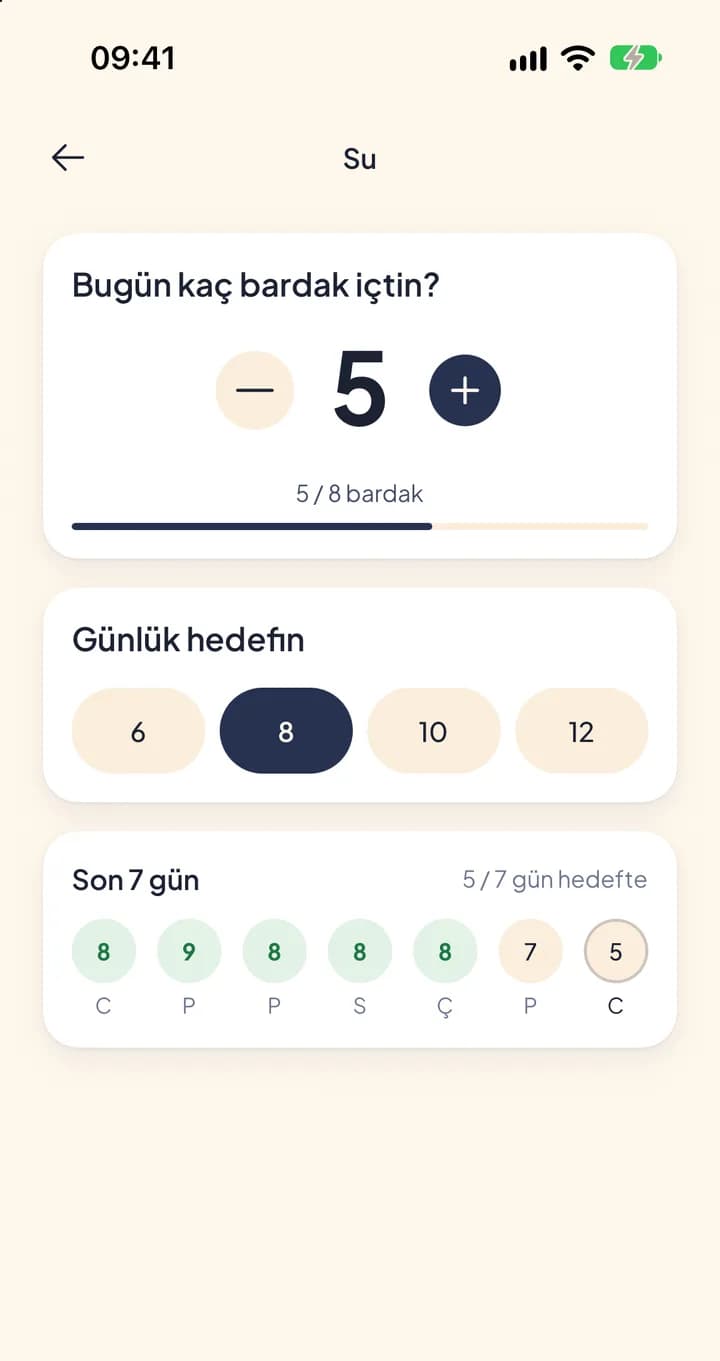
Water tracker
Count glasses through the day against a goal you pick.
 Coming soonAndroid
 Scan with your phone camera to open the App Store.
Hydration
Count glasses through the day against a goal you pick.
Your journal, mood, cycle and tracker records, including saved step counts, are stored on your device. When account backup is available and you are signed in, the app also sends an encrypted copy to our servers to restore and merge your records.
When to see a doctor
Water tracking is a self-care habit, not a medical diagnosis. The NHS advises contacting a doctor if you experience:
- Dizziness that does not pass when standing
- Unexplained, extreme fatigue or lethargy
- Consistently dark, concentrated urine despite drinking fluids
- Abnormally rapid breathing or elevated heart rate
Seek immediate emergency help if signs of shock or severe distress appear, such as bluish lips, severe confusion, or difficulty breathing. Detailed symptoms are reviewed in low water intake symptoms.
Frequently asked questions
What is the healthiest way to drink water?
Health authorities emphasize drinking small amounts regularly throughout the day. Limiting sugar sweetened beverages and avoiding excessive alcohol helps maintain healthy hydration.
What happens if you do not drink enough water?
Inadequate fluid intake leads to dehydration, characterized by thirst, dark urine, headaches, and fatigue. Left uncorrected, severe dehydration can lead to kidney strain and heat exhaustion.
Sources
- Turkish Ministry of Health: Healthy fluid consumption in summer
- NHS: Water, drinks and hydration
- CDC: About Water and Healthier Drinks
- MedlinePlus: Water in diet
- NHS: Dehydration
Water tracker
Count glasses through the day against a goal you pick.
Coming soonAndroidScan with your phone camera to open the App Store.